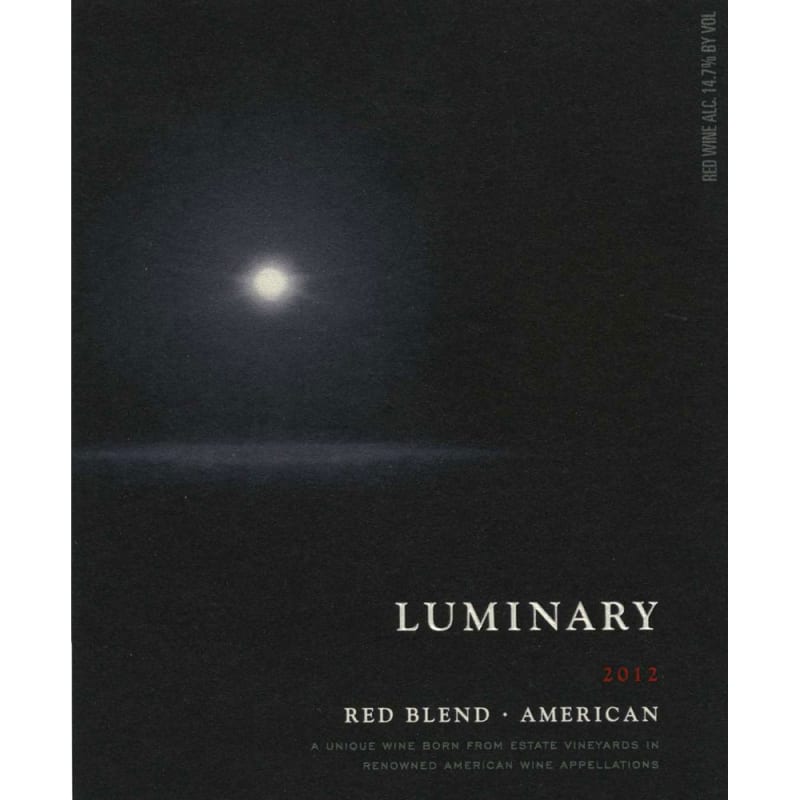

Winemaker Notes
Elegantly structured with soft, round tannins, the 2012 debut release of Luminary boasts vibrant impressions of cherries and berries as well as fragrant spice notes of cinnamon, smoke and toast. Deep, rich layers of fruit, sweet cream, cocoa and spice expand on a palate, which is beautifully concentrated but balanced by bright acid and subtle wood nuances.
Professional Ratings
-
Wine Enthusiast
An entrepreneurial debut blend of Cabernet Sauvignon, Syrah, Zinfandel and Merlot from vineyards across California and Washington state, this wine was guided by a team of winemakers from Pine Ridge, Double Canyon, Chamisal and Seghesio, who worked together to produce it. Full bodied in blackberry and black cherry, it's refined but has a bite of tannin and power that keep it interesting. It finishes in smooth vanilla and chocolate.
-
Wilfred Wong of Wine.com
As incredible as it seems, the Luminary successfully shows a synergy of four separate regions and four different winemakers. Made from Cabernet Sauvignon, Syrah, Zinfandel and Merlot, one would have thought this was nothing more than a "kitchen sink" red. But no, the 2012 Liminary serves up brisk red fruit aromas and flavors and exhibits an excellent presence on the palate; lively and refined in the finish. They say that this is a work of art. They are absolutely right; this is an impressive piece of work.


With hundreds of red grape varieties to choose from, winemakers have the freedom to create a virtually endless assortment of blended red wines. In many European regions, strict laws are in place determining the set of varieties that may be used, but in the New World, experimentation is permitted and encouraged resulting in a wide variety of red wine styles. Blending can be utilized to enhance balance or create complexity, lending different layers of flavors and aromas. For example, a red wine blend variety that creates a fruity and full-bodied wine would do well combined with one that is naturally high in acidity and tannins. Sometimes small amounts of a particular variety are added to boost color or aromatics. Blending can take place before or after fermentation, with the latter, more popular option giving more control to the winemaker over the final qualities of the wine.
How to Serve Red Wine
A common piece of advice is to serve red wine at “room temperature,” but this suggestion is imprecise. After all, room temperature in January is likely to be quite different than in August, even considering the possible effect of central heating and air conditioning systems. The proper temperature to aim for is 55° F to 60° F for lighter-bodied reds and 60° F to 65° F for fuller-bodied wines.
How Long Does Red Wine Last?
Once opened and re-corked, a bottle stored in a cool, dark environment (like your fridge) will stay fresh and nicely drinkable for a day or two. There are products available that can extend that period by a couple of days. As for unopened bottles, optimal storage means keeping them on their sides in a moderately humid environment at about 57° F. Red wines stored in this manner will stay good – and possibly improve – for anywhere from one year to multiple decades. Assessing how long to hold on to a bottle is a complicated science. If you are planning long-term storage of your reds, seek the advice of a wine professional.

From Alabama to Wyoming, each of the fifty United States produces wine—with varying degrees of success. Many of the colder northeastern states focus primarily on American or French-American hybrid varieties like Concord and Vidal, while Muscadine is the grape species of the warm, humid southeast. In Alaska, grapes are grown indoors in greenhouses; other states specialize in fruit wines, like the pineapple wine of Hawaii. New York and Virginia have thriving wine industries, and New Mexico, Arizona, Texas, Michigan, Idaho, and Ohio are all worth keeping an eye on.