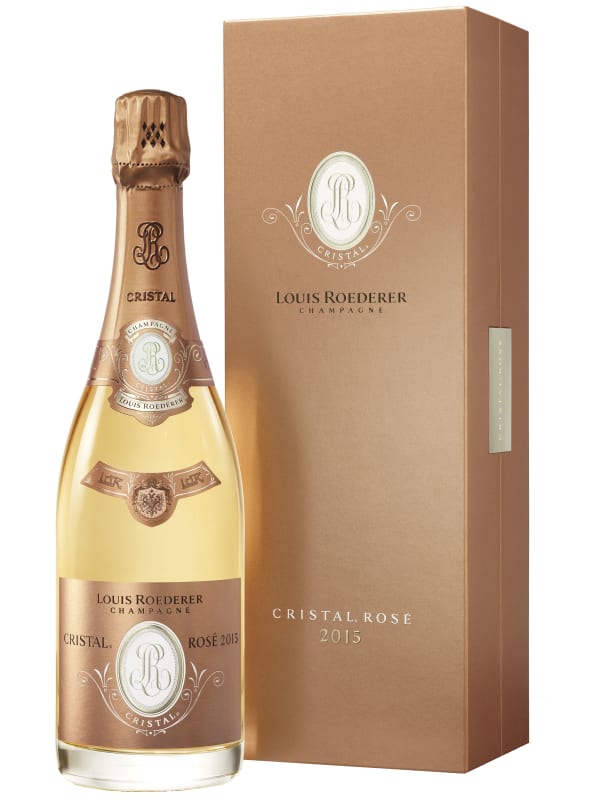


Winemaker Notes
Bright with a pink hue and subtle coppery overtones. Dynamic, almost creamy bubbles, forming an attractive bead.
A lithe, fragrant bouquet with a blend of citrus (Etna blood oranges), floral notes (rose petals), and concentrated red fruit (raspberry). It shows a particularly sensual and “powdery quality with notes of toasted hazelnuts and macarons. This bouquet is exceptionally fresh yet restrained, unfolding with grace and assurance throughout the drinking experience.
The palate is delicate, caressing, creamy and enveloping. The concentration of red fruit comes through again with raspberry aromas and fragrant petal notes, endowing the wine with a deliciously rich, satiny quality. The bubbles are soft and tactile, adding a further layer to the delicacy. Then comes an impression of chalky freshness and the hint of a sea breeze, in the form of a palate with a lovely trim finish. One can feel a distinct "freshness from the soil" supported by some lovely plump and saline tannins. This wine reveals depth, richness of flavor, a voluptuous texture with gentle tannins that provide structure without any hardness, and culminates in a saline finish.
Blend: 56% Pinot Noir, 44% Chardonnay
Professional Ratings
-
Robert Parker's Wine Advocate
Disgorged in March 2024 with a dosage of seven grams per liter, the 2015 Cristal Rosé has turned out very well. As always, it originates from the south-facing yet windswept slopes of Aÿ, where Pinot Noir thrives, and is complemented by Chardonnay from Avize and Le Mesnil-sur-Oger, imparting freshness and lightness to the infused Pinot Noir. The wine unfurls from the glass with a bouquet of orange zest, red currant, raspberry and spices interwoven with citrus notes. On the palate, it is medium to full-bodied, fleshy and intense, brimming with bright acidity and ample dry extract, culminating in a long, saline-tinged finish. The 2015 rendition is neither as tightly coiled as the 2013 nor as concentrated as the 2012, yet it exhibits the hallmark precision expected from this house—shaped by intelligent viticulture and a cellar master who refuses to rest on his laurels. True to tradition, it is crafted without malolactic fermentation, a choice that aligns with Roederer’s approach to dosage.
Rating: 96+





Uncompromising Quality
Champagne Louis Roederer was founded in 1776 in Reims, France and is one of the rare family owned companies, which is still managed by the Roederer family. In 1833, Louis Roederer inherited the company from his uncle and renamed the company under his namesake. Under his leadership, the company rapidly grew while remaining true to their philosophy of uncompromising quality. Today, the company is under the helm of Jean-Claude Rouzaud and his son Frédéric who continue to place quality before quantity.
First-Rate Vineyards
Champagne Louis Roederer is one of the only French champagne producers to own nearly 75 percent of the grapes in the most desirable vineyards in the Champagne. The property is located on 450 acres in the finest villages of Montagne de Reims, Côtes des Blancs, and Valleé de la Marne. Each region is selected to produce Chardonnay and Pinot Noir with the elegance needed for perfectly balanced champagne. The Louis Roederer vineyards rate an average 98 percent based on France’s statutory 100-point classification scale.
The reserve wine is then tasted and graded by a team of Roederer specialists. They choose as many as 40 different wines from several lots for the blend. For the final touch, the wine is then added in order to enhance the cuvee and guarantee consistency while retaining the champagne's characteristics.

What are the different types of sparkling rosé wine?
Rosé sparkling wines like Champagne, Prosecco, Cava, and others make a fun and festive alternative to regular bubbles—but don’t snub these as not as important as their clear counterparts. Rosé Champagnes (i.e., those coming from the Champagne region of France) are made in the same basic way as regular Champagne, from the same grapes and the same region. Most other regions where sparkling wine is produced, and where red grape varieties also grow, also make a rosé version.
How is sparkling rosé wine made?
There are two main methods to make rosé sparkling wine. Typically, either white wine is blended with red wine to make a rosé base wine, or only red grapes are used but spend a short period of time on their skins (maceration) to make rosé colored juice before pressing and fermentation. In either case the base wine goes through a second fermentation (the one that makes the bubbles) through any of the various sparkling wine making methods.
What gives rosé Champagne and sparkling wine their color and bubbles?
The bubbles in sparkling wine are formed when the base wine undergoes a secondary fermentation, which traps carbon dioxide inside the bottle or fermentation vessel. During this stage, the yeast cells can absorb some of the wine’s color but for the most part, the pink hue remains.
How do you serve rosé sparkling wine?
Treat rosé sparkling wine as you would treat any Champagne, Prosecco, Cava, and other sparkling wine of comparable quality. For storing in any long-term sense, these should be kept at cellar temperature, about 55F. For serving, cool to about 40F to 50F. As for drinking, the best glasses have a stem and a flute or tulip shape to allow the bead (bubbles) and beautiful rosé hue to show.
How long do rosé Champagne and sparkling wine last?
Most rosé versions of Prosecco, Champagne, Cava or others around the “$20 and under” price point are intended for early consumption. Those made using the traditional method with extended cellar time before release (e.g., Champagne or Crémant) can typically improve with age. If you are unsure, definitely consult our Customer Care team for guidance.

Associated with luxury, celebration, and romance, the region, Champagne, is home to the world’s most prized sparkling wine. In order to bear the label, ‘Champagne’, a sparkling wine must originate from this northeastern region of France—called Champagne—and adhere to strict quality standards. Made up of the three towns Reims, Épernay, and Aÿ, it was here that the traditional method of sparkling wine production was both invented and perfected, birthing a winemaking technique as well as a flavor profile that is now emulated worldwide.
Well-drained, limestone and chalky soil defines much of the region, which lend a mineral component to its wines. Champagne’s cold, continental climate promotes ample acidity in its grapes but weather differences from year to year can create significant variation between vintages. While vintage Champagnes are produced in exceptional years, non-vintage cuvées are produced annually from a blend of several years in order to produce Champagnes that maintain a consistent house style.
With nearly negligible exceptions, . These can be blended together or bottled as individual varietal Champagnes, depending on the final style of wine desired. Chardonnay, the only white variety, contributes freshness, elegance, lively acidity and notes of citrus, orchard fruit and white flowers. Pinot Noir and its relative Pinot Meunier, provide the backbone to many blends, adding structure, body and supple red fruit flavors. Wines with a large proportion of Pinot Meunier will be ready to drink earlier, while Pinot Noir contributes to longevity. Whether it is white or rosé, most Champagne is made from a blend of red and white grapes—and uniquely, rosé is often produce by blending together red and white wine. A Champagne made exclusively from Chardonnay will be labeled as ‘blanc de blancs,’ while ones comprised of only red grapes are called ‘blanc de noirs.’