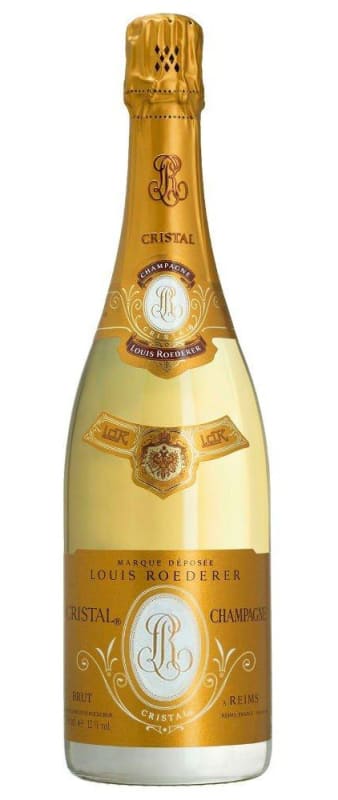


Winemaker Notes
A golden hue with soft, glowing highlights. Fine, steady, gentle bubbles. Powerful and complex on the palate, revealing a mixture of yellow fruit (mirabelle plum), juicy, ripe fruits (nectarine), citrus peel (candied orange) and finely-roasted nuts (hazelnut). The nose is simultaneously powdery and sweet, with elegant, chalky notes. Gentle, tactile and full-bodied on the palate. The bubbles create a gentle, vibrating sensation, then the wine becomes soft, dense and juicy. But it is the chalky freshness that quickly sets the tone: the sweetness becomes energetic and intense, giving the wine an elegant yet powerful texture. Fine, textured tannins reveal a poised and vinous dimension to the wine. The finish is savory and saline. Blend: 60% Pinot Noir, 40% Chardonnay
Professional Ratings
-
Australian Wine Companion
Sheer, frightening intensity; pure unsweetened citrus. It’s a wine notorious for improving on cork in the years following release, but this will take longer than most. 100% estate-grown, 60/40% chardonnay and pinot noir, one-third each Montagne de Reims, Vallée de la Marne and Côtes des Blancs; 6 years on lees, disgorged September ’20.
-
James Suckling
Magnums of Cristal are always released a couple of years after the original release of a vintage. And the 2013 is gorgeous. It’s linear and extremely long, showing real energy and vibe with crushed chalk and stone. Medium-bodied, tight and still structured, with phenolic tension and intensity. Fresh finish. Demonstrates the reserve power of Crystal.
-
Robert Parker's Wine Advocate
One of the greatest wines of Louis Roederer’s contemporary chapter, the 2013 Cristal continues to impress. Tasted from magnum, which was disgorged in September 2024 with a dosage of 7.5 grams per liter, it wafts from the glass with a bouquet of white flowers, lemon zest and toasted hazelnut, mingling with iodine and smoke. Qualitatively speaking, it's “a copy of 2012 with a month longer growing cycle,” summarizes Lecaillon, and it's indeed true that these two wines represent the high points of the of the decade so far—as only time will tell what Jean-Baptiste Lecaillon will achieve with 2019. Expecting a crystalline, electric wine, given the cool, late-ripening season, the 2013 indeed delivers a Champagne that is bright, with incredible clarity and concentration, even if it’s undeniably a leaner version than its immediate predecessor.
-
Decanter
The peak of drinkability is between 15 and 20 years from the harvest; so says Jean-Baptiste, but he has not spared the taster the wondrous early impression of perfection in the making. A soft gold with glistening highlights, like the river meadow at dawn; the nose effortlessly marries a panoply of flavours, the citric grip nodding to hints of passion fruit and Mirabelle plum, with hazelnut and almond signalling the grace of development. Texturally generous, yet tightly wound, taut and flinty yet ripe and open, the wine faithfully underlines the vigneron’s philosophy, every nuance of its template deftly rehearsed and charmingly enacted.
-
Jeb Dunnuck
Lots of ripe orchard fruits, toasted bread, brioche, and chalky mineral notes define the nose, and it's medium to full-bodied, with a layered, nicely concentrated, tight, inward style, beautiful precision and purity, and a great finish. It needs a good 5-7 years of bottle age to hit its stride and will keep for two decades or more.
-
Wine & Spirits
A wine of chalk soils, from mid-slope estate parcels, Cristal is a blast of pale limestone power in 2013. Its textures are grand and sumptuous against the chalk, its flavors layering sunny apple briskness, smoky lees and earthy acidities ghosting the finish, lasting for minutes, suggesting a long life ahead in the cellar.
-
Wine Spectator
Exotic hints of tangerine and candied ginger are an enticing entrance for this vivid Champagne, accenting a finely meshed range of ripe green apple and cassis fruit, with rich notes of chopped almond, brioche and lemon curd. An underscoring streak of salinity gains momentum through the mouthwatering finish, echoing as it rides the plushly creamy mousse. This is decadence in a sleek and graceful package. Pinot Noir and Chardonnay.





Uncompromising Quality
Champagne Louis Roederer was founded in 1776 in Reims, France and is one of the rare family owned companies, which is still managed by the Roederer family. In 1833, Louis Roederer inherited the company from his uncle and renamed the company under his namesake. Under his leadership, the company rapidly grew while remaining true to their philosophy of uncompromising quality. Today, the company is under the helm of Jean-Claude Rouzaud and his son Frédéric who continue to place quality before quantity.
First-Rate Vineyards
Champagne Louis Roederer is one of the only French champagne producers to own nearly 75 percent of the grapes in the most desirable vineyards in the Champagne. The property is located on 450 acres in the finest villages of Montagne de Reims, Côtes des Blancs, and Valleé de la Marne. Each region is selected to produce Chardonnay and Pinot Noir with the elegance needed for perfectly balanced champagne. The Louis Roederer vineyards rate an average 98 percent based on France’s statutory 100-point classification scale.
The reserve wine is then tasted and graded by a team of Roederer specialists. They choose as many as 40 different wines from several lots for the blend. For the final touch, the wine is then added in order to enhance the cuvee and guarantee consistency while retaining the champagne's characteristics.

Representing the topmost expression of a Champagne house, a vintage Champagne is one made from the produce of a single, superior harvest year. Vintage Champagnes account for a mere 5% of total Champagne production and are produced about three times in a decade. Champagne is typically made as a blend of multiple years in order to preserve the house style; these will have non-vintage, or simply, NV on the label. The term, "vintage," as it applies to all wine, simply means a single harvest year.

Associated with luxury, celebration, and romance, the region, Champagne, is home to the world’s most prized sparkling wine. In order to bear the label, ‘Champagne’, a sparkling wine must originate from this northeastern region of France—called Champagne—and adhere to strict quality standards. Made up of the three towns Reims, Épernay, and Aÿ, it was here that the traditional method of sparkling wine production was both invented and perfected, birthing a winemaking technique as well as a flavor profile that is now emulated worldwide.
Well-drained, limestone and chalky soil defines much of the region, which lend a mineral component to its wines. Champagne’s cold, continental climate promotes ample acidity in its grapes but weather differences from year to year can create significant variation between vintages. While vintage Champagnes are produced in exceptional years, non-vintage cuvées are produced annually from a blend of several years in order to produce Champagnes that maintain a consistent house style.
With nearly negligible exceptions, . These can be blended together or bottled as individual varietal Champagnes, depending on the final style of wine desired. Chardonnay, the only white variety, contributes freshness, elegance, lively acidity and notes of citrus, orchard fruit and white flowers. Pinot Noir and its relative Pinot Meunier, provide the backbone to many blends, adding structure, body and supple red fruit flavors. Wines with a large proportion of Pinot Meunier will be ready to drink earlier, while Pinot Noir contributes to longevity. Whether it is white or rosé, most Champagne is made from a blend of red and white grapes—and uniquely, rosé is often produce by blending together red and white wine. A Champagne made exclusively from Chardonnay will be labeled as ‘blanc de blancs,’ while ones comprised of only red grapes are called ‘blanc de noirs.’