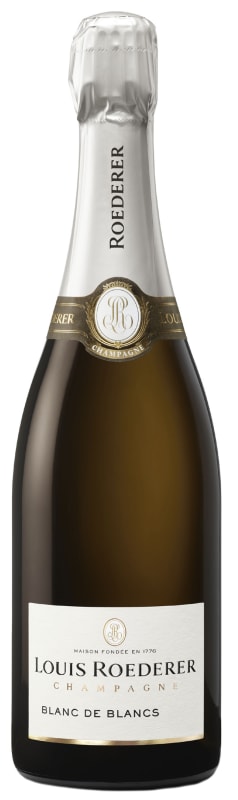


Winemaker Notes
Intense yellow hue with bright, luminous tints. An even flow of creamy, ultra-fine bubbles. Bouquet of harvest (almonds), spring flowers (honeysuckle) and citrus (lemon). The aromas are harmonious and deep, with delicate notes of roasted almonds and roasting. Upon aeration, powdery and chalky nuances emerge, creating a refined reductive nose typical of exceptional Chardonnays. Precise, juicy and deep on entry to the palate, this wine exudes a magnificent concentration of ripe fruit and floral aromas interwoven with a mineral freshness. The mouthfeel is creamy and chalky, almost powdery and drying, imparting a trim, finely honed quality to the palate. Juicy and rounded, the wine is drawn out into a fresh, powdery finish. The palate crescendos like a torrent of white mountain water, with a lingering sweetness from the wood ageing complementing the saline length and structure imparted by the white chalk of Avize.
Professional Ratings
-
Wine Enthusiast
Produced from selected parcels in Avize on the Côte des Blancs, this Champagne shows minerality and tension. While it has aged well, it still has vibrant freshness, from the lemon and brioche aroma and the tangy, citrus and spice flavors. The wine is textured and sure to age further. Drink from 2026. — Roger Voss
-
Jeb Dunnuck
A bright yellow reflective color, the 2017 Champagne Blanc De Blancs is aromatic and pretty on the nose although just a little shy at this stage, offering notes of lemon meringue and hazelnut. The wine has a Burgundian texture and breadth to it, with a highly refined feel of elegance, a supple, rounded mouthfeel, a fluffy mousse, and a long finish. It has a hint of warmth, but it’s very well-managed and balanced. It’s pure all the way through, with a persistent chalky, underlying mineral texture.
-
James Suckling
Croissants, sliced pears, apples, white flowers and almonds on the nose of this creamy and elegant blanc de blancs. Very silky on the palate, with almost imperceptible bubbles and delicate pastry notes. Soft and beautifully balanced. Chardonnay from the Grand Cru village of Avize.
-
Wine Spectator
Pleasing hints of pastry, lemon curd and chopped hazelnut enrich a juicy core of ripe white peach and apricot fruit in this focused blanc de blancs, with a creamy mousse. Backed by vibrant acidity,this shows good length and expression through the lightly salty finish.
-
Robert Parker's Wine Advocate
The 2017 Brut Blanc de Blancs, derived from four plots in the mid-slopes of Avize and vinified tw-thirds in stainless steel with the remainder in oak, is a considerable effort in the comparatively challenging year. “Unlike the red grapes, Chardonnay did not have issues with rot,” recalls Jean-Baptiste Lecaillon. Disgorged with seven grams per liter dosage, it soars from the glass with aromas of grapefruit zest, pear and toasted almonds. On the palate, it’s medium to full-bodied, ample and textural, with a low-pressure mousse, vibrant acidity and a long, chalky finish. It’s derived from their estate, which has been farmed organically since 2017 (and certified as such in 2020). For its richness, 2017 reminds one of the 2010 vintage with less exoticism.





Uncompromising Quality
Champagne Louis Roederer was founded in 1776 in Reims, France and is one of the rare family owned companies, which is still managed by the Roederer family. In 1833, Louis Roederer inherited the company from his uncle and renamed the company under his namesake. Under his leadership, the company rapidly grew while remaining true to their philosophy of uncompromising quality. Today, the company is under the helm of Jean-Claude Rouzaud and his son Frédéric who continue to place quality before quantity.
First-Rate Vineyards
Champagne Louis Roederer is one of the only French champagne producers to own nearly 75 percent of the grapes in the most desirable vineyards in the Champagne. The property is located on 450 acres in the finest villages of Montagne de Reims, Côtes des Blancs, and Valleé de la Marne. Each region is selected to produce Chardonnay and Pinot Noir with the elegance needed for perfectly balanced champagne. The Louis Roederer vineyards rate an average 98 percent based on France’s statutory 100-point classification scale.
The reserve wine is then tasted and graded by a team of Roederer specialists. They choose as many as 40 different wines from several lots for the blend. For the final touch, the wine is then added in order to enhance the cuvee and guarantee consistency while retaining the champagne's characteristics.

Representing the topmost expression of a Champagne house, a vintage Champagne is one made from the produce of a single, superior harvest year. Vintage Champagnes account for a mere 5% of total Champagne production and are produced about three times in a decade. Champagne is typically made as a blend of multiple years in order to preserve the house style; these will have non-vintage, or simply, NV on the label. The term, "vintage," as it applies to all wine, simply means a single harvest year.

Associated with luxury, celebration, and romance, the region, Champagne, is home to the world’s most prized sparkling wine. In order to bear the label, ‘Champagne’, a sparkling wine must originate from this northeastern region of France—called Champagne—and adhere to strict quality standards. Made up of the three towns Reims, Épernay, and Aÿ, it was here that the traditional method of sparkling wine production was both invented and perfected, birthing a winemaking technique as well as a flavor profile that is now emulated worldwide.
Well-drained, limestone and chalky soil defines much of the region, which lend a mineral component to its wines. Champagne’s cold, continental climate promotes ample acidity in its grapes but weather differences from year to year can create significant variation between vintages. While vintage Champagnes are produced in exceptional years, non-vintage cuvées are produced annually from a blend of several years in order to produce Champagnes that maintain a consistent house style.
With nearly negligible exceptions, . These can be blended together or bottled as individual varietal Champagnes, depending on the final style of wine desired. Chardonnay, the only white variety, contributes freshness, elegance, lively acidity and notes of citrus, orchard fruit and white flowers. Pinot Noir and its relative Pinot Meunier, provide the backbone to many blends, adding structure, body and supple red fruit flavors. Wines with a large proportion of Pinot Meunier will be ready to drink earlier, while Pinot Noir contributes to longevity. Whether it is white or rosé, most Champagne is made from a blend of red and white grapes—and uniquely, rosé is often produce by blending together red and white wine. A Champagne made exclusively from Chardonnay will be labeled as ‘blanc de blancs,’ while ones comprised of only red grapes are called ‘blanc de noirs.’