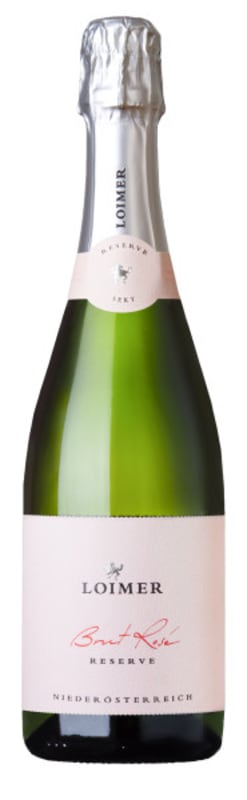


Winemaker Notes
Discreet but long-lasting foam presentation. It opens beautifully with air, exuding yeasty notes and aromas of plum cake and puff pastry with cherries. It plays its strength on the palate with discreet fruitiness, fine mousse, white nougat, hazelnut cake notes, a mouthfilling texture, and wonderfully soft acidity.
Blend: 60% Zweigelt, 30% Pinot Noir, 10% St. Laurent
Professional Ratings
-
Decanter
This easy-going, organic fizz made from Gruner Veltliner, Zweiget and Pinot Noir falls into the Klassik quality level. With its spiced green apple aromas and yeasty palate, it has great energy and a very modern appeal. The rose is equally delicious and a perfect match for lightly spiced foods.
-
Robert Parker's Wine Advocate
Disgorged in October 2021, the NV Brut Rosé Reserve offers a pure and fresh yet intensely aromatic bouquet of red berries intertwined with delicate brioche and lemon juice aromas as well as some flinty notes. Round and fruity on the palate, this is a well-balanced, very charming, finely structured and stimulating sparkling blend of the Kamptal's red grape varieties such as Pinot Noir and St. Laurent. This vinous and finessed rosé drinks perfectly well as an aperitif but has enough fruit and structure to be enjoyed with many lighter dishes based on veggies, white meat or fish. Disgorged with a dosage of just two grams per liter, this is in fact an extra brut or brut nature.


What are the different types of sparkling rosé wine?
Rosé sparkling wines like Champagne, Prosecco, Cava, and others make a fun and festive alternative to regular bubbles—but don’t snub these as not as important as their clear counterparts. Rosé Champagnes (i.e., those coming from the Champagne region of France) are made in the same basic way as regular Champagne, from the same grapes and the same region. Most other regions where sparkling wine is produced, and where red grape varieties also grow, also make a rosé version.
How is sparkling rosé wine made?
There are two main methods to make rosé sparkling wine. Typically, either white wine is blended with red wine to make a rosé base wine, or only red grapes are used but spend a short period of time on their skins (maceration) to make rosé colored juice before pressing and fermentation. In either case the base wine goes through a second fermentation (the one that makes the bubbles) through any of the various sparkling wine making methods.
What gives rosé Champagne and sparkling wine their color and bubbles?
The bubbles in sparkling wine are formed when the base wine undergoes a secondary fermentation, which traps carbon dioxide inside the bottle or fermentation vessel. During this stage, the yeast cells can absorb some of the wine’s color but for the most part, the pink hue remains.
How do you serve rosé sparkling wine?
Treat rosé sparkling wine as you would treat any Champagne, Prosecco, Cava, and other sparkling wine of comparable quality. For storing in any long-term sense, these should be kept at cellar temperature, about 55F. For serving, cool to about 40F to 50F. As for drinking, the best glasses have a stem and a flute or tulip shape to allow the bead (bubbles) and beautiful rosé hue to show.
How long do rosé Champagne and sparkling wine last?
Most rosé versions of Prosecco, Champagne, Cava or others around the “$20 and under” price point are intended for early consumption. Those made using the traditional method with extended cellar time before release (e.g., Champagne or Crémant) can typically improve with age. If you are unsure, definitely consult our Customer Care team for guidance.

Appreciated for superior wines made from indigenous varieties, Austria should be on the radar of any curious wine drinker. A rather cool and dry wine growing region, this country produces wine that is quintessentially European in style: food-friendly with racy acidity, moderate alcohol and fresh fruit flavors.
Austria’s viticultural history is rich and vast, dating back to Celtic tribes with first written record of winemaking starting with the Romans. But the 20th century brought Austria a series of winemaking obstacles, namely the plunder of both world wars, as well as its own self-imposed quality breach. In the mid 1980s, after a handful of shameless vintners were found to have added diethylene glycol (a toxic substance) to their sweet wines to imitate the unctuous qualities imparted by botrytis, Austria’s credibility as a wine-producing country was compromised. While no one was harmed, the incident forced the country to rebound and recover stronger than ever. By the 1990s, Austria was back on the playing field with exports and today is prized globally for its quality standards and dedication to purity and excellence.
Grüner Veltliner, known for its racy acidity and herbal, peppery aromatics, is Austria's most important white variety, comprising nearly a third of Austrian plantings. Riesling in Austria is high in quality but not quantity, planted on less than 5% of the country’s vineyard land. Austrian Rieslings are almost always dry and are full of bright citrus flavors and good acidity. Red varietal wines include the tart and peppery Zweigelt, spicy and dense Blaufränkisch and juicy Saint Laurent. These red varieties are also sometimes blended.