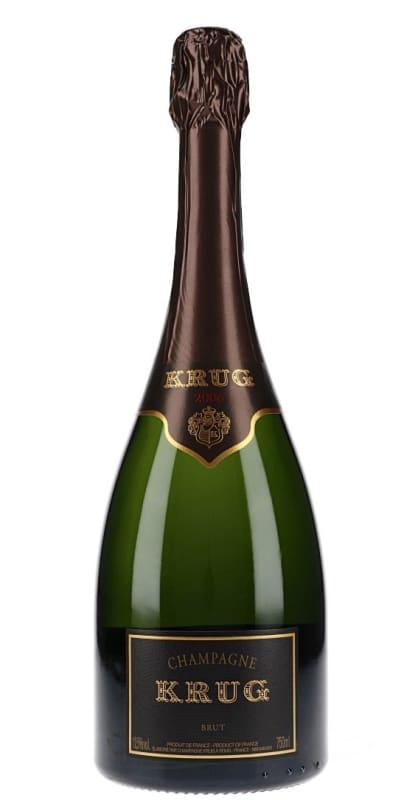


Winemaker Notes
#99 Wine Spectator Top 100 of 2021
At first sight, an intense and brilliant golden hue. An expressive nose that is rich and ample with patinated aromas of honey, licorice, menthol, orange peel and grapefruit. Vivacious, intense and harmonious with great tension on the palate, expressing notes of quince, candied fruits and citrus, yellow kiwi, star fruit, honey, apple tart, butter cookies, orange peel, peony and fennel, with floral and menthol undertones. It has a long, balanced and precise finish with astounding structure.
Krug 2008 is a beautiful match for oyster tartare with a lobster emulsion, parmesan shortbread, pistachio Chaource in pastry sheets, rabbit terrine with sorrel, tagliatelle with mussels and basil, dishes prepared with aromatic herbs like oregano and thyme or whitefish in a lemon and pepper sauce, as well as desserts that contrast vivacity and roundness such as passionfruit and lemon meringue.
Professional Ratings
-
James Suckling
This is very structured and framed with an almost red sensibility. Very phenolic. Full-bodied in a tightly wound ball with so much going on. Very pinot like. Mineral and stone. Shell and stone. Iodine. Vinous. The bubbles just fade into the finish of the wine, which goes on for minutes. Turns to toffee and salted caramel with time in the glass. One for the cellar. Great length. Blend of 53% pinot noir, 25% pinot meunier, 22% chardonnay.
-
Wine Spectator
There's a supernova of sensation with each sip of this powerful 2008 Champagne, starting with the vivid streak of mouthwatering acidity that drives a rich panoply of flavor across the palate. Notes of ripe black currant, Mandarin orange peel and grilled nut are accented by hints of candied ginger, briny oyster shell, verbena and ground cardamom spice. This burns bright from start to finish, yet its fine integration and lovely, raw silk-like mousse pull it all together into a seamless, vibrant package. Pinot Noir, Pinot Meunier and Chardonnay.
-
Decanter
What a burst of fresh fruit on the nose! The aromatic freshness is evident from the first whiff, suffused with notes of citrus fruits including grapefruit, menthol, and a hint of liquorice. The texture has precise contours, giving an impression of rectangular rectitude and perfect balance. This is a finely chiselled Champagne offering great harmony and a long finish enhanced by delicious underlying notes of nutty bitterness. 53% Pinot Noir, 25% Pinot Meunier and 22% Chardonnay. Disgorged in the first quarter of 2020. Dosage: 4.5g/L.
-
Wine Enthusiast
A vintage Champagne from this producer is rare. But 2008 was a great year in Champagne and that shows in this intense, still amazingly young wine. Freshness works with the richness to give concentration, density and the sure-fire possibility of long-term aging. So drink now, but the Champagne will last for many years.
-
Wine & Spirits
From a cool, rela-tively dry year in Champagne, Krug’s 2008 is blended from pinot noir (53 percent), pinot meunier (25 percent) and chardonnay (22 percent). Released in the fall of 2021, the wine is dense and concentrated, still tightly wound. While it shows some savory maturity, the wine’s meaty intensity suggest its evolu-tion has barely begun. Great Krug vintages last for decades, and this one should evolve into a classic.
-
Robert Parker's Wine Advocate
With its rather lean profile, Krug’s 2008 Brut is one of those wines that, to my palate, would be almost unrecognizable in a blind tasting—particularly given that it originates from a vintage evidently more favorable for Champenois viticulture than this release might suggest. Disgorged in 2021 with a dosage of 3.5 grams per liter, the wine opens in the glass with aromas evocative of lemon oil, freshly baked bread and quince mingled with golden apple, faint hints of honeysuckle and nuts. On the palate, it is medium-bodied and defined by a taut architecture and incisive acids that one might wish were more seamlessly cloaked within its core of fruit; yet the fruit informing the wine appears to have been harvested a little on the early side if one’s preferences incline toward the aromatic plenitude and texture that only full maturity can impart.
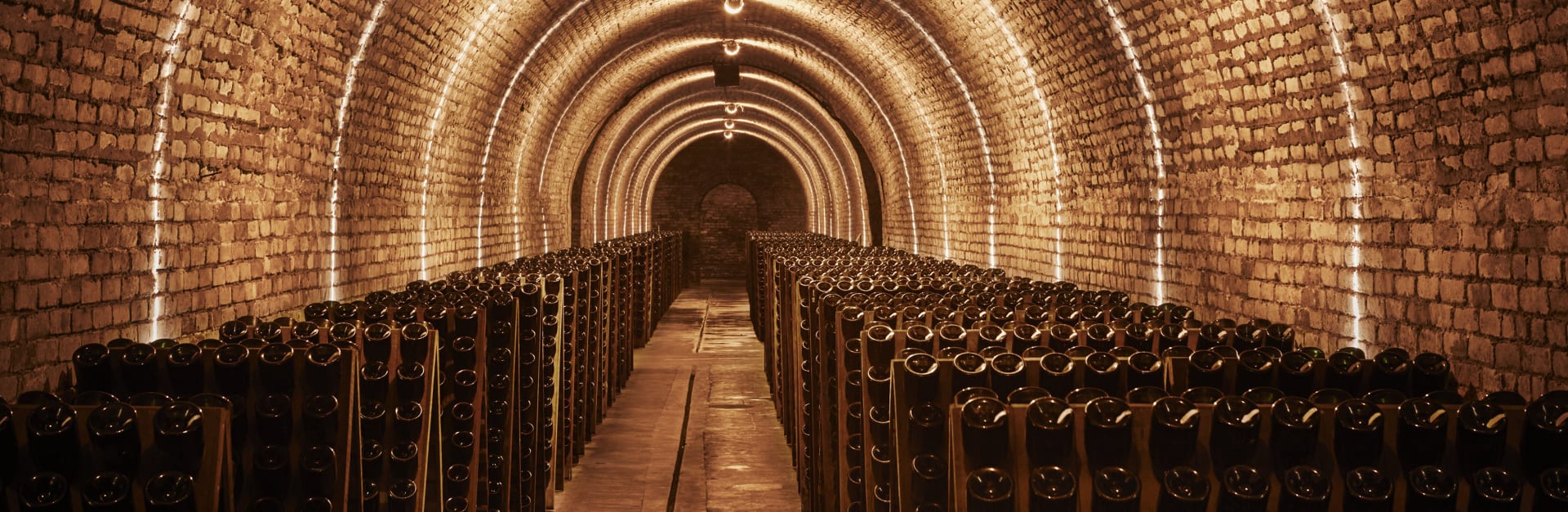




Krug has always lived up to its reputation as the first and only Champagne House to create exclusively prestige Champagnes every year since its foundation.
The House was established in Reims in 1843, by Joseph Krug, a visionary non-conformist with an uncompromising philosophy. Having understood that the true essence of Champagne is pleasure itself, his dream was to craft the very best Champagne he could offer, every single year, regardless of annual variations in climate. Paying close attention to the vineyard’s character, respecting the individuality of each plot and its wine, as well as building an extensive library of reserve wines from many different years allowed Joseph Krug to fulfil his dream.
With a very original approach to Champagne making, he decided to go beyond the notion of vintage to create the most generous expression of Champagne, every year. Thus, he founded a House in which all Champagnes are of the same level of distinction.
Six generations of the Krug family have perpetuated this dream, enriching the founder’s vision and savoir faire.
Further elaborating on the notion of individuality, for Krug’s Cellar Master Julie Cavil, each plot of grapes, through its wine, is like a single ingredient to a chef: carefully selected, and critical to the final composition. Each year, Krug honors this philosophy by inviting chefs from around the world to interpret a single ingredient, crafting unexpected recipes to pair with a glass of Krug Grande Cuvée or Krug Rosé. This year’s ingredient is the Onion.
The unspoken onion is a key component of almost every fundamental recipe from stocks, sauces and stews to baked goods and roasts. Its multifaceted expressions beautifully marry both the fullness of flavors and aromas of Krug Grande Cuvée the elegance and boldness of Krug Rose.

Representing the topmost expression of a Champagne house, a vintage Champagne is one made from the produce of a single, superior harvest year. Vintage Champagnes account for a mere 5% of total Champagne production and are produced about three times in a decade. Champagne is typically made as a blend of multiple years in order to preserve the house style; these will have non-vintage, or simply, NV on the label. The term, "vintage," as it applies to all wine, simply means a single harvest year.

Associated with luxury, celebration, and romance, the region, Champagne, is home to the world’s most prized sparkling wine. In order to bear the label, ‘Champagne’, a sparkling wine must originate from this northeastern region of France—called Champagne—and adhere to strict quality standards. Made up of the three towns Reims, Épernay, and Aÿ, it was here that the traditional method of sparkling wine production was both invented and perfected, birthing a winemaking technique as well as a flavor profile that is now emulated worldwide.
Well-drained, limestone and chalky soil defines much of the region, which lend a mineral component to its wines. Champagne’s cold, continental climate promotes ample acidity in its grapes but weather differences from year to year can create significant variation between vintages. While vintage Champagnes are produced in exceptional years, non-vintage cuvées are produced annually from a blend of several years in order to produce Champagnes that maintain a consistent house style.
With nearly negligible exceptions, . These can be blended together or bottled as individual varietal Champagnes, depending on the final style of wine desired. Chardonnay, the only white variety, contributes freshness, elegance, lively acidity and notes of citrus, orchard fruit and white flowers. Pinot Noir and its relative Pinot Meunier, provide the backbone to many blends, adding structure, body and supple red fruit flavors. Wines with a large proportion of Pinot Meunier will be ready to drink earlier, while Pinot Noir contributes to longevity. Whether it is white or rosé, most Champagne is made from a blend of red and white grapes—and uniquely, rosé is often produce by blending together red and white wine. A Champagne made exclusively from Chardonnay will be labeled as ‘blanc de blancs,’ while ones comprised of only red grapes are called ‘blanc de noirs.’