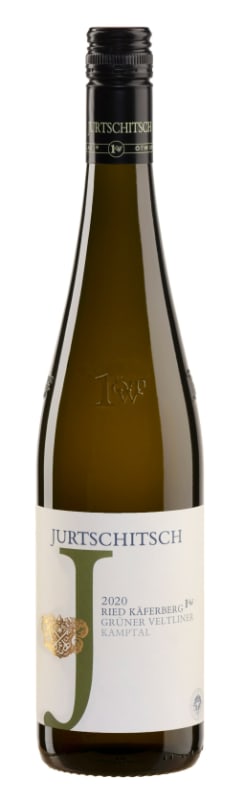


Winemaker Notes
In the south-western part of the Langenlois Käferberg, old vines that have been cultivated by our family for generations are rooted in amphibolite rock. The hand-picked grapes have been transformed into wine with craftsmanlike care and stored in our 700-year-old natural cellar. The Grüner Veltliner Käferberg shines with its crystalline minerality and Kamptaler coolness. It is strong in character and multi-layered with intense fruit aromas, paired with lots of fresh spice and reflects the expressiveness of the variety with persistence and tension.
Professional Ratings
-
Robert Parker's Wine Advocate
The 2020 Ried Käferberg 1ÖTW Kamptal Grüner Veltliner is clear, bright and fresh on the yeasty, citric nose. Very elegant and lush on the palate, this is a crystalline and salty, tight and tensioned, always refreshing Käferberg with grip and fine bitters.
-
Wine Enthusiast
This is incredibly elegant, yet very expressive, with firm, bracing acidity that keeps it intact, but also gives it energy, creating a mouthwatering impression. There is an intense mix of ginger, tangerine and persimmon upfront, while notes of jasmine and strawberry mint emerge toward the finish. It lingers on the palate, inviting you for more. Bowler Wine


Fun to say and delightfully easy to drink, Grüner Veltliner calls Austria its homeland. While some easily quaffable Grüners come in a one-liter—a convenient size—many high caliber single vineyard bottlings can benefit from cellar aging. Somm Secret—About 75% of the world’s Grüner Veltliner comes from Austria but the variety is gaining ground in other countries, namely Hungary, the Czech Republic, Slovakia and the United States.

Climbing north and slightly east of the Kremstal region, Kamptal has very little vineyard area bordering the Danube River (unlike Wachau and Kremstal, whose vineyards run along it). The region takes its name from the river called Kamp, which traverses it north and south. Kamptal’s densely planted vineyards represent eight percent of Austria’s total.
The area experiences wide diurnal temperature variations like the Wachau but with less rain and more frost. Its vast geologic diversity makes it suitable for various experimentations with other varieties besides Grüner Veltliner and Riesling, such as Chardonnay, Pinot Blanc (Weissburgunder), Sauvignon Blanc, Pinot Noir, St. Laurent and Zweigelt.
But the region is probably most noted for the beautiful and expansive terraced Heiligenstein, arguably one of the world’s top Riesling sites, as well as some of Austria’s most extraordinary Grüner Veltliner vineyards. Kamptal’s soils, which are mostly loess and sand with some gravel and rocks, make it suitable for Grüner Veltliner, so much so that actually half of the zone is planted to that grape.