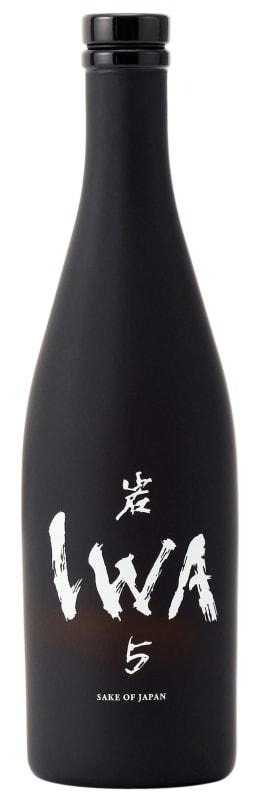


Winemaker Notes
The interplay of warmth, gravitas and tonicity expressed in Assemblage 5 is IWA’s unprecedented – somewhat avant-garde – proposition.
The aromas of pear, raspberry and plum blend with the notes of rose and jasmine. Such a complexity is heightened by the spicy freshness of pine and geranium. The contrast between palate and nose is engaging. There is a palpable duality of the pure well rounded fruity/floral aromatics and the archaic tactile presence of a gentle astringency. The silky and warm opening dissolves into a dry minerality and lingers with a vibrant touch of citron, white pepper and licorice.
IWA 5 has an intriguing capacity to pair with a great array of foods: the Sake has sort of a flexibility to invariably adjust itself right to the level of the food, sensibly, from the delicate to the robust, from light to dark flavors. IWA 5 can pair with successive dishes throughout one single meal.


Saké with the highest milling requirement at 50%, so that 50% of each grain of rice remains unmilled, is called Junmai Daiginjo. It is, just like Junmai and Junmai Ginjo, made up solely of water, koji mold, yeast and rice with no addition of alcohol. Since the categories of saké are determined by milling requirement (not rice variety), this is one of the most premium categories, along with Daiginjo. Pair Jumai Daiginjo with lighter fare such as sashimi or steamed fish.

The introduction of the waterwheel in the 17th century, which eliminated the need for the manual polishing of rice grains, allowed Japan to begin producing saké at an industrial level for its greater population. Today Japan remains at the cutting edge of technology in its brewing practices. However, the traditional methods of handcrafted, artisanal saké remain alive in smaller and often family-owned breweries. Many of these showcase local ingredients and focus on microclimates to make what is known as ‘jizake,’ or regional saké.