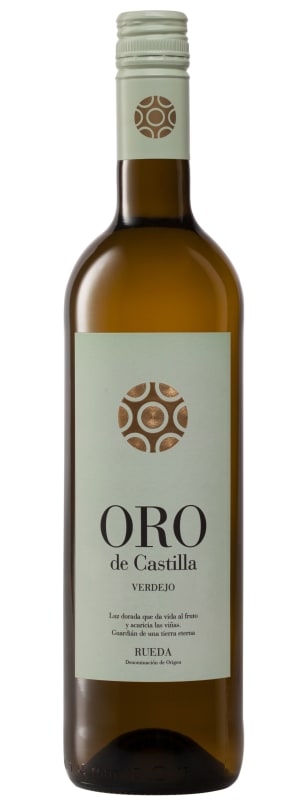


Winemaker Notes
A great pair would be sockeye salmon, Mahi Mahi, or flounder simply pan-fried in a beurre blanc, or plank roasted. Salads with grilled chicken, asparagus or toasted almonds would also pair well, as well as soft, ripe cheese.
Professional Ratings
-
Wine Enthusiast
Aromas of white peach, grapefruit and fresh parsley pave the way for pineapple, ripe summer peach and fennel-pollen flavors, with very soft touches of mint leaf. Bold acidity and a firm vein of minerality make for luscious mouthfeel and a sublime finish.


Captivating and full of character, Verdejo grows with great success in Rueda, Spain and virtually nowhere else in Europe. It has become so trendy in Spain since the turn of the century that plantings have also increased tremendously. Somm Secret—Contrary to what some may think, it is actually not related to the Portugese variety with a very similar name, Verdelho. In fact, DNA profiling suggests it may be a sibling of Godello, another native of NW Spain.

Rueda is located along the banks of the Duero River in Spain’s Castilla y León region, just a 2-hour drive north of Madrid. While winemaking in this area goes back to the 12th century, it was in the 1980s that the region was granted Denominación de Origen (D.O.) status. Today, more than 70 wineries call Rueda home. This national favorite is the top-selling white wine in Spain.
Notable facts Rueda’s main grape variety, Verdejo, gets it distinct complexity from stressful growing conditions and mineral-rich soil. Think of Verdejo as a fuller-bodied and more aromatic Sauvignon Blanc. A lush and smooth character with perfectly balanced acidity means Rueda wines pair well with seafood, fresh salads and spicy food, but are also great on their own.