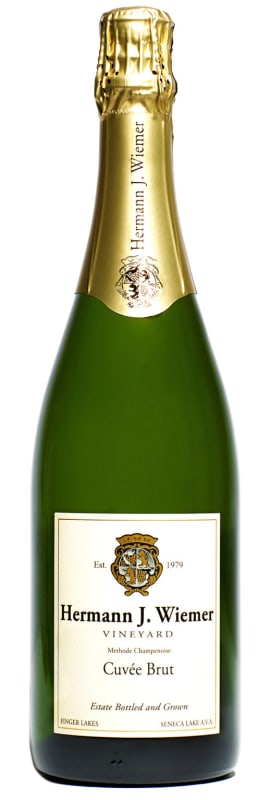


Winemaker Notes
Blend: 65% Chardonnay 35% Pinot Noir
Vegan-Friendly
Professional Ratings
-
James Suckling
What a vibrant and precise nose of lemon blossoms and brioche. So elegant and so creamy on the impeccably balanced palate, with great finesse. Very long, crystalline finish. Disgorged in March 2024 after 43 months on the lees in bottle. Drink or hold.
-
Robert Parker's Wine Advocate
The 2020 Cuvée Brut is a blend of 51% Chardonnay and 49% Pinot Noir that spent 45 months en tirage before being disgorged and given a minimal dosage of 2.5 grams per liter. It's medium-bodied, creamy and lush in the mouth, rounder and softer than the Blanc de Blanc, despite being practically the same dosage, with some meatiness to it, a hint of stone fruit and just a bit of citrus lingering on the finish.


Representing the topmost expression of a Champagne house, a vintage Champagne is one made from the produce of a single, superior harvest year. Vintage Champagnes account for a mere 5% of total Champagne production and are produced about three times in a decade. Champagne is typically made as a blend of multiple years in order to preserve the house style; these will have non-vintage, or simply, NV on the label. The term, "vintage," as it applies to all wine, simply means a single harvest year.

As the most historic wine-producing region in New York state, winemaking in the Finger Lakes area dates back to the 1820s and today as a region, accounts for 90% of the state’s total wine production.
Its narrow and deep lakes created by the movement of Ice Age glaciers create an environment similar to the classic Riesling-loving regions of Europe, namely Germany and Austria. The Finger Lakes retain summer heat that incidentally warms up cold winter air, making it fall down from the lakes’ steep slopes. When spring comes, the lakes, already cooled by cold winter weather, stave off vine budding until the danger of frost has subsided. The main lakes of the zone, that is those big enough to moderate the climate in this way, are the focal points of prime vineyard areas. They include Canandaigua, Keuka, Seneca and Cayuga.
While Riesling has fueled most of the region’s success, today Pinot Noir and Cabernet Franc enjoy some attention.