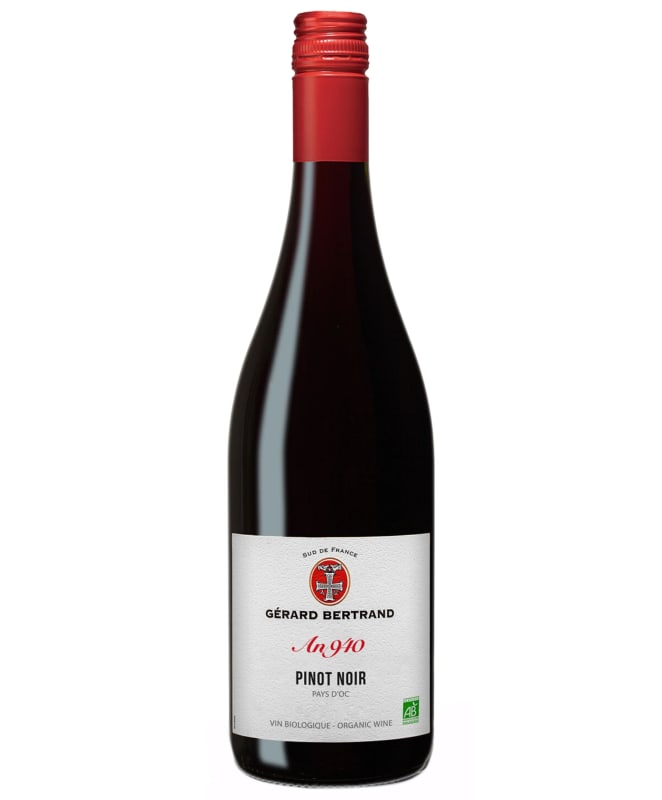


Winemaker Notes
The origins of the 'langue d'oc' language date back to around 940, in literary texts such as the poem 'La Passion de Clermont'. It subsequently became the Occitan language, a part of European culture transported by the traveling troubadours of the Middle Ages.
Ripe cherry aromas dominate on the nose, enhanced by delicate touches of wild raspberry and spice. On the palate, the ripeness of the cherries shines through, accompanied by a subtle toasted note that offers a welcome depth. The wine's silky texture and lingering finish make it a refined Pinot that perfectly balances fruity and toasted characteristics.
Serve with grilled lamb, pepperoni pizza or mature cheese.
Organically grown


Thin-skinned, finicky and temperamental, Pinot Noir is also one of the most rewarding grapes to grow and remains a labor of love for some of the greatest vignerons in Burgundy. Fairly adaptable but highly reflective of the environment in which it is grown, Pinot Noir prefers a cool climate and requires low yields to achieve high quality. Outside of France, outstanding examples come from in Oregon, California and throughout specific locations in wine-producing world. Somm Secret—André Tchelistcheff, California’s most influential post-Prohibition winemaker decidedly stayed away from the grape, claiming “God made Cabernet. The Devil made Pinot Noir.”

A sunny land braced by the influence of the Mediterranean Sea, the South of France extends from the French Riviera in the East to the rugged and mountainous Spanish border in the West. This expansive and stunning region remains the source of France's finest rosé and fortified wines, while the red and white wines continue to gain respect.
Provence, located farthest east, is revered for dry, elegant and quenching rosé wines, which make up the vast majority of the region’s production. These are typically blends of Mourvèdre, Grenache, Cinsault, Tibouren and other varieties.
Moving west from the Rhône Valley, spanning the Mediterranean coast to the Pyrenees mountains of Roussillon, Languedoc’s terrain is generally flat coastal plains. Virtually every style of wine is made in Languedoc; most dry wines are blends with varietal choice strongly influenced by the neighboring Rhône Valley.
Bordered by the rugged eastern edge of the Pyrenees Mountains and intense sunshine, Roussillon is largely defined by Spanish influence. The arid, exposed, steep and uneven valleys of the Pyrénées-Orientales zone guarantee that grape yields are low and berries are small and concentrated. While historically recognized for the vins doux naturels of Rivesaltes, Banyuls and Maury, the region’s dry reds are beginning to achieve the notoriety the deserve.
A catchall term for the area surrounding the Languedoc and Roussillon, Pays d’Oc is the most important IGP (Indication Géographique Protégée) in France, producing nearly all of France’s wine under the IGP designation.