


Winemaker Notes
Its appearance in the glass reveals golden highlights and an outstanding persistence and refined perlage. The nose is intense and immediately displays floral notes of jasmine, but also of quince, sweet oranges and gingerbread. The palate simply confirms the great richness suggested by the aromas. The flavor is creamy but still vibrant, rendered almost interminable by an appealing iodized vein. The finish returns to notes of delicate spices and exotic fruit, which elongate its persistence and underline the extraordinary class of this wine.
Professional Ratings
-
Decanter
Grapes from the family's southwest-facing Maso Pianizza vineyard at around 600m above sea level are matured on the lees for more than 10 years – this 2010 was disgorged in 2022. Alpine flowers mingle with lanolin and honey scents, while the steely-fresh palate combines stone fruit and orange peel with patisserie and spice. The long finish showcases juicy lime and white peach. Still quite youthful, you're best leaving this alone for several more years.
-
Wine Enthusiast
White spring flower, bread crust, toasted nut and orange zest aromas form the nose. Smooth and elegantly structured, the palate shows the complexity of age and the freshness of a younger wine, delivering ripe yellow apple, pear, flinty mineral and hazelnut framed against a refined, continuous perlage. Fresh acidity keeps it focused and precise.





Mastering the art of Italian living is not difficult. Simply pop open a bottle of Ferrari, Italy’s most iconic sparkling wine, and you will find luxury, glamour, and undeniable quality in every sip.
Giulio Ferrari, a Trentino native, started his venerable sparkling wine house in 1902, after studying winemaking in France. Convinced that his native region’s terroir was ideal for growing Chardonnay, he produced three of his now best-known cuvées – Ferrari Brut, Perlé and Giulio Ferrari – as blanc de blancs. This innovative approach quickly paid off. Ferrari wines consistently receive some of Italy’s top accolades, including being awarded Tre Bicchieri 22 years in a row.
With its mountain viticulture (the Dolomites), Trentino is an area well-suited to the production of sparkling wines of great elegance and complexity. Large diurnal temperature range and high altitudes ensures high acidity and freshness in the grapes. With 300 acres of vineyards, Ferrari represents the largest estate in the Trentino region.
In 1952, Giulio Ferrari, having no children of his own, chose friend and local merchant Bruno Lunelli as successor for his beloved business. Today, the third generation of the Lunelli family is at the helm. Bruno Lunelli’s passion and entrepreneurial talent passed on to his sons, Franco, Gino and Mauro, who established Ferrari as the market leader in Italy and the nation’s celebratory wine par excellence. Production is in the hands of a capable team of eight winemakers and four agronomists, led by chief winemaker Marcello Lunelli. The pursuit of excellence in all areas of Ferrari production and management is an enduring family legacy with several cousins involved from the new generation: Marcello’s cousin, Matteo Lunelli, is the Chairman of Ferrari F.lli Lunelli SpA, Camilla Lunelli heads up global communications, and Alessandro Lunelli, an engineer by training, is responsible for planning and technical oversight. This generation leads the company with the aim of combining innovation and tradition, promoting Ferrari around the world as ambassadors of the Italian Art of Living.

Representing the topmost expression of a Champagne house, a vintage Champagne is one made from the produce of a single, superior harvest year. Vintage Champagnes account for a mere 5% of total Champagne production and are produced about three times in a decade. Champagne is typically made as a blend of multiple years in order to preserve the house style; these will have non-vintage, or simply, NV on the label. The term, "vintage," as it applies to all wine, simply means a single harvest year.
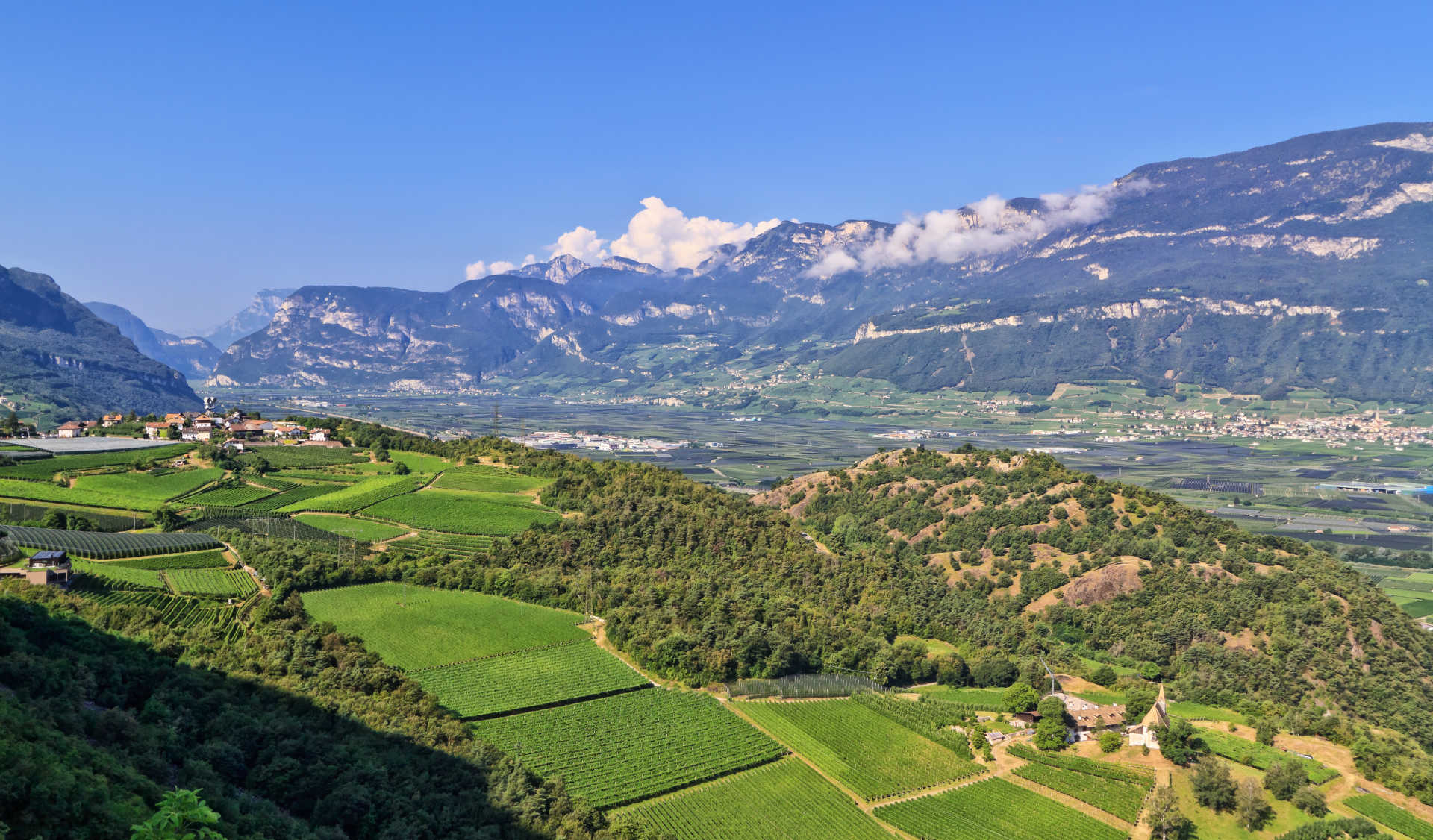
The southern part of Italy’s northeastern Alpine region, Trentino, produces quality wines from international varieties. But its most exceptional native variety, Teroldego, with plantings concentrated around the sandy, gravelly, limestone soils of its Campo Rotaliano district, makes a deep purple-hued red wine with scents and flavors of wild blackberry, herbs, espresso and cocoa.