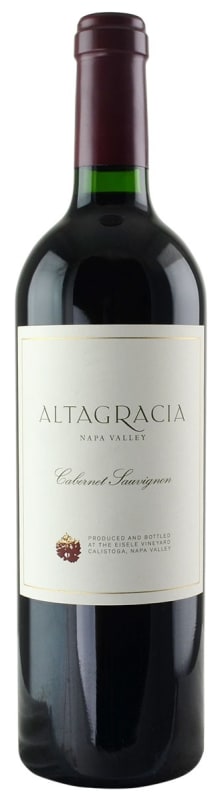


Winemaker Notes
Professional Ratings
-
James Suckling
Lots of sweet-tobacco, currant and coffee character, yet this remains refined and subtle. Mushroom undertones. Medium to full body, ultra-fine tannins and a velvety texture. Complex and fascinating. Spanish cedar all the way. Better in 2019.
-
Wine Spectator
Plum and blackberry compote flavors give this up-front appeal, with licorice root, sagebrush and singed juniper notes adding textural and aromatic range for greater intrigue. Solidly built through the finish, with the fruit and earthy herb elements working harmoniously. Best from 2020 through 2034.



When we arrived at Araujo Estate in 2013, forty vintages had already carried the Eisele Vineyard designation. We admire and respect these wines immensely. Their exceptional balance, elegance and restraint spoke to us, and we found the expression of terroir to be pure, honest and unmistakable. We were captivated and humbled, knowing that giving voice to this place would be both a privilege and a challenge.
As we continue to write the history of Eisele Vineyard, we build on the spirit of stewardship that defines its past. Our journey here is an exploration, a quest to understand this vineyard more deeply — its geologic construct, the variations in terroir, and the nature of its ancient soils. Changes, when considered, are only in service to letting the terroir speak more clearly. To this work, our experienced team brings creativity, curiosity, and an unflagging passion for excellence.

One of the most prestigious wines of the world capable of great power and grace, Napa Valley Cabernet is a leading force in the world of fine, famous, collectible red wine. Today the Napa Valley and Cabernet Sauvignon are so intrinsically linked that it is difficult to discuss one without the other. But it wasn’t until the 1970s that this marriage came to light; sudden international recognition rained upon Napa with the victory of the Stag’s Leap Wine Cellars 1973 Cabernet Sauvignon in the 1976 Judgement of Paris.
Cabernet Sauvignon undoubtedly dominates Napa Valley today, covering half of the land under vine, commanding the highest prices per ton and earning the most critical acclaim. Cabernet Sauvignon’s structure, acidity, capacity to thrive in multiple environs and ability to express nuances of vintage make it perfect for Napa Valley where incredible soil and geographical diversity are found and the climate is perfect for grape growing. Within the Napa Valley lie many smaller sub-AVAs that express specific characteristics based on situation, slope and soil—as a perfect example, Rutherford’s famous dust or Stags Leap District's tart cherry flavors.