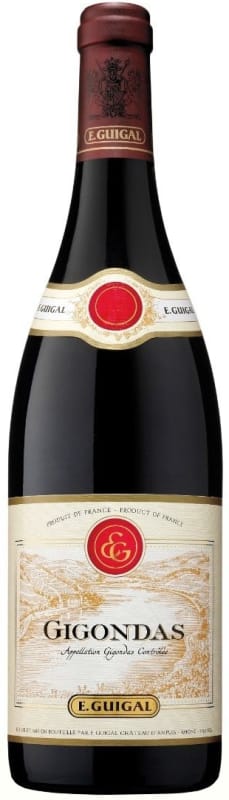


Winemaker Notes
#76 Wine Enthusiast Top 100 Wines of 2019
Purple in color with an intense nose dominated by peach and apricot with liquorice and notes of undergrowth. Generous, powerful and full-bodied with a long elegant finish. A frank attack, racy with soft tannic structure.
Blend: 70% Grenache, 20% Syrah, and 10% Mourvèdre.
Professional Ratings
-
Wine Enthusiast
Pert black-cherry and blackberry flavors are anchored by an invigorating granite backbone in this bold but elegant red. It's lush and silky in mouthfeel, augmented by feathery tannins and sunny acidity, but maintains a vitality and earthen complexity that should hold well through 2025.
-
James Suckling
This offers ripe and brambly red plum and darker berry aromas with earth, pepper and spice, too. The palate has quite a punchy feel with meaty tannins, carrying darker plum and berry flavors. Drink or hold.
-
Robert Parker's Wine Advocate
The 2015 Gigondas is remarkable for its elegance. Sourced largely from higher-altitude vineyards, it's evolved in a red-fruited direction, offering cranberry and cherry notes accented by hints of clove and allspice. Medium to full-bodied, with a creamy mid-palate and silky tannins on the finish, it drinks well now and should continue to do so for at least another 6-7 years.
-
Jeb Dunnuck
While not from the northern Rhône, I’m always able to taste the Guigal releases from the Southern Rhône during my visit. It’s worth noting that these are all from purchased grapes, and the Guigals are known for paying more than anyone else in the region to ensure the quality. The 2015 Gigondas is a winner that offers lifted notes of cedarwood, white pepper, and Christmas spice as well as plenty of red and black fruits. Medium to full-bodied, with ripe tannins, drink it over the coming 8-10 years.



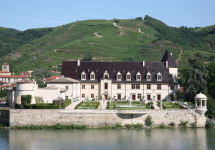
The Guigal domain was founded in 1946 by Etienne Guigal in the ancient village of Ampuis, home of the wines of the Côte-Rôtie. In these vineyards that are over 2400 years old, you can still see the small terraced walls characteristic of the Roman period. Etienne Guigal arrived in this region in 1923 at the age of 14. He made wine for over 67 vintages and, at the beginning of his career, participated in the development of the Vidal-Fleury establishment.
Despite his young age, Marcel Guigal took over from his father in 1961 when the latter was victim to a brutal illness rendering him blind. Marcel's hard work and perseverance enabled the Guigals to buy out Vidal-Fleury in 1984, although the establishment retains its own identity and commercial autonomy. In 2000, the Guigals purchased the Jean-Louis Grippat estate in Saint-Joseph and Hermitage, as well as the Domaine de Vallouit in Côte-Rôtie, Hermitage, Saint-Joseph and Crozes-Hermitage.
In the cellars of the Guigal estate in Ampuis, the northern appellations of the Rhône Valley are produced and aged. These are the appellations of Côte-Rôtie, Condrieu, Hermitage, Saint-Joseph and Crozes-Hermitage. The great appellations of the Southern Rhône, Chateauneuf-du-Pape, Gigondas, Tavel and Côtes-du-Rhône, are also aged in the Ampuis cellars.

With bold fruit flavors and accents of sweet spice, Grenache, Syrah and Mourvèdre form the base of the classic Rhône Red Blend, while Carignan, Cinsault and Counoise often come in to play. Though they originated from France’s southern Rhône Valley, with some creative interpretation, Rhône blends have also become popular in other countries. Somm Secret—Putting their own local spin on the Rhône Red Blend, those from Priorat often include Merlot and Cabernet Sauvignon. In California, it is not uncommon to see Petite Sirah make an appearance.

The Southern Rhône region of Gigondas extends northwest from the notably jagged wall of mountains called the Dentelles di Montmirail, whose highest point climbs to about 2,600 feet. The region and its wines have much in common with the neighboring Chateauneuf-du-Pape except that the vineyards of Gigondas exist at higher elevation and its soils, comprised mainly of crumbled limestone from the Dentelles, often produce a more dense and robust Grenache-based red wine.
The region has a history of fine winemaking, extending back to Roman times. But by the 20th century, Gigondas was merely lumped into the less distinct zone of Côtes du Rhône Villages. However, it was first among these satellite villages to earn its own appellation, which occurred in 1971.
Gigondas reds must be between 50 to 100% Grenache with Syrah and Mourvèdre comprising the bulk of the remainder of the blend. They tend express rustic flavors and aromas of wild blackberry, raspberry, fig, plum, as well as juniper, dried herbs, anise, smoke and river rock. The best are bold but balanced, and finish with impressively sexy and velvety tannins.
The Gigondas appellation also produces rosé but no white wines.