


Winemaker Notes
Professional Ratings
-
Vinous
Full ruby color. The deeply perfumed nose showcases cherry, dark berries, licorice, savory herbs and olive notes. Concentrated, spice-laced cassis, cherry-cola and candied lavender flavors smoothly blend depth and vivacity. Polished tannins come in slowly on a very long, penetrating finish that strongly repeats the cherry and floral notes.
-
Wine Enthusiast
This wine provides a wonderful introduction to the region, especially for the price-point within its class. Juicy ripe rhubarb, wild strawberry, blackberry and savory herbs coat the palate with an impressive saline finish. Enjoy its youthful concentration now or cellar through 2030+.
-
Robert Parker's Wine Advocate
Strawberries and raspberries join olives and green hay on the nose of the 2019 Gigondas. It's a solid example of the appellation, showcasing the elegant side of the stylistic spectrum—not something that I always associate with the Guigal name, but there it is. Medium to full-bodied.
-
Jeb Dunnuck
The 2019 Gigondas is terrific, with a more medium-bodied, elegant style as well as lots of red and black fruits, spice, incense, and garrigue. It's a Southern Rhône charmer yet has balance, fine tannins, and certainly a sense of class.
-
James Suckling
Aromas of black licorice, charred rosemary, coriander and plums. Full-bodied with silky tannins. Generous fruit on the palate with steady balance and intensity.
-
Wine Spectator
Understated style, with light incense and worn cedar notes running along the edges of the slightly dried currant, raspberry and red cherry fruit flavors. The cedary edge lingers longest in the end. Grenache, Syrah and Mourvèdre.



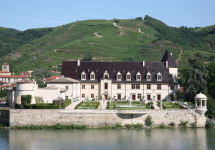
The Guigal domain was founded in 1946 by Etienne Guigal in the ancient village of Ampuis, home of the wines of the Côte-Rôtie. In these vineyards that are over 2400 years old, you can still see the small terraced walls characteristic of the Roman period. Etienne Guigal arrived in this region in 1923 at the age of 14. He made wine for over 67 vintages and, at the beginning of his career, participated in the development of the Vidal-Fleury establishment.
Despite his young age, Marcel Guigal took over from his father in 1961 when the latter was victim to a brutal illness rendering him blind. Marcel's hard work and perseverance enabled the Guigals to buy out Vidal-Fleury in 1984, although the establishment retains its own identity and commercial autonomy. In 2000, the Guigals purchased the Jean-Louis Grippat estate in Saint-Joseph and Hermitage, as well as the Domaine de Vallouit in Côte-Rôtie, Hermitage, Saint-Joseph and Crozes-Hermitage.
In the cellars of the Guigal estate in Ampuis, the northern appellations of the Rhône Valley are produced and aged. These are the appellations of Côte-Rôtie, Condrieu, Hermitage, Saint-Joseph and Crozes-Hermitage. The great appellations of the Southern Rhône, Chateauneuf-du-Pape, Gigondas, Tavel and Côtes-du-Rhône, are also aged in the Ampuis cellars.

With bold fruit flavors and accents of sweet spice, Grenache, Syrah and Mourvèdre form the base of the classic Rhône Red Blend, while Carignan, Cinsault and Counoise often come in to play. Though they originated from France’s southern Rhône Valley, with some creative interpretation, Rhône blends have also become popular in other countries. Somm Secret—Putting their own local spin on the Rhône Red Blend, those from Priorat often include Merlot and Cabernet Sauvignon. In California, it is not uncommon to see Petite Sirah make an appearance.

The Southern Rhône region of Gigondas extends northwest from the notably jagged wall of mountains called the Dentelles di Montmirail, whose highest point climbs to about 2,600 feet. The region and its wines have much in common with the neighboring Chateauneuf-du-Pape except that the vineyards of Gigondas exist at higher elevation and its soils, comprised mainly of crumbled limestone from the Dentelles, often produce a more dense and robust Grenache-based red wine.
The region has a history of fine winemaking, extending back to Roman times. But by the 20th century, Gigondas was merely lumped into the less distinct zone of Côtes du Rhône Villages. However, it was first among these satellite villages to earn its own appellation, which occurred in 1971.
Gigondas reds must be between 50 to 100% Grenache with Syrah and Mourvèdre comprising the bulk of the remainder of the blend. They tend express rustic flavors and aromas of wild blackberry, raspberry, fig, plum, as well as juniper, dried herbs, anise, smoke and river rock. The best are bold but balanced, and finish with impressively sexy and velvety tannins.
The Gigondas appellation also produces rosé but no white wines.