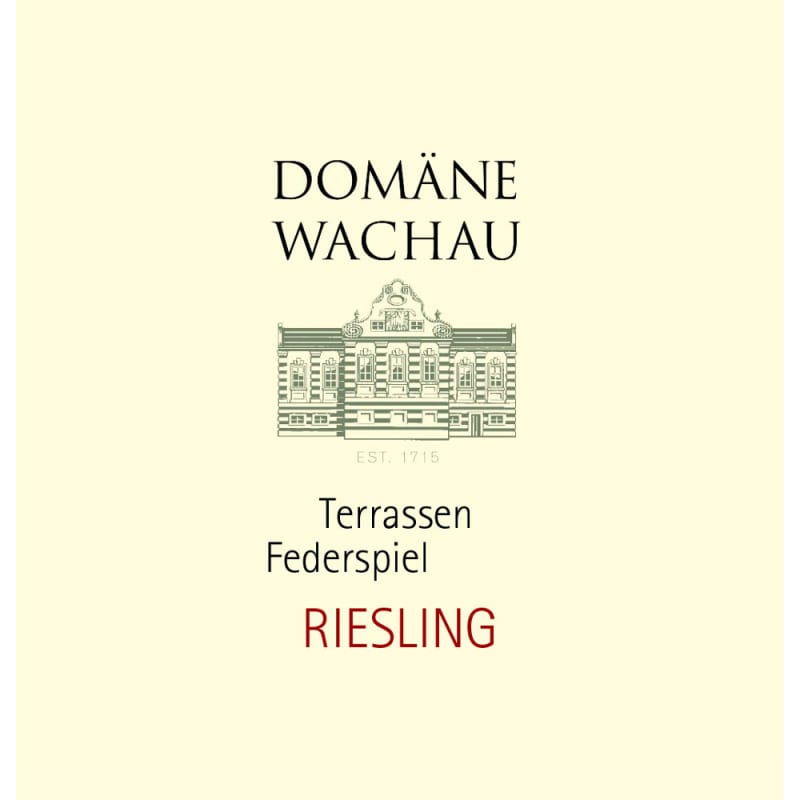

Winemaker Notes



Domane Wachau: Craftmanship, terroir and precision.
Craftsmanship, terroir, and precision are the key values of Domäne Wachau under the leadership of Roman Horvath MW and Heinz Frischengruber. Respect for nature and the soil dominates the vignerons' hard work in the steep terraced vineyards. With over 160 hectares of organic vineyards, Domäne Wachau is Austria's leading wine estate with organically cultivated vines.
Organized into small parcels and worked mainly by hand, each vigneron cultivates less than two hectares of vines on average. The families have often passed down the craft over generations, producing a tremendous wealth of knowledge about their vineyards and an uncompromising focus on each individual plot. This is a next generation wine cooperative, as found nowhere else on Earth. Winemaker Heinz Frischengruber knows every parcel personally. The vignerons harvest their terraced vineyards over multiple passes, exclusively by hand. No herbicides or pesticides are used. To the contrary, every effort is made to promote a diversity of flora and fauna, ensuring better ecological balance on the Wachau terraces. Based on these guiding principles, Domäne Wachau is considered a sustainability pioneer for the entire region.
Domäne Wachau wines reflect their grand terroir and deliver an unmistakably puristic style, with both depth and freshness — partly spontaneously fermented and with minimal addition of sulfur. The Wachau offers ideal conditions for origin-driven wines from grand single vineyards such as Achleiten, Bruck, and Kellerberg.

Riesling possesses a remarkable ability to reflect the character of wherever it is grown while still maintaining its identity. A regal variety of incredible purity and precision, this versatile grape can be just as enjoyable dry or sweet, young or old, still or sparkling and can age longer than nearly any other white variety. Somm Secret—Given how difficult it is to discern the level of sweetness in a Riesling from the label, here are some clues to find the dry ones. First, look for the world “trocken.” (“Halbtrocken” or “feinherb” mean off-dry.) Also a higher abv usually indicates a drier Riesling.

Appreciated for superior wines made from indigenous varieties, Austria should be on the radar of any curious wine drinker. A rather cool and dry wine growing region, this country produces wine that is quintessentially European in style: food-friendly with racy acidity, moderate alcohol and fresh fruit flavors.
Austria’s viticultural history is rich and vast, dating back to Celtic tribes with first written record of winemaking starting with the Romans. But the 20th century brought Austria a series of winemaking obstacles, namely the plunder of both world wars, as well as its own self-imposed quality breach. In the mid 1980s, after a handful of shameless vintners were found to have added diethylene glycol (a toxic substance) to their sweet wines to imitate the unctuous qualities imparted by botrytis, Austria’s credibility as a wine-producing country was compromised. While no one was harmed, the incident forced the country to rebound and recover stronger than ever. By the 1990s, Austria was back on the playing field with exports and today is prized globally for its quality standards and dedication to purity and excellence.
Grüner Veltliner, known for its racy acidity and herbal, peppery aromatics, is Austria's most important white variety, comprising nearly a third of Austrian plantings. Riesling in Austria is high in quality but not quantity, planted on less than 5% of the country’s vineyard land. Austrian Rieslings are almost always dry and are full of bright citrus flavors and good acidity. Red varietal wines include the tart and peppery Zweigelt, spicy and dense Blaufränkisch and juicy Saint Laurent. These red varieties are also sometimes blended.