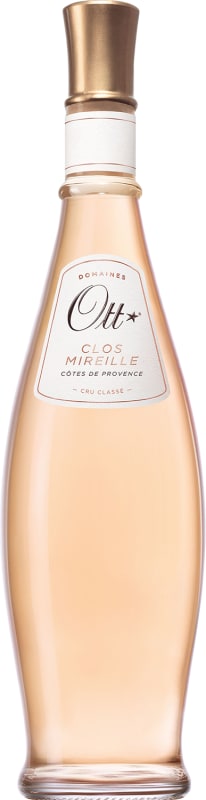


Winemaker Notes
The Clos Mireille Rosé is an expression of a blend of various grapes typical of the Côtes de Provence appellation: Grenache, the majority grape, chosen for its full-bodied texture, Cinsault for its well-known softness and Syrah for its fruity roundness.
The wine is a very pale pink highlighted, depending on the vintage, with golden, orange and even vermilion tints. Its bouquet reveals fresh fruit (mango, melon) punctuated with lemony notes. On the palate, its freshness develops through citrus aromas around a resolutely mineral core before ending with a subtly persistent finish.
Blend: 70% Grenache, 20% Cinsault, 10% Rolle (Vermentino)
Professional Ratings
-
Vinous
The 2022 Rosé Clos Mireille Cru Classé is dreamy, wafting up with a perfumed blend of nectarine, sweet white flowers and white strawberry. Like pure silk on the palate, this soothes with its ripe orchard fruits, which are gently contrasted by a bitter tinge of sour citrus as juicy acidity adds fleshy depths. The 2022 cleans up beautifully as inner florals and confectionary spice echo throughout. This is a gorgeous Rosé today, yet it should evolve beautifully for years.
Rating:93+ -
Wine & Spirits
Grown from the Otts’ seaside property, this wine is round, ripe and powerful. Its slightly dusty tannins make me want for sausages—boudin blanc, bratwurst, even merguez—and there’s enough acidity to balance the richness. It carries its pedigree in the tannins, a rosé for the dinner table, serious, elegant and fun, like a fine-dining restaurant that puts a few tables out on the terrace in the summer and likes to sell caviar before dinner.
-
Wine Enthusiast
From an estate close to the sea, the wine always has a slightly saline character that gives a fragrance. It is rich, dense and full of red and tropical fruits.
-
Decanter
From vineyards touching the seashore, the maritime breezes seem to have contributed an extra crispness and a touch of sea salt. Floral notes, white stone fruit and dried hay aromatics lead on to crunchy red berries, cherries and juicy white stone fruit. Wild hedgerow acidity, gentle textured chalkiness, saline minerality and more vibrant red fruit. Fabulous concentration and ripeness with a lasting finish that combines pretty fruit with austere minerality.
-
Robert Parker's Wine Advocate
Instantly brilliant in the glass, the 2022 Cotes de Provence Rose Clos Mireille, a blend of 70% Grenache, 20% Cinsault and the balance of Rolle (or Vermentino), exhales aromas of red berries, lemon, peach, guava and hints of curry leaf. On the palate, the wine is medium-bodied, combining fine acidity and a salty, penetrating, mouthwatering finish. It’s one of the more gourmand, fleshy, generous wines in the Domaines Ott range.
-
Wine Spectator
This stylish, weighty rose is very refreshing, thanks to tangerine acidity, supported by a vein of minerality. Shows white peach and grapefruit notes that are nicely broad, with salt and flint shoring up the finish. Grenache, Cinsault and Syrah. Drink now through 2027. 1,554 cases imported.





In 1896, after a tour of France’s many vineyards, Marcel Ott, a young graduate in agronomy engineering, finally found an estate that inspired him. To set the scene, we are in Provence. The Mediterranean is lapping at the shore a mere stone’s throw away...
In these parts, growing vines is the legacy of ancient times. Alas, a short while before Marcel Ott’s discovery, phylloxera had wreaked havoc on the vines. The land was cheaper, but the vineyards would have to be replanted. The wine had lost a great deal of its soul in the vineyard’s reconstruction. Marcel Ott bought several estates and began renovating them with the determined ambition to create great Provencal wines from noble grape varieties.
Today, 120 years later, cousins Christian and Jean-François Ott dedicate their life to their ancestor’s love for the site. In 2004, Domaines Ott joined Louis Roederer and its fabulous selection of wine craftsmen.
Christian and Jean-François run three estates: Château de Selle, Clos Mireille (both Côtes de Provence) and Château Romassan (Bandol). Each of these properties has its own individual charm and personality. Each can be proud of their extremely elegant rosé, red and white wines.

Whether it’s playful and fun or savory and serious, most rosé today is not your grandmother’s White Zinfandel, though that category remains strong. Pink wine has recently become quite trendy, and this time around it’s commonly quite dry. Since the pigment in red wines comes from keeping fermenting juice in contact with the grape skins for an extended period, it follows that a pink wine can be made using just a brief period of skin contact—usually just a couple of days. The resulting color depends on grape variety and winemaking style, ranging from pale salmon to deep magenta.

More than just a European vacation hotspot and rosé capital of the world, Provence, in southeastern France, is a coastal appellation producing interesting wines of all colors. The warm, breezy Mediterranean climate is ideal for grape growing and the diverse terrain and soil types allow for a variety of wine styles within the region. Adjacent to the Rhône Valley, Provence shares some characteristics with this northwestern neighbor—namely, the fierce mistral wind and the plentiful wild herbs (such as rosemary, lavender, juniper and thyme) often referred to as garrigue. The largest appellation here is Côtes de Provence, followed by Coteaux d’Aix-en-Provence.
Provence is internationally acclaimed for dry, refreshing, pale-hued rosé wines, which make up the vast majority of the region’s production. These are typically blends, often dominated by Mourvèdre and supplemented by Grenache, Cinsault, Tibouren and other varieties.
A small amount of full-bodied, herbal white wine is made here—particularly from the Cassis appellation, of Clairette and Marsanne. Other white varieties used throughout Provence include Roussane, Sémillon, Vermentino (known locally as Rolle) and Ugni Blanc.
Perhaps the most interesting wines of the region, however, are the red wines of Bandol. Predominantly Mourvèdre, these are powerful, structured, and ageworthy wines with lush berry fruit and savory characteristics of earth and spice.