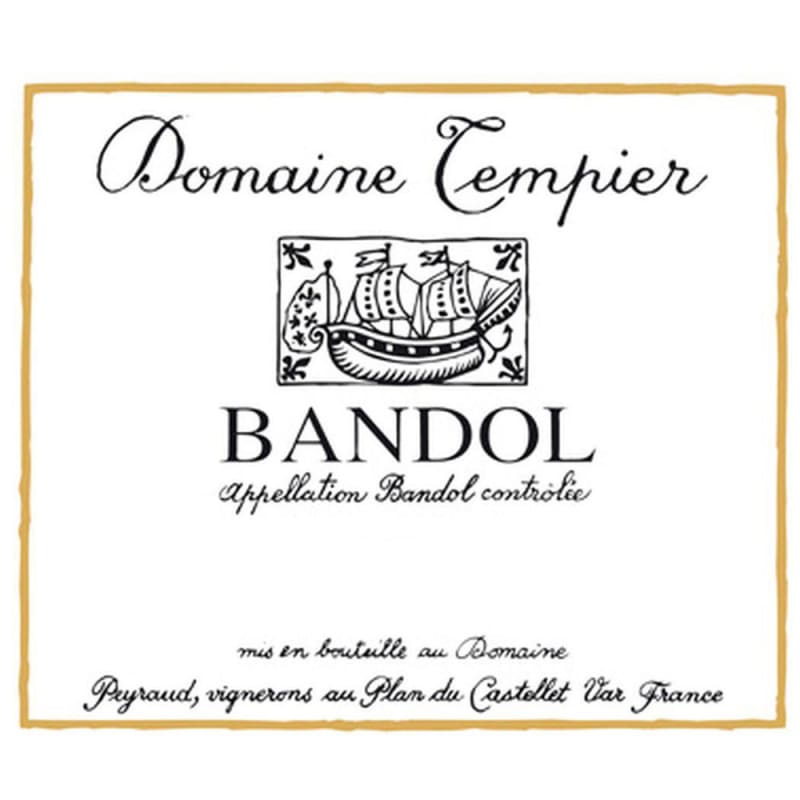

Winemaker Notes
The Cuvée Classique blend combines grapes from the estate’s different terroirs. In the area known as ‘Le Petit Moulin de la Cadière’, named after its windmill, the vines grow on south-facing terraces stretching out over hilly terrain. The soil in this part of the vineyard is characterized by the presence of fossilized seashells (85 million-year-old bivalve mollusks). Clay is found to varying depths throughout the estate’s soil and, although the clay is quite dense, alluvial layers comprised of silt-sand sediment deposits are also present. One might think these looser layers in the soil would have little influence on the wine, but in fact, they provide excellent drainage which helps to produce very refined wines.
Professional Ratings
-
Wine & Spirits
Since Daniel Ravier took over winemaking at Tempier in 2000, he’s cleaned the old barrels and moved the winery from organic farming toward biodynamics, but otherwise his style holds firmly to the one Lucian Peyraud established after acquiring the estate in 1940. He blends Tempier’s basic Bandol from various terroirs within the estate’s 98 acres, adding a little grenache, cinsault and carignan to the mourvèdre that makes up three-quarters of the wine. The 2014 is dark and earthy, with chocolate density to the plummy fruit and pleasantly gravelly tannins. As it takes on air, notes of garrigue and roasted meat appear, as well as an acidity that recalls plum skin in its firmness and crunch. If you open it now, decant it an hour before serving; it should age well over the next five to ten years.
-
Robert Parker's Wine Advocate
An impressive barrel sample, the 2014 Bandol Cuvee Classique shows surprising depth and concentration in the vintage. Notes of dark fruits, mineral and peppery, Provencal herbs all emerge from this medium to full-bodied, beautifully pure, elegant 2014 that should drink reasonably well on release.
Range: 89-92 -
Wilfred Wong of Wine.com
A wine for true aficionados, the 2014 Domaine Tempier Bandol Rouge delivers a potpourri of wonderfully enticing flavors—wet stones, black fruits, forest floor, and other wild nuances. This delicious wine invites a pairing of roast chicken with an accent of herbs de Provence. (Tasted: February 27, 2017, San Francisco, CA)


Full of ripe fruit, and robust, earthy goodness, Mourvèdre is actually of Spanish provenance, where it still goes by the name Monastrell or Mataro. It is better associated however, with the Red Blends of the Rhône, namely Chateauneuf-du-Pape. Mourvèdre shines on its own in Bandol and is popular both as a single varietal wine in blends in the New World regions of Australia, California and Washington. Somm Secret—While Mourvèdre has been in California for many years, it didn’t gain momentum until the 1980s when a group of California winemakers inspired by the wines of the Rhône Valley finally began to renew a focus on it.

Provence’s leader in concentrated and age-worthy red wines, Bandol is home to the dense, deep and earthy Mourvèdre grape. Like Châteauneuf-du-Pape, Bandol produces characterful reds that, while approachable in their youth, are typically designed for the cellar.
Given its coastal, Provencal situation, Bandol also naturally produces an assortment of charming, aromatic rosés made of Mourvèdre, Grenache and Cinsault.