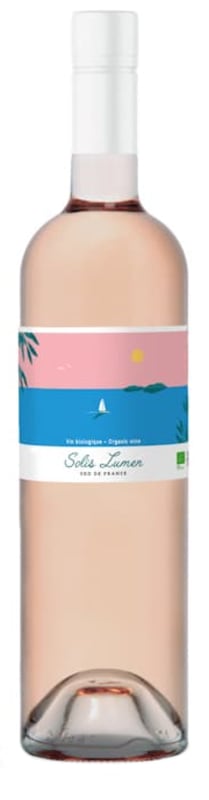


Winemaker Notes
Explosive cranberry, strawberry, and watermelon fruit on the nose and palate, with firm acidity and a dose of minerality. Silky richness in the mouth, with good complexity and extended length on the palate. A great sipper, this works well as an aperitif or with light fare.
Solis Lumen is Latin for "The Light of the Sun," a fundamental element of the Sud de France. The long hours of sunlight allow the wine to reach its full potential and is an important feature of the Southern French lifestyle.
Blend: 80% Grenache, 20% Cinsault
*Receive one of six possible labels
*Specific labels cannot be requested
Professional Ratings
-
Wilfred Wong of Wine.com
COMMENTARY: The 2021 Domaine Montrose Solis Lumen Rosé is bright and zesty on the palate. TASTING NOTES: This wine offers aromas and flavors of mineral notes and tart red fruits. Enjoy it as an aperitif or with small pass-around plates before dinner. (Tasted: August 2, 2022, San Francisco, CA)


Montrose is located in the South of France in the Languedoc, a few kilometers from Pézenas and the Mediterranean Sea. Solis Lumen is Latin for "The Light of the Sun," a fundamental element of the Sud de France. The long hours of sunlight here allows the wine to reach its full potential and is an important feature of the Southern French lifestyle. The Coste family has made wine in the South of France, near the Mediterranean Sea since 1701.
"My family has made wine in the Languedoc for nine generations. The Mediterranean Sea, the wind and the sun are fundamental elements of our region. They shape our wines and participate in our South of France art de vivre. Our wines are carbon neutral. To preserve the planet, we use lightweight eco-friendly bottles and we measure, reduce and compensate 100% of our carbon emissions." - Olivier Coste, Owner & Winemaker

Whether it’s playful and fun or savory and serious, most rosé today is not your grandmother’s White Zinfandel, though that category remains strong. Pink wine has recently become quite trendy, and this time around it’s commonly quite dry. Since the pigment in red wines comes from keeping fermenting juice in contact with the grape skins for an extended period, it follows that a pink wine can be made using just a brief period of skin contact—usually just a couple of days. The resulting color depends on grape variety and winemaking style, ranging from pale salmon to deep magenta.

A catchall term for the area surrounding the Languedoc and Roussillon, Pays d’Oc is the most important IGP (Indication Géographique Protégée) in France, producing 85% of this country’s wine under the IGP designation. (IGP indicates wine of good quality, not otherwise elevated to the Appellation d'Origine Contrôlée (AOC) status.)
The near perfect Mediterranean climate combined with dry, cool winds from the north, optimal soils, altitudes and exposures make Pays d’Oc an ideal wine growing region. Single varietal wines and blends are possible here and while many types of grapes do well in Pays d’Oc, Chardonnay, Pinot Noir, Grenache and Cinsault are among the most common.