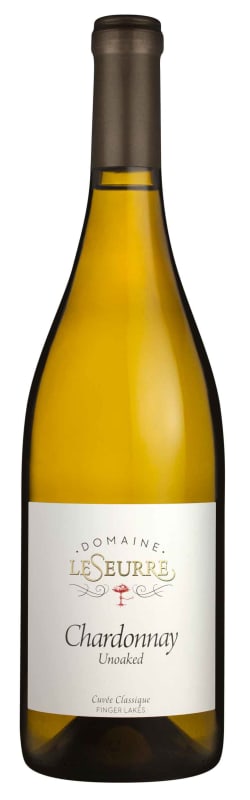


Winemaker Notes
Pairs well with Coquilles St. Jacques à la Provençale (Traditional French Scallops Provencale)
Professional Ratings
-
Robert Parker's Wine Advocate
The 2017 Chardonnay Cuvée Classique is all unoaked, aged only in stainless steel for ten months. This is sourced from two different sites, both with west-southwest exposures but with different soil makeup: one terroir (planted in 1971) is only shale stone, while the other terroir (planted in 1999) has a mix of shale stone & clay. This is supposedly the producer's lower level, but its fruit is so beautiful, ripe, pulpy and delicious that it is hard to resist. There's a hint of flint, but not much. It has the structure to linger on the finish. It seems to have the freshness to allow it to age. The owner-winemaker says it can do ten years. I tend to agree, but let's be a little cautious to start out with. The freshness and fruit here combine to make something irresistible. This is just a little understated, but the more I had of it, the more I liked it for its balance, flavor and freshness. It's a nice value too. There were 580 cases produced.


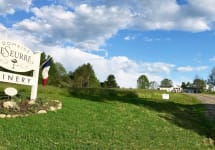
When Céline and Sébastien LeSeurre opened their doors at Domaine LeSeurre Winery on 13th of October 2013, it was another step in a long and interesting voyage that started in France. Sébastien was raised in the Champagne region (northeast France), where his family had been growing grapes and making wine for 6 generations. After studying viticulture and oenology for 6 years in Champagne and wine and spirits sales and marketing in Reims for a year, he began his world travels. Céline was born in the Toulouse region (southwest France), and grew up around her grandparents' vineyard located in the foothills of the Pyrénées. From 2002 until 2005, she took sommelier classes and graduated with a Degree in Hospitality and Tourism from Taylor’s College in Kuala Lumpur, Malaysia.
Between the two of them, Céline and Sébastien have worked on 23 vintages in various regions of France, Australia, New Zealand, and the United States. Their approach to winemaking is to use a mix of old world traditions and new world techniques to bring out the fullest expression of the Finger Lakes terroir that is possible. Since they know good wine starts in the vineyard, they travel extensively around the region looking for the best Terroirs and grapes, and they stay close to the vineyards during the growing season. As harvest approaches, they taste regularly—every two or three days—and it is taste and taste alone that guides their picking decisions. They do not rely on measuring brix or PH as most winemakers do, they use their experience and in depth knowledge to craft these special wines that showcase their unique terroir.

One of the most popular and versatile white wine grapes, Chardonnay offers a wide range of flavors and styles depending on where it is grown and how it is made. While it tends to flourish in most environments, Chardonnay from its Burgundian homeland produces some of the most remarkable and longest lived examples. California produces both oaky, buttery styles and leaner, European-inspired wines. Somm Secret—The Burgundian subregion of Chablis, while typically using older oak barrels, produces a bright style similar to the unoaked style. Anyone who doesn't like oaky Chardonnay would likely enjoy Chablis.

As the most historic wine-producing region in New York state, winemaking in the Finger Lakes area dates back to the 1820s and today as a region, accounts for 90% of the state’s total wine production.
Its narrow and deep lakes created by the movement of Ice Age glaciers create an environment similar to the classic Riesling-loving regions of Europe, namely Germany and Austria. The Finger Lakes retain summer heat that incidentally warms up cold winter air, making it fall down from the lakes’ steep slopes. When spring comes, the lakes, already cooled by cold winter weather, stave off vine budding until the danger of frost has subsided. The main lakes of the zone, that is those big enough to moderate the climate in this way, are the focal points of prime vineyard areas. They include Canandaigua, Keuka, Seneca and Cayuga.
While Riesling has fueled most of the region’s success, today Pinot Noir and Cabernet Franc enjoy some attention.