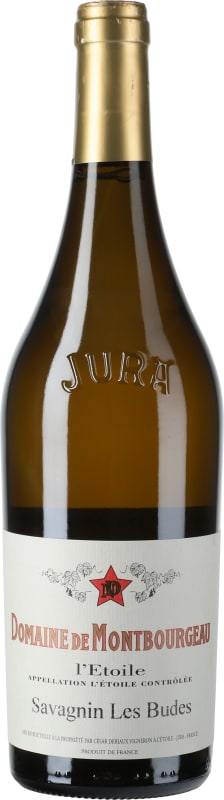


Winemaker Notes
From a 1970 planting in grey marl at the upper part of a southwest-facing slope in L'Etoile, “Les Budes” ferments spontaneously and spends 18 months in used 500-liter barrels before being bottled without fining or sterile filtration. Topped up during its elevage, it trades the oxidative breadth of the estate’s traditional Savagnin for a luscious, kinetic interplay of fruit, salt, and ripping acid, and a note of briny umami builds on the wine’s ultra-long finish.
Professional Ratings
-
Robert Parker's Wine Advocate
I loved the expressive nose of mandarin peel of the 2021 L'Etoile Savagnin Ouillé Les Budes. The wine comes from a vineyard planted in 1998 on gray marl soils and from a very challenging vintage with frost and lots of mildew, which decimated the crop. This fermented and aged in 500-liter topped-up barrels for two years. It has precision and purity, elegance, balance and energy in the elegant house style. It has moderate ripeness and alcohol, 13%. Tasty, clean and long. Very good. 1,590 bottles produced. It was bottled in April 2023.


An ancient and genetically valuable vine variety with origins in NE France, Savagnin is a parent to many modern varieties but is most associated today with the Jura. It is responsible for a few styles of wine, the idiosyncratic Vin Jaune, a wine matured in barrel under a film of flor yeast and the sweet, concentrated Vin de Paille. Savagnin also makes a charming sparkling or still wine and is often found in blends with Chardonnay. Somm Secret—While Savagnin is an off-spring of Pinot, Savagnin is a parent of Chenin Blanc, Grüner Veltiner, Sauvignon Blanc, Silvaner and Trousseau.

On the foothills of the Jura Mountains, just east of the Cote de Beaune on the Switzerland border, the Jura wine-producing zone is recognized for its unique reds, as well as its particular and diverse styles of whites.
Though borrowed from their neighbor Burgundy, Chardonnay and Pinot noir have been growing in Jura since the Middle Ages. But here the altitude, topography, climate and clay-rich, marl soils support a different style of Pinot noir, not to mention its other deeply-colored, full-bodied indigenous reds, Poulsard and Trousseau.
Considering area under vine, growers here favor Chardonnay for its consistency and reliability; it comprises almost half of Jura's vineyard acreage. However, Jura Chardonnay is anything but boring; its many offbeat styles are part of what make region’s wines so distinctive. It is used for Cremant (sparkling), Macvin (a fortified wine), as well as fine examples at the quality level of Burgundy.
Jura also has a unique oxidative style for Chardonnay but is better recognized for its similarly-styled “vin jaune,” meaning ‘yellow wine,’ which is made from the indigenous variety, Savagnin. Vin jaune is made using techniques similar to those used to make Sherry.
For all of its wines, Jura favors a traditional, natural and often organic style in viticulture and winemaking.