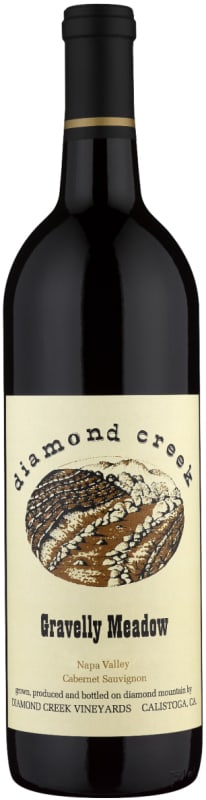


Winemaker Notes
Aromas of red fruits, cassis, lavender, and rosemary. Rich entry with blueberry, blackberry compote, expanding into licorice, orange peel, freshly tilled earth, and hints of cacao and mint. Persistent finish, densely textured with threaded acidity.
Blend: 78% Cabernet Sauvignon, 16% Merlot, 3% Petit Verdot, 2% Malbec, 1% Cabernet Franc
Professional Ratings
-
James Suckling
Aromatic with blackcurrant, ink, black licorice, iodine and oyster shell. Full-bodied with fine, chewy tannins and blue-fruit, currant-bush and rose-petal flavors. Very transparent. It goes on for minutes. Give this some time to soften, but already a genie in the bottle. Best After 2027
-
Robert Parker's Wine Advocate
The 2019 Cabernet Sauvignon Gravelly Meadow features scents of mocha and tree-bark-like oak, nicely highlighting bold cassis and blackberry fruit notes. Full-bodied, rich and velvety, it finishes long, with softly dusty tannins that linger elegantly.
Rating: 96+ -
Wine Spectator
Quite brambly in feel, with zesty acidity and a pronounced savory streak adding a perkiness to the mix of blackberry, black cherry and black currant fruit. Floral, anise and warm earth notes fill in on the finish. Feels a bit raw and untamed now, in the old-school style. Cellaring is required so this can modulate itself.
-
Connoisseurs' Guide
16% Merlot; 3% Petit Verdot; 2% Malbec; 1% Cabernet Franc. Ripe black cherry fruit is joined by a nice dollop of slight caramelly oak and a touch of dark chocolate on the nose here, and, while the wine is full and fleshy, it is governed by more ripeness than we are accustomed to finding in Diamond Creek Cabernets. It is intense, but it is also slightly hot, and it is more than tannic enough to demand no fewer than another six to eight years of age.


A noble variety bestowed with both power and concentration, Cabernet Sauvignon enjoys success all over the globe, its best examples showing potential to age beautifully for decades. Cabernet Sauvignon flourishes in Bordeaux's Medoc where it is often blended with Merlot and smaller amounts of some combination of Cabernet Franc, Malbecand Petit Verdot. In the Napa Valley, ‘Cab’ is responsible for some of the world’s most prestigious, age-worthy and sought-after “cult” wines. Somm Secret—DNA profiling in 1997 revealed that Cabernet Sauvignon was born from a spontaneous crossing of Cabernet Franc and Sauvignon Blanc in 17th century southwest France.

Diamond Mountain is the northernmost mountain appellation in the Mayacamas Range, on the northwest side of the valley floor, above the town of Calistoga. Defined mainly by elevation, vineyards are planted at 400 to 2,200 feet.
Diamond Mountain vineyards receive plenty of sunshine at these elevations and are typically above the coastal fog line. But given its western proximity, the area still easily cools down from early morning and late afternoon Pacific Ocean breezes. The AVA (American Viticultural Area) covers 5,000 acres but just over 500 acres are under vine.
Diamond Mountain soils, mainly weathered, red sedimentary rock and decomposed, volcanic ash, are infertile, quick-draining and produce small, thick-skinned grapes, bursting with chewy tannins.
Cabernet Sauvignon, Merlot, Cabernet Franc, Malbec, Petit Verdot and Zinfandel have great success here.
Like other sub-appellations in Napa Valley, the Diamond Mountain area had no shortage of pioneer winemakers. Rudy von Strasser led the effort for Diamond Mountain to acquire AVA status in 1999.