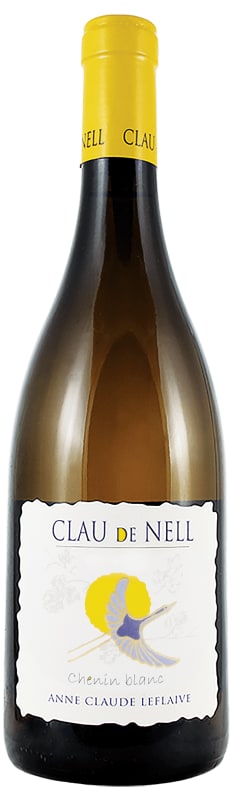


Winemaker Notes
Twelve months on fine lees in French oak, 5 vintage old casks. Aged in ancient troglodyte cellars cut into the limestone hillside on the property and then 6 months in stainless steel vat. Bottled without filtration or fining.
Blend: 100% Chenin Blanc
Professional Ratings
-
Robert Parker's Wine Advocate
The 2018 Chenin Blanc, from sandstone-silex and clay-limestone soils, displays an intense straw-yellow color and opens with an intense and complex, lemony chalky aroma with yeasty notes and a kiss of oak. On the palate, this is a full-bodied, textural, very elegant and finely tensioned Burgundian Chenin with a finely creamy sur lie texture, very fine tannins and refreshing lemon aromas. The wine is less pure and dramatic but also less alcoholic than the 2018 Chenins from Melaric in Puy Notre Dame, but it is textural, more haptic, gentle and very well elaborated. This is a great, lush and fruity but highly finessed Chenin, especially for this difficult year. Lovely lingering salinity and mineral grip. Tasted in June 2021.


Unquestionably one of the most diverse grape varieties, Chenin Blanc can do it all. It shines in every style from bone dry to unctuously sweet, oaked or unoaked, still or sparkling and even as the base for fortified wines and spirits. Perhaps Chenin Blanc’s greatest asset is its ever-present acidity, maintained even under warm growing conditions. Somm Secret—Landing in South Africa in the mid 1800s, today the country has double the acreage of Chenin Blanc planted compared to France. There is also a new wave of dedicated producers committed to restoring old Chenin vines.

Praised for its stately Renaissance-era chateaux, the picturesque Loire valley produces pleasant wines of just about every style. Just south of Paris, the appellation lies along the river of the same name and stretches from the Atlantic coast to the center of France.
The Loire can be divided into three main growing areas, from west to east: the Lower Loire, Middle Loire, and Upper/Central Loire. The Pay Nantais region of the Lower Loire—farthest west and closest to the Atlantic—has a maritime climate and focuses on the Melon de Bourgogne variety, which makes refreshing, crisp, aromatic whites.
The Middle Loire contains Anjou, Saumur and Touraine. In Anjou, Chenin Blanc produces some of, if not the most, outstanding dry and sweet wines with a sleek, mineral edge and characteristics of crisp apple, pear and honeysuckle. Cabernet Franc dominates red and rosé production here, supported often by Grolleau and Cabernet Sauvignon. Sparkling Crémant de Loire is a specialty of Saumur. Chenin Blanc and Cabernet Franc are common in Touraine as well, along with Sauvignon Blanc, Gamay and Malbec (known locally as Côt).
The Upper Loire, with a warm, continental climate, is Sauvignon Blanc country, home to the world-renowned appellations of Sancerre and Pouilly-Fumé. Pinot Noir and Gamay produce bright, easy-drinking red wines here.