


Winemaker Notes
#92 James Suckling Top 100 Wines of the World 2025
Blend: 90% Merlot, 10% Cabernet Franc
Professional Ratings
-
Robert Parker's Wine Advocate
Aromas of raspberries, a subtle hint of mint, rose petals and a subtle hint of crushed vitamin pills introduce the 2022 Mondot, a full-bodied, ample and layered wine that's pure, succulent and suave, with sweet tannins, juicy acids and a long, expansive finish. As readers may remember, the 2022 is a somewhat different beast from previous renditions, as it now incorporates some newly acquired holdings, spanning a wider variety of expositions and altitudes, and includes Cabernet Franc and Cabernet Sauvignon in addition to Merlot.
-
Jeb Dunnuck
the 2022 Château Troplong Mondot on two separate occasions, and it never failed to impress. A blend of 85% Merlot, 13% Cabernet Sauvignon, and 2% Cabernet Franc, it was raised in 55% new oak, with the balance in once-used barrels and foudre. It's an incredibly pure, precise, seamless Saint-Emilion that has vibrant black raspberry and darker cherry fruits as well as hints of graphite, spring flowers, and damp earth. This medium to full-bodied, layered, nicely concentrated 2022 has polished tannins, a lively spine of acidity, and flawless overall balance.
-
James Suckling
Hyper precision from the crushed-stone minerality here, with berries, spiced dark cherries, hibiscus and fresh plums. Extremely polished yet vivid, with fibrous, chalky tannins emitting vibrations before dissolving into a lengthy finish drenched with fruit. Concentrated but effortless.
-
Decanter
Lifted aromas, intense and inviting, blueberries, violets and iris floral notes. Sharp and buzzy, tangy and instantly so bright, this has an electricity to it, but not sour and not too razor like, with the salty stone elements coming through straight away contrasting the concentrated fruit and giving the tannins a cool fresh edge. Precise, clean and crisp but with juiciness and succulence and liquorice and graphite minerality on the finish, not spiced, but fresh and salty. Fun, confident, shiny, and totally drinkable.
Barrel Sample: 94 -
Wine Spectator
A sappy red, with kirsch and cassis notes tossed in with red licorice and apple wood. A flash of sweet tobacco pierces the juicy, slightly compact finish. Should unwind nicely in the cellar, as there's a bold mix of buried minerality and latent energy. Merlot, Cabernet Sauvignon and Cabernet Franc.
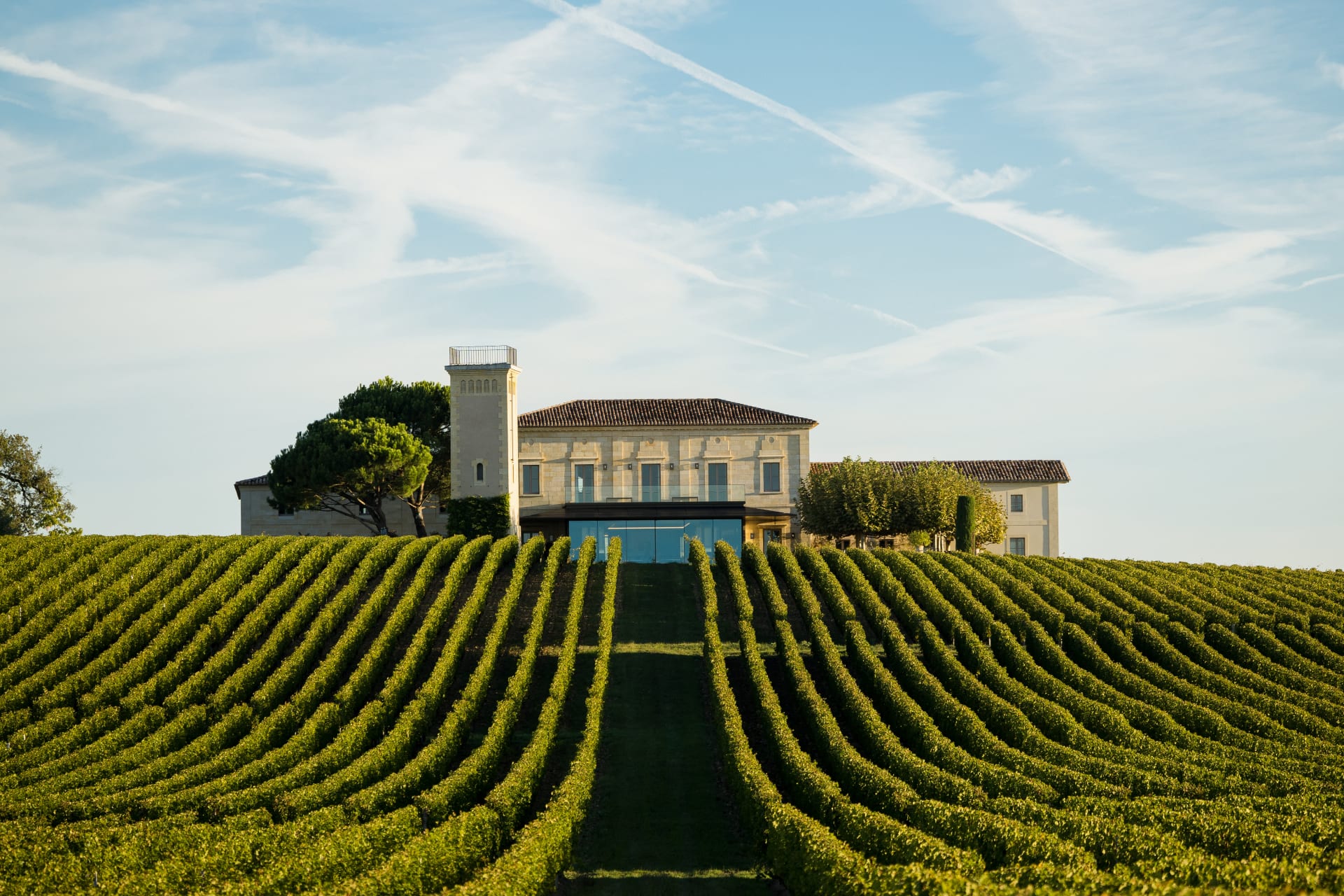



Premier Grand Cru Classe in Saint-Emilion, Chateau Troplong Mondot stands out with refinement, boasting a strong wine identity, a perfectly-controlled vineyard and an innate sense of welcoming. Located on the highet point of Saint-Emilion's famous limestone plateau, the 43-hectare estate held in one piece stands on some of the most enviable and unique terroirs of the Right Bank, with ideal geological conditions and exposure, The unique diversity of the soils is revealed through balanced wines combining strength and elegance, complexity and precision. Troplong Mondot's history has been enriched with charismatic and cultured figures who have led the estate towards excellence with a different vision. By trusting Aymeric de Gironde for the executive management, the company SCOR bring a fresh boost since 2017 while respecting the values and spirit of the estate.

One of the world’s most classic and popular styles of red wine, Bordeaux-inspired blends have spread from their homeland in France to nearly every corner of the New World. Typically based on either Cabernet Sauvignon or Merlot and supported by Cabernet Franc, Malbec and Petit Verdot, the best of these are densely hued, fragrant, full of fruit and boast a structure that begs for cellar time. Somm Secret—Blends from Bordeaux are generally earthier compared to those from the New World, which tend to be fruit-dominant.

Marked by its historic fortified village—perhaps the prettiest in all of Bordeaux, the St-Émilion appellation, along with its neighboring village of Pomerol, are leaders in quality on the Right Bank of Bordeaux. These Merlot-dominant red wines (complemented by various amounts of Cabernet Franc and/or Cabernet Sauvignon) remain some of the most admired and collected wines of the world.
St-Émilion has the longest history in wine production in Bordeaux—longer than the Left Bank—dating back to an 8th century monk named Saint Émilion who became a hermit in one of the many limestone caves scattered throughout the area.
Today St-Émilion is made up of hundreds of independent farmers dedicated to the same thing: growing Merlot and Cabernet Franc (and tiny amounts of Cabernet Sauvignon). While always roughly the same blend, the wines of St-Émilion vary considerably depending on the soil upon which they are grown—and the soils do vary considerably throughout the region.
The chateaux with the highest classification (Premier Grand Cru Classés) are on gravel-rich soils or steep, clay-limestone hillsides. There are only four given the highest rank, called Premier Grand Cru Classés A (Chateau Cheval Blanc, Ausone, Angélus, Pavie) and 14 are Premier Grand Cru Classés B. Much of the rest of the vineyards in the appellation are on flatter land where the soils are a mix of gravel, sand and alluvial matter.
Great wines from St-Émilion will be deep in color, and might have characteristics of blackberry liqueur, black raspberry, licorice, chocolate, grilled meat, earth or truffles. They will be bold, layered and lush.