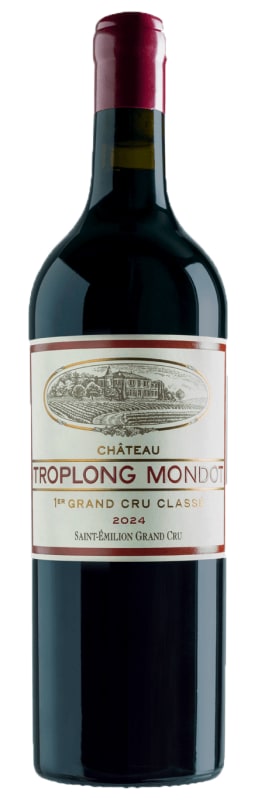


Winemaker Notes
Blend: 85% Merlot, 13% Cabernet Sauvignon, 2% Cabernet Franc
This wine does not include the blanket 10% tariff imposed in April 2025. When the wines are shippable in fall of 2027, customers will have the option to pay any tariff in place at the time or to keep their wines stored in a temperature-controlled facility free of charge in France.
Professional Ratings
-
Decanter
Super fragrant on the nose, ripe blackcurrant, some dried herbs, so much florality and perfumed fruit. Amazing aromatics, so complex. Rosehip, wild strawberries, red cherries, violets, milk chocolate and salty stones. Succulent and so supple, a juicy core with touches of sweetness and density. I also love the minerality that you get on the mid palate after a burst of bright red fruit. Almost plump then smoothes out with a long-lasting flavour. Ends with a moreish salivating aspect of mint, liquorice and wet stones. Tannins are so polished. This has excellent intensity. They achieved full ripeness with natural density but a finessed touch too. A delicious wine that puts a smile on your face but still multifaceted. Ageing 26% foudre, 55% new oak, the rest one year old barrels.
Barrel Sample: 96 -
Jeb Dunnuck
The Grand Vin 2024 Château Troplong Mondot is deeper hued than the Mondot and is based on 85% Merlot, 13% Cabernet Franc, and 2% Cabernet Sauvignon, aging in 55% new wood with portions in foudre and used barrels. It's a classic wine from this Château today that shows the focus on purity, precision, and elegance without being dilute or mid-weight. Black raspberries, spring flowers, spicy wood, and graphite all define the aromatics, and it's medium-bodied, has a pure, seamless, elegant mouthfeel, ultra-fine tannins, and a great finish. It's one of the standouts in the vintage on the right bank.
Barrel Sample: 94-96 -
James Suckling
A crunchy and vivid red with blackberry, black olive and walnut character. It’s medium- to full-bodied with medium-round tannins and a creamy, textured finish. I like the citrus and chalk undertones.
Barrel Sample: 94-95 -
Robert Parker's Wine Advocate
The 2024 Troplong Mondot is a beauty, wafting from the glass with aromas of dark berries and licorice mingled with hints of violet and lavender. Medium to full-bodied, dense and deep, it's one of the more layered and muscular wines of the vintage, a quality this terroir seems to invariably deliver, with sweet tannins and lively acids, concluding with a long, expansive finish.
Barrel Sample: 93-95
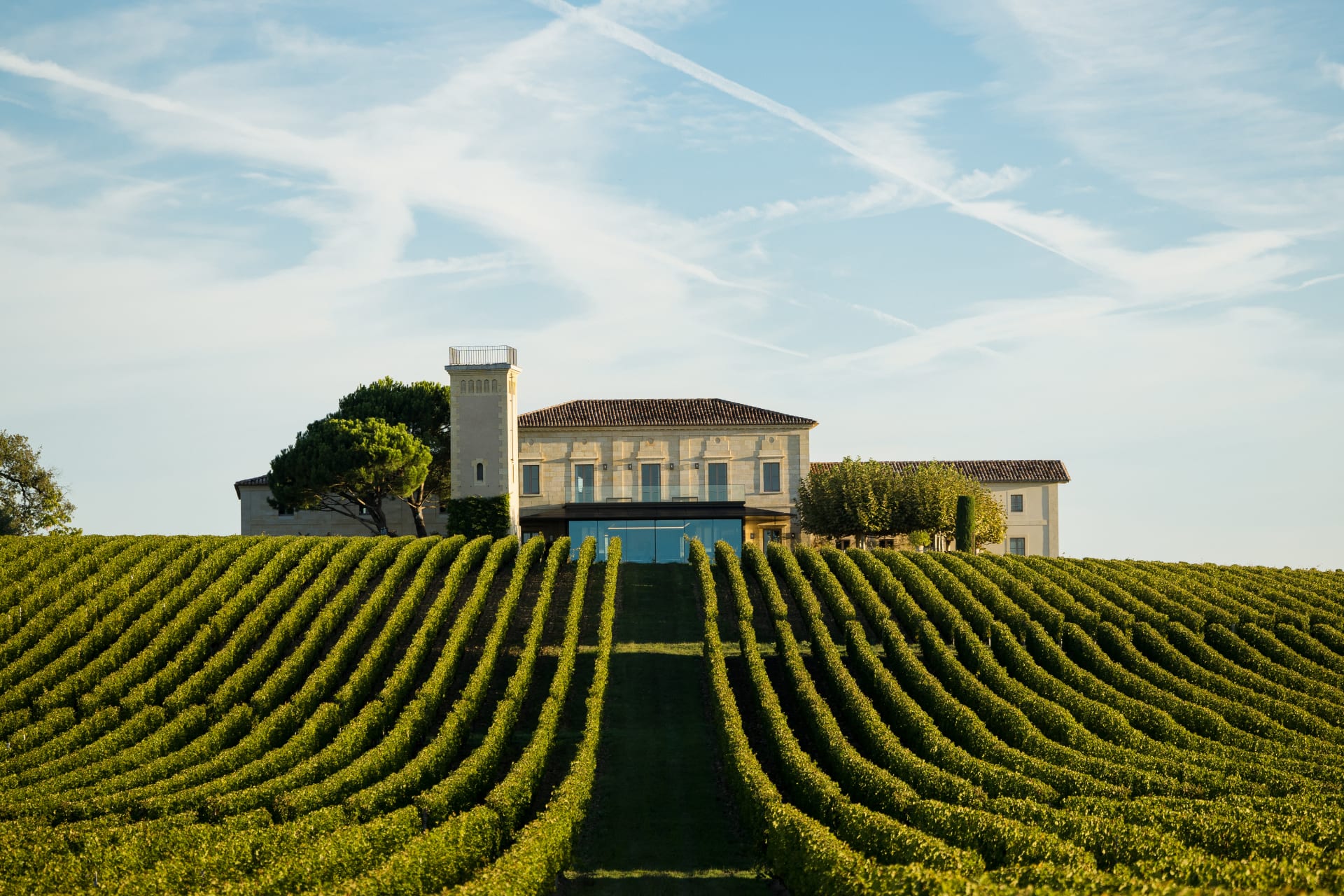



Premier Grand Cru Classe in Saint-Emilion, Chateau Troplong Mondot stands out with refinement, boasting a strong wine identity, a perfectly-controlled vineyard and an innate sense of welcoming. Located on the highet point of Saint-Emilion's famous limestone plateau, the 43-hectare estate held in one piece stands on some of the most enviable and unique terroirs of the Right Bank, with ideal geological conditions and exposure, The unique diversity of the soils is revealed through balanced wines combining strength and elegance, complexity and precision. Troplong Mondot's history has been enriched with charismatic and cultured figures who have led the estate towards excellence with a different vision. By trusting Aymeric de Gironde for the executive management, the company SCOR bring a fresh boost since 2017 while respecting the values and spirit of the estate.

One of the world’s most classic and popular styles of red wine, Bordeaux-inspired blends have spread from their homeland in France to nearly every corner of the New World. Typically based on either Cabernet Sauvignon or Merlot and supported by Cabernet Franc, Malbec and Petit Verdot, the best of these are densely hued, fragrant, full of fruit and boast a structure that begs for cellar time. Somm Secret—Blends from Bordeaux are generally earthier compared to those from the New World, which tend to be fruit-dominant.

Marked by its historic fortified village—perhaps the prettiest in all of Bordeaux, the St-Émilion appellation, along with its neighboring village of Pomerol, are leaders in quality on the Right Bank of Bordeaux. These Merlot-dominant red wines (complemented by various amounts of Cabernet Franc and/or Cabernet Sauvignon) remain some of the most admired and collected wines of the world.
St-Émilion has the longest history in wine production in Bordeaux—longer than the Left Bank—dating back to an 8th century monk named Saint Émilion who became a hermit in one of the many limestone caves scattered throughout the area.
Today St-Émilion is made up of hundreds of independent farmers dedicated to the same thing: growing Merlot and Cabernet Franc (and tiny amounts of Cabernet Sauvignon). While always roughly the same blend, the wines of St-Émilion vary considerably depending on the soil upon which they are grown—and the soils do vary considerably throughout the region.
The chateaux with the highest classification (Premier Grand Cru Classés) are on gravel-rich soils or steep, clay-limestone hillsides. There are only four given the highest rank, called Premier Grand Cru Classés A (Chateau Cheval Blanc, Ausone, Angélus, Pavie) and 14 are Premier Grand Cru Classés B. Much of the rest of the vineyards in the appellation are on flatter land where the soils are a mix of gravel, sand and alluvial matter.
Great wines from St-Émilion will be deep in color, and might have characteristics of blackberry liqueur, black raspberry, licorice, chocolate, grilled meat, earth or truffles. They will be bold, layered and lush.