

Winemaker Notes
Professional Ratings
-
Robert Parker's Wine Advocate
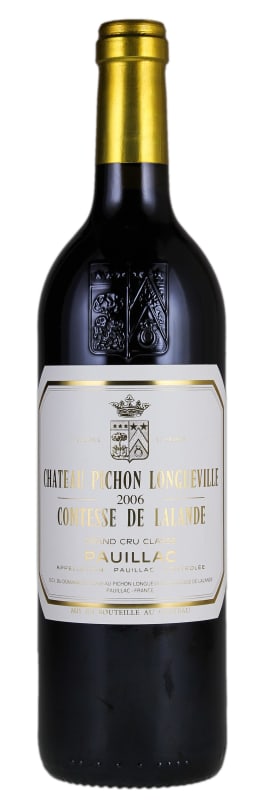
The 2006 Pichon Lalande, which blows away the 2005, represents a return to the velvety-textured, rich, sexy style most readers would associate with Pichon Lalande. This blend of 64% Cabernet Sauvignon and 36% Merlot no Petit Verdot was included in the final blend exhibits a dense purple color as well as abundant aromas of chocolate, coffee, cedar, black currants, and a subtle touch of smoke, a rich, savory, full-bodied mouthfeel, plump, fleshy fruit, and a superb finish. This is a 21st century version of the brilliant 1996. Anticipated maturity: 2013-2030.
-
Wine Enthusiast
The success of this wine owes as much to Merlot as to Cabernet. The Merlot has created the ripeness and smoothness of the wine. While the Cabernet keeps it firm and closed up, there is a base of rich, sweet fruit here that will show over the next two years. The style of the wine is moving away from elegance to power under the new regime of owners, Champagne Roederer.
-
Wine Spectator
Displays currant and blackberry, with hints of licorice. Full-bodied, with round, chewy tannins and lots of fruit under the structure. A rich wine for the vintage, needing plenty of bottle age. Best after 2014.


One of the world’s most classic and popular styles of red wine, Bordeaux-inspired blends have spread from their homeland in France to nearly every corner of the New World. Typically based on either Cabernet Sauvignon or Merlot and supported by Cabernet Franc, Malbec and Petit Verdot, the best of these are densely hued, fragrant, full of fruit and boast a structure that begs for cellar time. Somm Secret—Blends from Bordeaux are generally earthier compared to those from the New World, which tend to be fruit-dominant.

The leader on the Left Bank in number of first growth classified producers within its boundaries, Pauillac has more than any of the other appellations, at three of the five. Chateau Lafite Rothschild and Mouton Rothschild border St. Estephe on its northern end and Chateau Latour is at Pauillac’s southern end, bordering St. Julien.
While the first growths are certainly some of the better producers of the Left Bank, today they often compete with some of the “lower ranked” producers (second, third, fourth, fifth growth) in quality and value. The Left Bank of Bordeaux subscribes to an arguably outdated method of classification that goes back to 1855. The finest chateaux in that year were judged on the basis of reputation and trading price; changes in rank since then have been miniscule at best. Today producers such as Chateau Pontet-Canet, Chateau Grand Puy-Lacoste, Chateau Lynch-Bages, among others (all fifth growth) offer some of the most outstanding wines in all of Bordeaux.
Defining characteristics of fine wines from Pauillac (i.e. Cabernet-based Bordeaux Blends) include inky and juicy blackcurrant, cedar or cigar box and plush or chalky tannins.
Layers of gravel in the Pauillac region are key to its wines’ character and quality. The layers offer excellent drainage in the relatively flat topography of the region allowing water to run off into “jalles” or streams, which subsequently flow off into the Gironde.