

Winemaker Notes
The vintage has been blended and it has kept its promises. The color is a deep red with purple reflections. On the nose, aromas of ripe fruit (black cherry, blackcurrant, blackberry...) are made more complex by toasty and licorice notes. On the palate, the impressive attack leads on to fleshy and crunchy fruit.
This harmonious blend is kept taut by nice freshness at the end of the palate and great aromatic length.
Combining the qualities of concentration, tannic power, structure, ripeness and length, 2019 also has the freshness necessary for the balance of great Bordeaux wines. It joins the club of 2009, 2010 and 2018 with brio.
Blend: 56% Cabernet Sauvignon, 42% Merlot, 2% Cabernet Franc
The Barrel Sample for this wine is above 14% ABV.
Professional Ratings
-
James Suckling
This is a very classically structured Bordeaux with blackcurrant, walnut, cedar and hints of toasted oak. It’s reserved now, but shows very serious, polished tannins. Persistent and powerful with fantastic length. Very precise. Try after 2025.
-
Jeb Dunnuck
The 2019 Château Phelan Segur from Véronique Dausse is another brilliant Saint-Estèphe in the vintage, and this estate plays in the top handful of Saint-Estèphes out there. Offering lots of darker currants, spiced plums, Iron, tobacco, and damp earth on the nose, it hits the palate with full-bodied richness, a concentrated, tannic, yet balanced mouthfeel, and a great finish. It needs to be forgotten for a good 5-7 years and will be a brilliant wine over the following two decades. Best After 2027
-
Wine Enthusiast
Now cured of its tendency to use too much wood, this estate is producing some finely structured wines. This vintage continues in that tradition, a wine that is packed with serious, concentrated fruits that are highlighted by bright acidity. There is great potential for aging here.
Barrel Sample: 93-95 -
Decanter
Serious and seductive on the nose, full of ripe black fruits and faint florality. A sophisticated style, clearly powerful and concentrated with a core of succulent blackcurrant and black cherry fruit but delivered with poise and refinement. Round, generous and juicy with lashings of slate, liquorice and menthol freshness with tannins that are both abundant and well integrated, cushioning the fruit and driving it through to a long finish. Excellent clarity and confidence here. A top buy. Drinking Window: 2024 - 2034.
-
Robert Parker's Wine Advocate
Is this the most over-performing estate in the Médoc? Director Véronique Dausse would surely riposte that it's simply performing at the level to which its well-situated vineyards and detail-oriented team entitle it; but in any case, the 2019 Phélan Ségur is a brilliant wine. Offering up aromas of cassis, sweet wild berries, rose petals, violets, licorice and spices, it's medium to full-bodied, layered and concentrated, with tangy acids, powdery tannins and a long, penetrating finish. This is another 2019 that en primeur purchasers can feel very pleased with. Best After 2027 Rating : 94+
-
Wine Spectator
Solid, featuring a good punch of dark blackberry and black currant preserve flavors, with bay leaf, charcoal and warm paving stone notes that keep it very grounded through the finish. Shows ample structure for the cellar, too. Cabernet Sauvignon, Merlot and Cabernet Franc. Best from 2024.



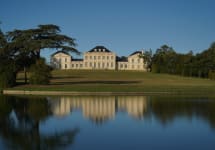
Located in the village of Saint-Estèphe, Château Phélan Ségur has proudly overlooked the Gironde estuary since the early 19th century. Founded by Irishman, Bernard Phelan, the estate was developed by his son, Frank, and renamed Phélan Ségur in the early 20th century. The cellar and the vat room are integrated into the Château in a highly unsual architectural ensemble.
The property is spread over 114 hectares, including 44 hectares of parks, forests, meadows, streams and ponds, forming a remarkable biodiversity reserve. Its 70 hectares of vineyards benefit from the temperature regulation provided by the proximity of the River; they are divided into four very distinct islands and express the diversity of the clay-gravel soils of the appellation. This produces powerful wines often characterised by their tannic structure. The Phélan Ségur style stands out for its elegance, its pure and complex aromas, its finesse and precision, the quality of its tannins and its balance.
Philippe Van de Vyvere is the owner since January 2018. Initiated by his grandfather at an early age, this great connoisseur of Bordeaux was really taken with the Château Phélan Ségur. He intends to apply his entrepreneurial values in pursuit of aesthetic and technical while respecting environmental balances.

One of the world’s most classic and popular styles of red wine, Bordeaux-inspired blends have spread from their homeland in France to nearly every corner of the New World. Typically based on either Cabernet Sauvignon or Merlot and supported by Cabernet Franc, Malbec and Petit Verdot, the best of these are densely hued, fragrant, full of fruit and boast a structure that begs for cellar time. Somm Secret—Blends from Bordeaux are generally earthier compared to those from the New World, which tend to be fruit-dominant.

Deeply colored, concentrated, and distinctive, St. Estephe is the go-to for great, age-worthy and reliable Bordeaux reds. Separated from Pauillac merely by a stream, St. Estephe is the farthest northwest of the highest classed villages of the Haut Medoc and is therefore subject to the most intense maritime influence of the Atlantic.
St. Estephe soils are rich in gravel like all of the best sites of the Haut Medoc but here the formation of gravel over clay creates a cooler atmosphere for its vines compared to those in the villages farther downstream. This results in delayed ripening and wines with higher acidity compared to the other villages.
While they can seem a bit austere when young, St. Estephe reds prove to live very long in the cellar. Traitionally dominated by Cabernet Sauvignon, many producers now add a significant proportion of Merlot to the blend, which will soften any sharp edges of the more tannic, Cabernet.
The St. Estephe village contains two second growths, Chateau Montrose and Cos d’Estournel.