


Winemaker Notes
The wine is a crimson-hued garnet red. The nose reveals red berry fruit aromas combined with delicate floral notes of peony and fresh mint. A dense and muscular attack leads into a full-bodied mid-palate whose juicy and expressive substance is underlined by well-rounded, silky tannins. The long and balanced finish lingers on notes of spice, especially white pepper.
Blend: 77% Cabernet Sauvignon, 19.5% Merlot, 3% Cabernet Franc, 0.5% Petit Verdot
Professional Ratings
-
James Suckling
This is surprisingly full-bodied and round, reflecting the warmth and sunny exposure of the vineyard around the chateau. Tangy and vivid with currants, fresh flowers and plenty of energy and length. Delicate yet ripe. 77% cabernet sauvignon, 19.5% merlot, 3% cabernet franc and 0.5% petit verdot. Needs two or three years to come together completely. Drink after 2027.
-
Jeb Dunnuck
The second wine of this great château, the 2021 Le Petit Mouton De Mouton Rothschild offers up a mini-Mouton-like nose of pure cassis, graphite, and spicy oak and hits the palate with medium-bodied richness, a deep, layered mid-palate, plenty of fruit and richness, and almost velvety tannins. Based on 77% Cabernet Sauvignon, 20% Merlot, and the balance Cabernet Franc and Petit Verdot, aged in 50% new barrels, this textured, focused, impressively concentrated 2021 will benefit from 3-5 years of bottle age (which is rare for a second wine) and cruise for 10-15+ years in cold cellars.
-
Decanter
Beautifully fragrant strawberries and red cherries, just so perfumed and appealing, really a very lovely nose drawing you in. An excellent Petit Mouton in 2021; serious intensity here but also such a liveliness as well as creaminess. It has weight and layers while having fruit intensity and a core of aromatics. There's a softness and delicacy in terms of the tannins and frame - beguiling - but a real base of concentrated blue, red and black fruits - strawberries, red cherries and blackcurrants. You get the stony tones and the clove on the finish but this feels round, expansive and approachable. It's uber glamorous, still with freshness and lift. A gorgeous wine with lots going on! 0.5% Petit Verdot completes the blend. 3.73pH. 14% press wine.
Barrel Sample: 92 -
Robert Parker's Wine Advocate
The 2021 Le Petit Mouton wafts from the glass with rich aromas of dark berries, cherries and cassis mingled with licorice, mint and dark chocolate. Medium to full-bodied, rich and layered, it's dense and velvety, with sweet tannins and a long, expansive finish. As readers may remember, since Mouton-Rothschild itself this year derives exclusively from the two plateaus that always make up the core of the blend, the Petit Mouton benefits from the inclusion of parcels that often make it into the grand vin.



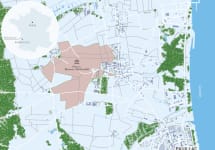
A First Classified Growth, Château Mouton Rothschild spans 82 hectares (202 acres) of vines at Pauillac in the Médoc, planted with the classic varieties of the region: Cabernet Sauvignon (79%), Merlot (17%), Cabernet Franc (3 %), Petit Verdot (1 %). The average age of the vines is 50 years.
The estate benefits from exceptionally favourable natural conditions, in the quality of the soil, the position of its vines and their exposure to the sun. Combining respect for tradition with the latest technology, it receives meticulous attention from grape to bottle. The wine is matured in new French oak barrels.
Le Petit Mouton de Mouton Rothschild is the second wine of Château Mouton Rothschild.
The estate also comprises 6 hectares (15 acres) of sandy, gravelly soil planted with Sauvignon Blanc (51%), Semillon (40%) and Sauvignon Gris (9%), used to make its white wine, Aile d’Argent.
Brought to the pinnacle by two exceptional people, Baron Philippe de Rothschild (1902-1988) then his daughter Baroness Philippine (1933-2014), its destiny has now been taken in hand by her three children: Camille and Philippe Sereys de Rothschild, and Julien de Beaumarchais de Rothschild. True to their grandfather’s and mother’s work, all three are committed, with the same enthusiasm and determination, to perpetuating Baron Philippe’s dictum: “Live for the vine”. Almost a command, it means being there for the vineyard in good times and in hardship, serving it with skill and honouring it with art.
Château Mouton Rothschild is a place of art and beauty, famous for the spectacular vista of its great barrel hall, its remarkable vat room and its Museum of Wine in Art. Every year since 1945, the Château Mouton Rothschild label has been illustrated with an original artwork by a great contemporary artist. Dalí, César, Miró, Chagall, Warhol, Soulages, Bacon, Balthus, Tàpies, Koons and Doig are only some of the artists featured in a fascinating collection to which a new work is added each year and which makes up the Paintings for the Labels exhibition.

One of the world’s most classic and popular styles of red wine, Bordeaux-inspired blends have spread from their homeland in France to nearly every corner of the New World. Typically based on either Cabernet Sauvignon or Merlot and supported by Cabernet Franc, Malbec and Petit Verdot, the best of these are densely hued, fragrant, full of fruit and boast a structure that begs for cellar time. Somm Secret—Blends from Bordeaux are generally earthier compared to those from the New World, which tend to be fruit-dominant.

The leader on the Left Bank in number of first growth classified producers within its boundaries, Pauillac has more than any of the other appellations, at three of the five. Chateau Lafite Rothschild and Mouton Rothschild border St. Estephe on its northern end and Chateau Latour is at Pauillac’s southern end, bordering St. Julien.
While the first growths are certainly some of the better producers of the Left Bank, today they often compete with some of the “lower ranked” producers (second, third, fourth, fifth growth) in quality and value. The Left Bank of Bordeaux subscribes to an arguably outdated method of classification that goes back to 1855. The finest chateaux in that year were judged on the basis of reputation and trading price; changes in rank since then have been miniscule at best. Today producers such as Chateau Pontet-Canet, Chateau Grand Puy-Lacoste, Chateau Lynch-Bages, among others (all fifth growth) offer some of the most outstanding wines in all of Bordeaux.
Defining characteristics of fine wines from Pauillac (i.e. Cabernet-based Bordeaux Blends) include inky and juicy blackcurrant, cedar or cigar box and plush or chalky tannins.
Layers of gravel in the Pauillac region are key to its wines’ character and quality. The layers offer excellent drainage in the relatively flat topography of the region allowing water to run off into “jalles” or streams, which subsequently flow off into the Gironde.