


Winemaker Notes
Château Giscours is a wine that reflects their teams’ expertise and in-depth knowledge of the terroir. It is a voluptuous, gourmet wine with the strong personality found in fine wines from the Margaux appellation. It is seductive on the palate thanks to its refined, silky tannins. It is a powerful, enchanting, hugely charming wine. It will age for years without gaining so much as a wrinkle.
Blend: 71% Cabernet Sauvignon, 23% Merlot, 6% Cabernet Franc
Professional Ratings
-
Vinous
The 2023 Giscours is the very best wine I have ever tasted here. Giscours has been knocking on the door of Bordeaux's elite for a few years now. Two thousand twenty-three is the year in which Giscours joins the region's big boys and girls. A towering, majestic Margaux, the 2023 dazzles from start to finish. What a wine! –Antonio Galloni
Barrel Sample: 96-98 -
James Suckling
The purity of fruit is impressive. Aromas of blackberries, black currants, violets and a hint of stone follow through to a medium to full body, with integrated tannins that are solid and polished and a long finish. Sweet fruit at the with an intensity and richness. Chewy in a classic way from the grape tannins that give tannins. 71% cabernet sauvignon, 23% merlot and 6% cabernet franc. Needs three or four years to come together.
-
Robert Parker's Wine Advocate
The 2023 Giscours is one of the real successes of the vintage, unwinding in the glass with aromas of dark berries, cherries and red fruits mingled with hints of undergrowth, violets and licorice. Medium to full-bodied, deep and layered, it's seamless and concentrated, with a fleshy core of fruit framed by ripe, powdery tannins and succulent acids, concluding with a long, broad finish. It's a blend of 71% Cabernet Sauvignon, 23% Merlot and 6% Cabernet Franc.
Barrel Sample: 94-96 -
Decanter
Some clear Cabernet notes on the nose, herbal elements, blackcurrant leaf and cranberry fruit. Smells ripe and cool with gorgeous milk chocolate elements. Energy is the first thing that springs to mind. There’s power here but there’s precision and velvety tannins to this too which gives both structure and brightness. Excellent harmony, this has roundness and depth, not too lean, with crunchy and really present chalky, wet stone tannins. Cranberry and strawberry with blueberry. Still lean, it’s straight but finessed with long, lingering flavours. It’s not as soft and plush as Giscours can be, not as naturally sexy, it’s more serious, but there’s suaveness here. Excellent effort. 3.75pH. Ageing 50% new oak. 70% grand vin production.
Barrel Sample: 95 -
Jeb Dunnuck
One heck of an impressive 2023, the 2023 Château Giscours is a blend of 71% Cabernet Sauvignon, 23% Merlot, and 6% Cabernet Franc aged in 50% new French oak. Ripe red and blackcurrants, spring flowers, graphite, and smoked tobacco notes all emerge from the glass, with an almost chalky minerality in the background. It's concentrated, medium-bodied, and has a round, layered mouthfeel, ample mid-palate depth, and beautiful tannins. It reminds me of the 2019 with its complete, layered style, if not slightly more concentrated.
-
Wine Enthusiast
Animpressive wine led by Cabernet Sauvignon,this has ripe tannins and a spice and black-currant flavor. The wine’s structure shows well with a firm coreand a black-pepper aroma. The wine is developing in astately fashion. Cellar Selection.
-
Wine Spectator
Violet and iris lead the way for a caressing core of blackberry and black currant fruit. Subtle, smol- dering bay and chestnut leaf notes underscore the fin- ish. Cabernet Sauvignon, Merlot and Cabernet Franc.
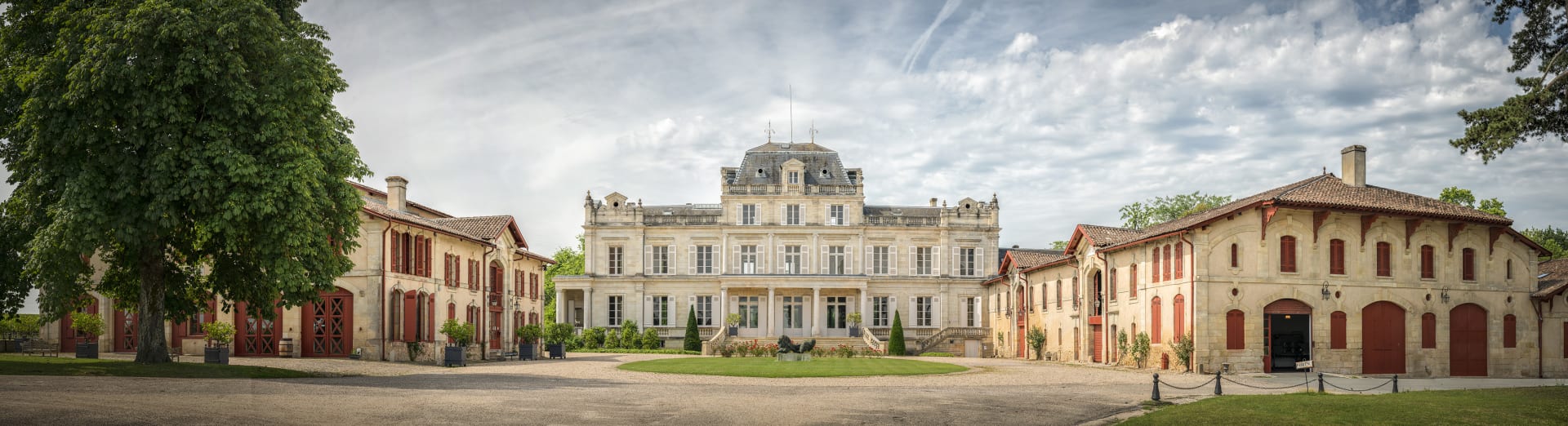


Château Giscours, a Grand Cru Classé, is one of the very few estates with vineyards planted in a single stretch, at the heart of an unspoiled ecosystem of 400 hectares of meadows and forest. The 100-hectare estate in the Margaux appellation boasts an ideal location on the magnificent Labarde and Arsac plateau.
Château Giscours, one of the oldest seigneuries in the Médoc, has reinvented itself constantly over the centuries. Pierre de Lhomme, Marc Promis, Jean-Pierre Pescatore, Edouard Cruse and Nicolas Tari were all ambitious and visionary estate owners who were passionate about pulling together the estate's land and giving this vineyard a reputation for excellence. These efforts were rewarded by the official classification in 1855, when Giscours was named a third Grand Cru Classé.
In 1995, a new chapter began with Dutch businessman Eric Albada Jelgersma, who oversaw a meticulous rehabilitation of the vineyards and buildings. It took a lengthy process, patience, and unfailing technical and commercial organization for Giscours to retain a strong identity and become the embodiment of a flourishing estate that has successfully transcended change.
Today, his children are following in their father's footsteps as they enable the estate to develop whilst also preserving its rich ecosystem.
This well-arranged land is a winemaker's dream. Deep Garonne gravel hilltops with slight variations give Giscours wines their structure and elegance. This exceptional terroir suits our vines, which offer up the best of themselves under the influence of the oceanic climate.

One of the world’s most classic and popular styles of red wine, Bordeaux-inspired blends have spread from their homeland in France to nearly every corner of the New World. Typically based on either Cabernet Sauvignon or Merlot and supported by Cabernet Franc, Malbec and Petit Verdot, the best of these are densely hued, fragrant, full of fruit and boast a structure that begs for cellar time. Somm Secret—Blends from Bordeaux are generally earthier compared to those from the New World, which tend to be fruit-dominant.

Silky, seductive and polished are the words that characterize the best wines from Margaux, the most inland appellation of the Médoc on the Left Bank of Bordeaux.
Margaux’s gravel soils are the thinnest of the Médoc, making them most penetrable by vine roots—some reaching down over 23 feet for water. The best sites are said to be on gentle outcrops, or croupes, where more gravel facilitates good drainage.
The Left Bank of Bordeaux subscribes to an arguably outdated method of classification but it is nonetheless important in regards to history of the area. In 1855 the finest chateaux were deemed on the basis of reputation and trading price—at that time. In 1855, Chateau Margaux achieved first growth status, yet it has been Chateau Palmer (officially third growth from the 1855 classification) that has consistently outperformed others throughout the 20th century.
Chateau Margaux in top vintages is capable of producing red Cabernet Sauvignon based wines described as pure, intense, spell-binding, refined and profound with flavors and aromas of black currant, violets, roses, orange peel, black tea and incense.
Other top producers worthy of noting include Chateau Rauzan-Ségla, Lascombes, Brane-Cantenac, and d’Issan, among others.
The best wines of Margaux combine a deep ruby color with a polished structure, concentration and an unrivaled elegance.