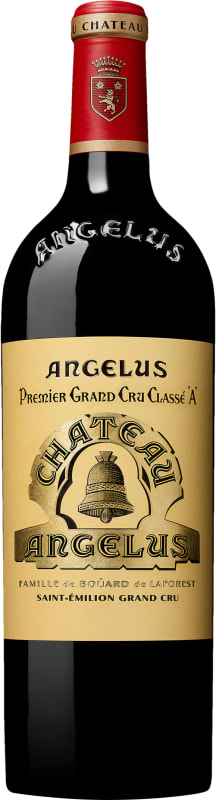


Winemaker Notes
This 2019 vintage, made while the estate was undergoing conversion to organic-farming status, turned out to be easier to manage than the 2018, which was a vintage that ended up superbly but which caused worries and tensions. In this vintage, the Merlot has given our wine an opulent texture and succulent fruit, while our Cabernet Franc has brought freshness and tension. We chose to vinify with delicate extractions in order to preserve the brightness of the wine’s character and the purity of its fruit. The barrel-ageing process is ongoing, and the wine seems to be absorbing the tannins of the oak barrels without losing any of its bright fruit character or its balance. It possesses the depth, balance, tension and energy to be a vintage of great complexity and have an ageing potential worthy of the greatest years.
Blend: 60% Merlot, 40% Cabernet Franc
The Barrel Sample for this wine is above 14% ABV.
Professional Ratings
-
Jeb Dunnuck
The grand vin 2019 Château Angelus, a blend of 60% Merlot and 40% Cabernet Franc, is certainly up with the top wines in the vintage. (It actually reminds me a little of a more elegant version of the 2005.) Deep purple-hued, with a blockbuster bouquet of black cherries, blackberries, spice box, violets, spring flowers, and chocolate, it has a terrific sense of minerality, full-bodied richness, building tannins, and an incredible sense of elegance pair with power. A quintessential example of the style now emerging from this estate, it's going to need 5-7 years of bottle age to hit maturity (it won't disappoint in its youth either) and will evolve gracefully for 20-30 years.
-
James Suckling
An extremely refined and sharpened Angelus with super fine tannins and sweet ripe fruit in the center palate. It’s full-bodied, yet tight and so very polished. Silky. Very subtle. Bright blue fruit, black fruit and stones. Supple and minerally. 60% merlot and 40% cabernet franc. Barrel Sample: 98-99
-
Decanter
A supremely elegant Angélus full of power. Here the quality of the fruit and the depth of plum, damson, black cherry and cassis is evident, along with tension, freshness - a slow melding of flavour through the palate with concentration and depth. Liquorice root and baked earth come in from the mid palate and this has the feeling of a being a serious wine that is going to go the distance. The exuberance and confidence of Angelus comes as it opens, with the flavours and texture fattening up. The wine will be aged for one year 30hl new oak casks, and then go into barrel but without new oak for the last 10 months. The low pH means maybe a little less fleshy than usual with Angélus, certainly less so than the 2018. This gets better and better in the glass, strongly recommend giving this time.
Barrel Sample: 97
-
Robert Parker's Wine Advocate
The 2019 Angélus bursts from the glass with a rich, dramatic nose of cherries, licorice, sweet spices and dark chocolate. Full-bodied, layered and vibrant, its broad and velvety attack segues into a layered, concentrated mid-palate that's underpinned by tangy acids and fine, powdery tannins, concluding with a long, penetrating finish. It's a blend of 60% Merlot and 40% Cabernet Franc. Its seamless, pure profile reflects the subtle shift chez Angélus away from the rich, toasty style of the 1990s and 2000s toward greater elegance and precision. Best after 2026.
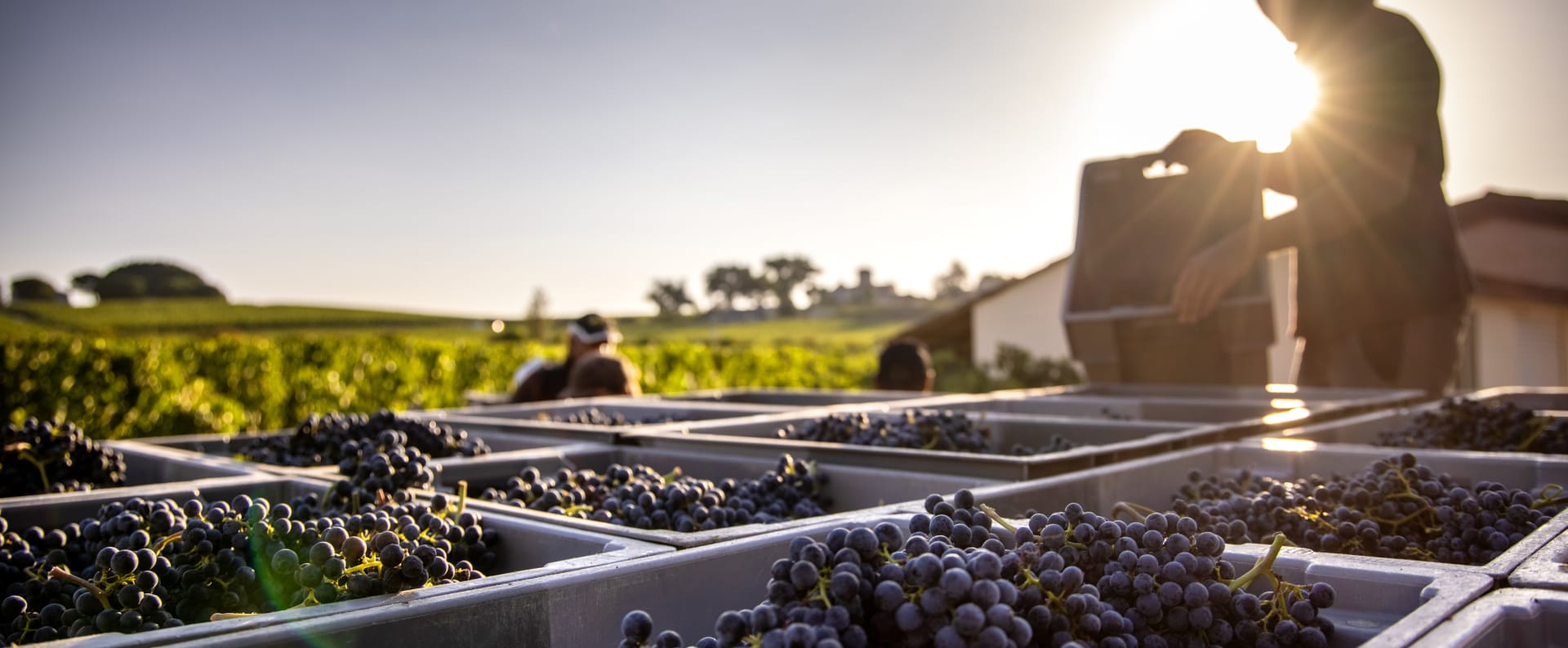


At the origin of Angelus is an exceptionally well-situated vineyard, at the gates to the village of Saint-Émilion, on the famous south-facing "foot of the slope". Since 1782, over the generations, the passion and determination of the de Boüard de Laforest family have built a destiny worthy of the Estate. At 131 hectares including 62 hectares in Saint-Émilion, of which 31 hectares from the historic heart of the Estate, Angelus is now one of the largest vineyards in the appellation. In 2012, after more than thirty years at the helm of Angelus, Hubert de Boüard de Laforest passed the baton to his daughter, Stéphanie de Boüard-Rivoal. She became the third woman in the family's nearly 250-year history to preside over the destiny of this emblematic Estate, ensuring its legacy continues to thrive. Today, Angelus employs 170 people, produces 8 cuvées and owns restaurants and hotels, in particular, the Logis de la Cadène in Saint-Émilion and Le Gabriel in Bordeaux. In 2023, diversification continued with the creation of La Ferme 1544, forming a link between Château Angelus wine business and its restaurants.

One of the world’s most classic and popular styles of red wine, Bordeaux-inspired blends have spread from their homeland in France to nearly every corner of the New World. Typically based on either Cabernet Sauvignon or Merlot and supported by Cabernet Franc, Malbec and Petit Verdot, the best of these are densely hued, fragrant, full of fruit and boast a structure that begs for cellar time. Somm Secret—Blends from Bordeaux are generally earthier compared to those from the New World, which tend to be fruit-dominant.

Marked by its historic fortified village—perhaps the prettiest in all of Bordeaux, the St-Émilion appellation, along with its neighboring village of Pomerol, are leaders in quality on the Right Bank of Bordeaux. These Merlot-dominant red wines (complemented by various amounts of Cabernet Franc and/or Cabernet Sauvignon) remain some of the most admired and collected wines of the world.
St-Émilion has the longest history in wine production in Bordeaux—longer than the Left Bank—dating back to an 8th century monk named Saint Émilion who became a hermit in one of the many limestone caves scattered throughout the area.
Today St-Émilion is made up of hundreds of independent farmers dedicated to the same thing: growing Merlot and Cabernet Franc (and tiny amounts of Cabernet Sauvignon). While always roughly the same blend, the wines of St-Émilion vary considerably depending on the soil upon which they are grown—and the soils do vary considerably throughout the region.
The chateaux with the highest classification (Premier Grand Cru Classés) are on gravel-rich soils or steep, clay-limestone hillsides. There are only four given the highest rank, called Premier Grand Cru Classés A (Chateau Cheval Blanc, Ausone, Angélus, Pavie) and 14 are Premier Grand Cru Classés B. Much of the rest of the vineyards in the appellation are on flatter land where the soils are a mix of gravel, sand and alluvial matter.
Great wines from St-Émilion will be deep in color, and might have characteristics of blackberry liqueur, black raspberry, licorice, chocolate, grilled meat, earth or truffles. They will be bold, layered and lush.