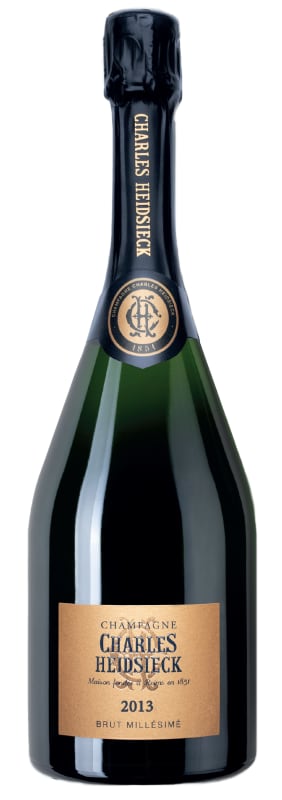


Winemaker Notes
A beautiful golden robe offers glints of green accentuated by a delicate, dynamic effervescence. The initial nose introduces intense toasted and smoky notes along with ripe fruit. When swirled in the glass, the nose takes on a heartier dimension with touches of apricot and vineyard peaches. The aromatic concentration, due to a heat wave of several weeks, is reminiscent of the summer sun. The attack is taut and decisive. the creamy texture, the crisp fruitiness and spiced notes of cinnamon, licorice and pepper are the hallmark of the House style.
Blend: 57% Pinot Noir, 43% Chardonnay
Professional Ratings
-
Wine Enthusiast
Aged for eight years on the lees before disgorgement, the Champagne is deliciously toasty with acidity and fine dryness.
-
Jeb Dunnuck
Disgorged in January of 2023, the 2013 Champagne Millésime Brut was the last vintage from the cellar master for Heidsieck prior to Cyril Brun. The 2013 Champagne Millésime Brut is a bright straw yellow color and is based on the crus of Les Mesnil, Avize, Averney, and Aÿ. It’s fresh with aromas of wet stones, fresh quince, and fresh jasmine flowers. It has a chalky and focused texture, with ripeness to balance it out, and a long, graceful finish. At this stage, it feels more forward with 57% Pinot Noir and the rest Chardonnay. A more mineral-tinged expression, it has a lot of charm and the promise of longevity over the coming two decades. Drink 2024-2044. It will be interesting to see how the Pinot shows itself over time. 8 grams per liter dosage.
-
James Suckling
A very striking nose with Reine Claude plums, old-fashioned apple varieties and some Nordic herbs. Structured and crisp with a very firm core, the finish driving and full of energy. Rich long finish with a chalky core. 60% pinot noir and 40% chardonnay, the make up of the blend very unconventional for this house. Drink or hold.
-
Robert Parker's Wine Advocate
The bouquet of the 2013 Brut Millésimé is compellingly fresh and minty, complicated by notes of white fruit—notably pear and apple—citrus and gentle spices, as well as a light touch of smoke. With aeration, elegant pastry notes come to the fore. On the palate, this is a structured, tension-filled but airborne Champagne with racy acidity, fleshy and charming texture and a long, penetrating finish. It should age well over the next eight to 10 years. Disgorged in 2022 with nine grams per liter, this is a blend of 57% Pinot Noir and 43% Chardonnay.
-
Wine Spectator
Features flavors of crème de cassis, lemon curd, poached apricot and smoked almond framed by well-cut, crunchy acidity, lending fine definition and vibrancy. A broad-shouldered Champagne that's lacy in texture, with a long finish of spices and grapefruit zest. Pinot Noir and Chardonnay.



Régis Camus joined Charles Heidsieck in 1994 and has been the head winemaker of the House since 2002. This meticulous and passionate professional likes to keep an eye on everything: the state of the vineyards, the selection of the grapes, their pressing and their vinification, cru by cru, in individual vats. His mission is to perpetuate the Charles Heidsieck style, reflecting the richness of the Champagne region.

Representing the topmost expression of a Champagne house, a vintage Champagne is one made from the produce of a single, superior harvest year. Vintage Champagnes account for a mere 5% of total Champagne production and are produced about three times in a decade. Champagne is typically made as a blend of multiple years in order to preserve the house style; these will have non-vintage, or simply, NV on the label. The term, "vintage," as it applies to all wine, simply means a single harvest year.

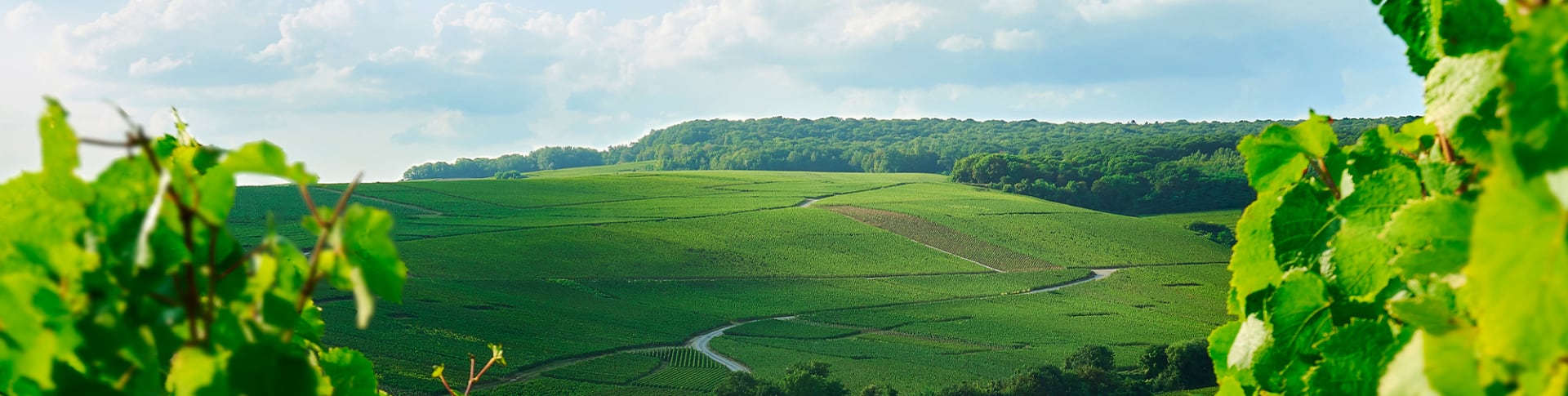
Associated with luxury, celebration, and romance, the region, Champagne, is home to the world’s most prized sparkling wine. In order to bear the label, ‘Champagne’, a sparkling wine must originate from this northeastern region of France—called Champagne—and adhere to strict quality standards. Made up of the three towns Reims, Épernay, and Aÿ, it was here that the traditional method of sparkling wine production was both invented and perfected, birthing a winemaking technique as well as a flavor profile that is now emulated worldwide.
Well-drained, limestone and chalky soil defines much of the region, which lend a mineral component to its wines. Champagne’s cold, continental climate promotes ample acidity in its grapes but weather differences from year to year can create significant variation between vintages. While vintage Champagnes are produced in exceptional years, non-vintage cuvées are produced annually from a blend of several years in order to produce Champagnes that maintain a consistent house style.
With nearly negligible exceptions, . These can be blended together or bottled as individual varietal Champagnes, depending on the final style of wine desired. Chardonnay, the only white variety, contributes freshness, elegance, lively acidity and notes of citrus, orchard fruit and white flowers. Pinot Noir and its relative Pinot Meunier, provide the backbone to many blends, adding structure, body and supple red fruit flavors. Wines with a large proportion of Pinot Meunier will be ready to drink earlier, while Pinot Noir contributes to longevity. Whether it is white or rosé, most Champagne is made from a blend of red and white grapes—and uniquely, rosé is often produce by blending together red and white wine. A Champagne made exclusively from Chardonnay will be labeled as ‘blanc de blancs,’ while ones comprised of only red grapes are called ‘blanc de noirs.’