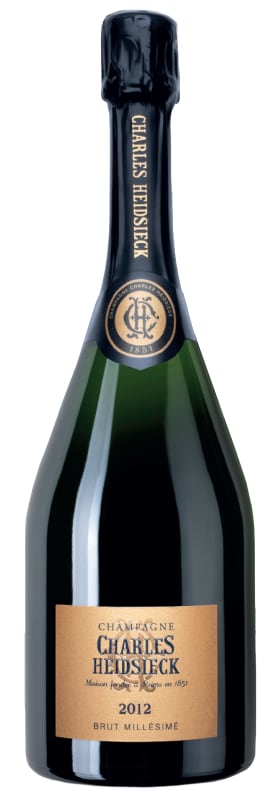


Winemaker Notes
The 2012 vintage is a beautiful pale golden yellow; with fine bubbles that are both delicate and dynamic. Initially, the nose shows subtle toasted and smoked notes with a touch of licorice and earthy tones. When swirled in the glass, fruity notes of apricot, blackthorn, quince, blueberry and fresh almonds add an extra dimension to the wine. This incredible aromatic concentration, very typical of the year, is the focus of the wine's merit. The palate is mineral and taut with excellent freshness, with notes of quince, vanilla and vineyard peaches on the mid-palate, followed by a firm, crisp finish. An excellent pairing with smoked dishes such as smoked eel, smoked Scamorza, and roast chicken with chicory sauce. A lovely vintage which will continue to develop great complexity and generosity over time.
Blend: 60% Pinot Noir, 40% Chardonnay
Professional Ratings
-
Jeb Dunnuck
The 2012 Champagne Millésime Brut is classic and harmonious. Layered and ripe with brioche, hazelnut, and baked apple, it is mouth-filling and round, with a pillowy mousse of ripe pear, custard, and orange oil. This is an assertive and forward wine with a timeless feel. Drink 2023-2043.
-
James Suckling
Very lemony (blossoms, zest and candied peel), with some red-berry and fresh tobacco-leaf notes. Impressive richness and concentration, the creaminess from lees beautifully matched by the fine mousse and mineral freshness. The latter also powers the structured and saline finish that makes a serious statement. A blend of 60% pinot noir and 40% chardonnay, disgorged in 2020. Drink or hold.
-
Jasper Morris
Even after five years of post-disgorgement aging, this wine has yet to fully enter its fruit-driven phase. The nose has reductive notes of toast, coffee, and hazelnut. The palate is dry and citrusy.
-
Robert Parker's Wine Advocate
Disgorged in 2024 with a dosage of eight grams per liter, the magnum of 2012 Brut Millésimé is showing very well, offering aromas of lemon rind, pear, buttered toast and dried flowers. Medium- to full-bodied and concentrated, the palate is elegantly muscular and textural, built around a rich core of fruit underpinned by racy acidity. It is a blend of 60% Pinot Noir and 40% Chardonnay.
-
Wine Spectator
A mouthwatering Champagne with a linear focus, which presents as up-front drive in a restrained, subtle way. Features a fine, satiny mousse that carries a range of toasted hazelnut, ripe black currant, mandarin orange peel, verbena and espresso crema notes, which unfurl on the palate and echo on the lasting finish. Pinot Noir and Chardonnay. Disgorged 2019. Drink now through 2032. 238 cases imported.



Régis Camus joined Charles Heidsieck in 1994 and has been the head winemaker of the House since 2002. This meticulous and passionate professional likes to keep an eye on everything: the state of the vineyards, the selection of the grapes, their pressing and their vinification, cru by cru, in individual vats. His mission is to perpetuate the Charles Heidsieck style, reflecting the richness of the Champagne region.

Representing the topmost expression of a Champagne house, a vintage Champagne is one made from the produce of a single, superior harvest year. Vintage Champagnes account for a mere 5% of total Champagne production and are produced about three times in a decade. Champagne is typically made as a blend of multiple years in order to preserve the house style; these will have non-vintage, or simply, NV on the label. The term, "vintage," as it applies to all wine, simply means a single harvest year.

Associated with luxury, celebration, and romance, the region, Champagne, is home to the world’s most prized sparkling wine. In order to bear the label, ‘Champagne’, a sparkling wine must originate from this northeastern region of France—called Champagne—and adhere to strict quality standards. Made up of the three towns Reims, Épernay, and Aÿ, it was here that the traditional method of sparkling wine production was both invented and perfected, birthing a winemaking technique as well as a flavor profile that is now emulated worldwide.
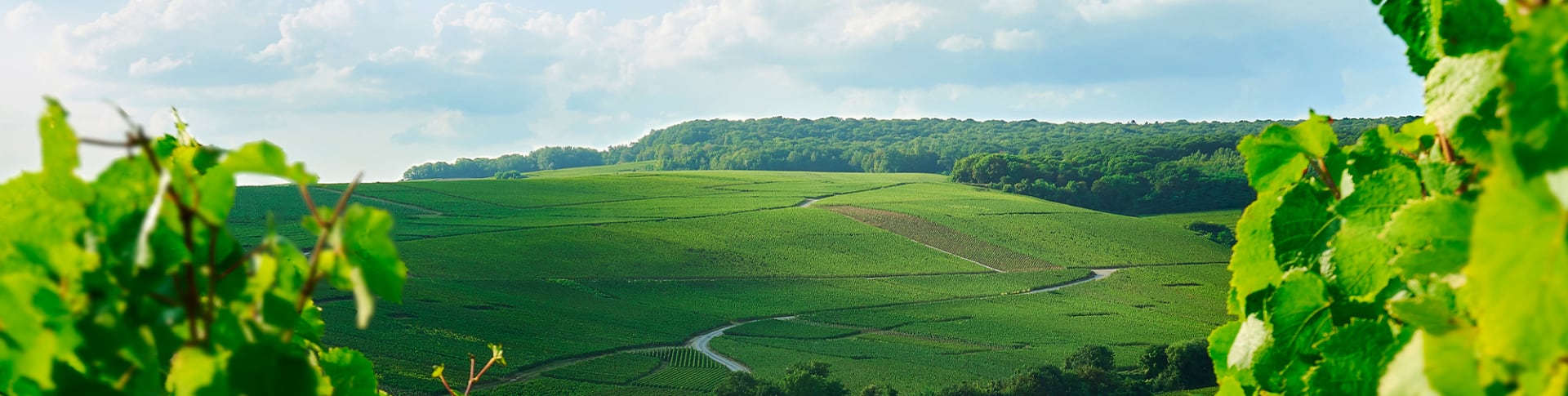
Well-drained, limestone and chalky soil defines much of the region, which lend a mineral component to its wines. Champagne’s cold, continental climate promotes ample acidity in its grapes but weather differences from year to year can create significant variation between vintages. While vintage Champagnes are produced in exceptional years, non-vintage cuvées are produced annually from a blend of several years in order to produce Champagnes that maintain a consistent house style.
With nearly negligible exceptions, . These can be blended together or bottled as individual varietal Champagnes, depending on the final style of wine desired. Chardonnay, the only white variety, contributes freshness, elegance, lively acidity and notes of citrus, orchard fruit and white flowers. Pinot Noir and its relative Pinot Meunier, provide the backbone to many blends, adding structure, body and supple red fruit flavors. Wines with a large proportion of Pinot Meunier will be ready to drink earlier, while Pinot Noir contributes to longevity. Whether it is white or rosé, most Champagne is made from a blend of red and white grapes—and uniquely, rosé is often produce by blending together red and white wine. A Champagne made exclusively from Chardonnay will be labeled as ‘blanc de blancs,’ while ones comprised of only red grapes are called ‘blanc de noirs.’