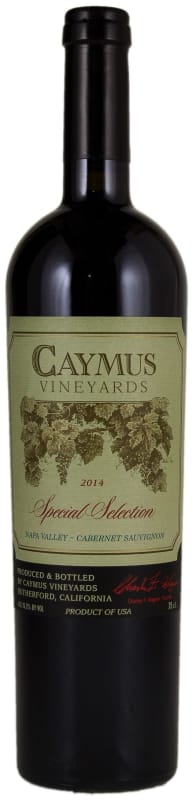


Winemaker Notes
Drink now until 2024, although, this wine should remain interesting until 2034 and beyond. Serve at 60°F. Decanting is not necessary.
Professional Ratings
-
Wilfred Wong of Wine.com
A class effort, the rich and voluptuous 2014 Caymus Vineyards Special Selection Cabernet Sauvignon is an excellent effort from a very good to excellent vintage. This wine exhibits a fine mix of black fruits, sweet oak, and some savory spice notes. Its rich tannins suggest more time in the bottle is needed, yet it is almost too easy to consume now. Give it a decade or more, and it should be even more rewarding. (Tasted: August 23, 2017, San Francisco, CA)
-
Wine Spectator
Pure and rich, well-centered on melted black licorice, spice, cedar and dark berry flavors. Deep and complex, if short on finesse and grace, ending with musclebound tannins. Drink now through 2028.
-
Wine Enthusiast
Brawny tannins meet mild acidity in this powerful, rich wine that’s full-bodied and decadent. Chocolate, mocha and caramel notes are etched into its soft, rounded layers of generous red fruit.


One of the most prestigious wines of the world capable of great power and grace, Napa Valley Cabernet is a leading force in the world of fine, famous, collectible red wine. Today the Napa Valley and Cabernet Sauvignon are so intrinsically linked that it is difficult to discuss one without the other. But it wasn’t until the 1970s that this marriage came to light; sudden international recognition rained upon Napa with the victory of the Stag’s Leap Wine Cellars 1973 Cabernet Sauvignon in the 1976 Judgement of Paris.
Cabernet Sauvignon undoubtedly dominates Napa Valley today, covering half of the land under vine, commanding the highest prices per ton and earning the most critical acclaim. Cabernet Sauvignon’s structure, acidity, capacity to thrive in multiple environs and ability to express nuances of vintage make it perfect for Napa Valley where incredible soil and geographical diversity are found and the climate is perfect for grape growing. Within the Napa Valley lie many smaller sub-AVAs that express specific characteristics based on situation, slope and soil—as a perfect example, Rutherford’s famous dust or Stags Leap District's tart cherry flavors.