
Winemaker Notes
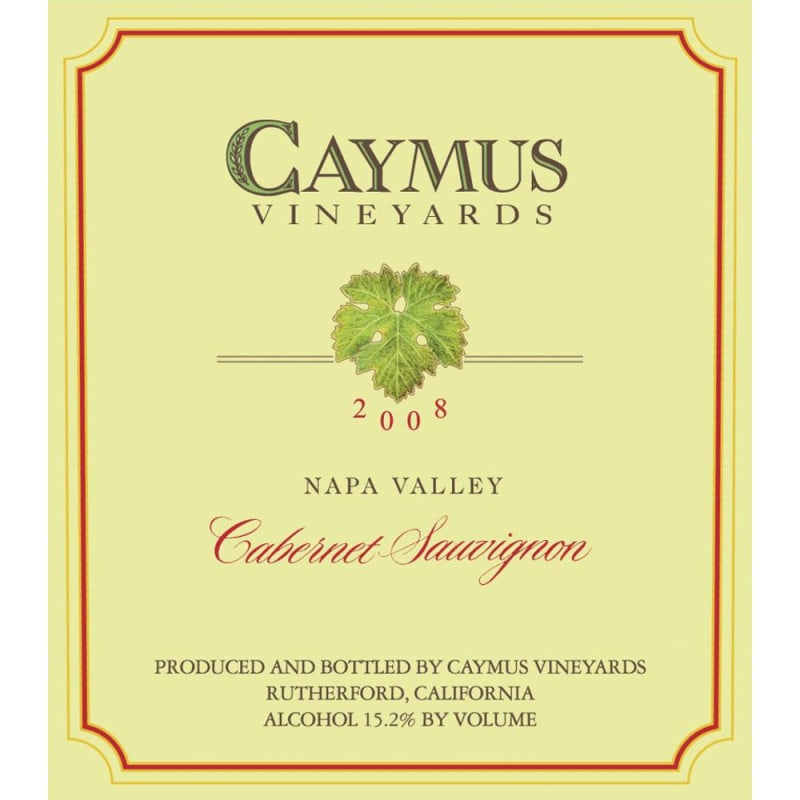
Wine Spectator rated the 2008 vintage for Napa Cabernet 90-92 points, saying it "could be unique for its depth and concentration."
Caymus Vineyards has made Cabernet Sauvignon from the Napa Valley since the winery was founded in 1972. Charles F. (Charlie) Wagner, his wife Lorna Belle Glos Wagner and their son Charles J. (Chuck) Wagner built their winery among vines planted on the family's ranch in Rutherford, a district long recognized for producing high-quality Cabernet Sauvignons.
Charlie Wagner planted most of the Cabernet vines in the mid 1960s, before this variety was universally considered the "king" of Napa Valley wines. He acquired the loose-clustered, intensely flavored clone he planted from Nathan Fay, a well-known grower in the Stags Leap area. "I liked the character of Nate's wine, and he told me to help myself if I wanted some budwood," Charlie explained. "He was a generous man, and he knew I wouldn't injure his vineyard."
For both the Napa Valley and Special Selection bottlings, the goal is a balanced wine that tastes delicious when bottled but can improve with age. Chuck Wagner attributes the quality of the wines to farming and winemaking techniques developed over the decades.
Professional Ratings
-
Wine Enthusiast
This extraordinary wine possesses an enormous wealth of black cherry, blueberry, cassis and espresso flavors, wrapped in fine, well-toasted oak. Has that rare quality of elegance, in which all the parts work together in harmony. Thoroughly dry, it's marked by a firm, astringent tannic structure now, but is a certain cel lar candidate.
-
Wine Spectator
Open fruit, rich, lush and layered, serving up a complex mix of plum, blackberry, black licorice and spices. Full-bodied and supple-textured, ending with a long, persistent finish that keeps repeating the core flavor themes. Drink now through 2018.


One of the most prestigious wines of the world capable of great power and grace, Napa Valley Cabernet is a leading force in the world of fine, famous, collectible red wine. Today the Napa Valley and Cabernet Sauvignon are so intrinsically linked that it is difficult to discuss one without the other. But it wasn’t until the 1970s that this marriage came to light; sudden international recognition rained upon Napa with the victory of the Stag’s Leap Wine Cellars 1973 Cabernet Sauvignon in the 1976 Judgement of Paris.
Cabernet Sauvignon undoubtedly dominates Napa Valley today, covering half of the land under vine, commanding the highest prices per ton and earning the most critical acclaim. Cabernet Sauvignon’s structure, acidity, capacity to thrive in multiple environs and ability to express nuances of vintage make it perfect for Napa Valley where incredible soil and geographical diversity are found and the climate is perfect for grape growing. Within the Napa Valley lie many smaller sub-AVAs that express specific characteristics based on situation, slope and soil—as a perfect example, Rutherford’s famous dust or Stags Leap District's tart cherry flavors.