

Winemaker Notes
Pairs well with lamb chops, beef tenderloin, and goat cheese.
Professional Ratings
-
Robert Parker's Wine Advocate
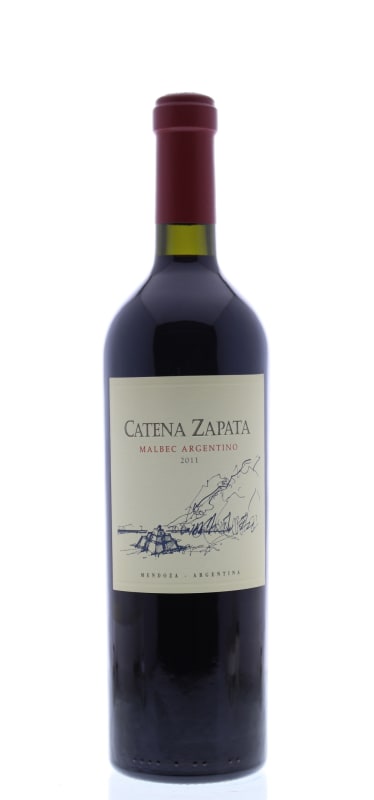
I was truly impressed with the nose of the 2011 Catena Zapata Malbec Argentino, a blend of grapes from Adrianna (Gualtallary) and Nicasia (Altamira) vineyards in the Uco Valley. Even if the grapes are sourced from the same vineyards as the Adrianna and Nicosia bottling, this wine is quite different. Here the plots are selected from the granitic parts that give it a different, austere texture. There is a seamless granularity with the tannins that go in a straight line, and keep going and going. Super! 11,000 bottles were filled.
-
Wine & Spirits
This come from two vineyards in the Uco Valley, one in La Consulta at 3,600 feet, the other in Gualtallary, 1,000 feet higher. And as is typical of this bottling, it defies the concept of malbec as a soft and gentle grape. Here strong tannins bind to imposing acidity, creating a powerful red that will need years to resolve. However, the fruit is so lovely in its ripeness and depth that it’s hard not to succumb to the temptation to open this now with an aged Manchego. Your decision.
-
James Suckling
A malbec with richness yet subtlety plus dark berry, hints of nuts and cream. Full body, with soft and silky tannins and a savory finish. Drink or hold.
-
Wine Enthusiast
Meaty, minty scents accent core cassis, jammy blackberry and oaky aromas. In the mouth, this benchmark Argentinean Malbec is tight and structured, with no flab or excess weight. An exotic mix of blueberry, cassis and Middle East spices finish long, with oak-driven lemony snap. Drink through 2020.
-
Wine Spectator
Offers lots of peppery notes to the sinewy dried berry and roasted plum flavors. Well-structured, with medium-grained tannins supporting the finish, which features alluring accents of paprika. Drink now through 2018






Bodega Catena Zapata is one of Argentina's high-altitude Malbec pioneers. The Catena family began making wine in Mendoza in 1902. Nicolas Catena, third generation family vintner, was one of the first to see the potential of Mendoza's mountain vineyards for producing high quality Malbec. In 1994, he became the first Argentine to export a world-class bottling of Malbec under the Catena label. Nicolas is joined by his daughter, Dr. Laura Catena, in their relentless pursuit of world-class quality from the family's high-altitude vineyards. Laura has done extensive work in introducing Malbec and other varietal plant selections, soil and climate analysis, and sustainable practices throughout Mendoza. Head winemaker, Alejandro Vigil, has been at Catena Zapata since 2002 and works with Laura and Nicolas to make wines that express the family's vineyards and palate.

Celebrated for its bold flavors and supple texture, Malbec has enjoyed runaway success in Argentina since the late 20th century. The grape originated in Bordeaux, France, where it historically contributed color and tannin to blends. A French agronomist, who saw great potential for the variety in Mendoza’s hot, high-altitude landscape, brought Malbec to Argentina in 1868. Somm Secret—If you’re trying to please a crowd, Malbec is generally a safe bet with its combination of dense fruit and soft tannins.

By far the largest and best-known winemaking province in Argentina, Mendoza is responsible for over 70% of the country’s enological output. Set in the eastern foothills of the Andes Mountains, the climate is dry and continental, presenting relatively few challenges for viticulturists during the growing season. Mendoza, divided into several distinctive sub-regions, including Luján de Cuyo and the Uco Valley, is the source of some of the country’s finest wines.
For many wine lovers, Mendoza is practically synonymous with Malbec. Originally a Bordelaise variety brought to Argentina by the French in the mid-1800s, here it found success and renown that it never knew in its homeland where a finicky climate gives mixed results. Cabernet Sauvignon, Syrah, Merlot and Pinot Noir are all widely planted here as well (and sometimes even blended with each other or Malbec). Mendoza's main white varieties include Chardonnay, Torrontés, Sauvignon Blanc and Sémillon.