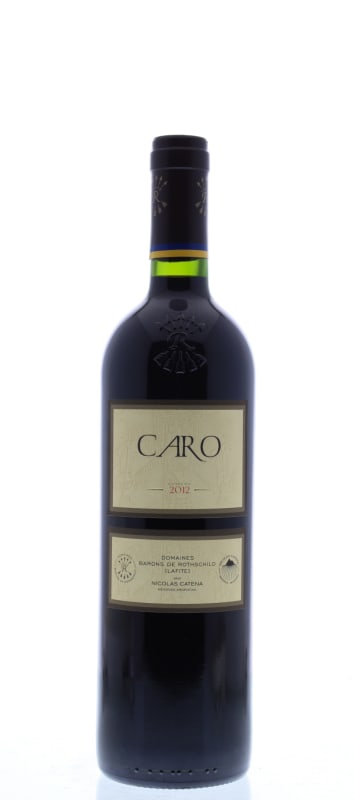


Winemaker Notes
Blend: 75% Malbec, 25% Cabernet Sauvignon
Professional Ratings
-
James Suckling
Incredible aromas of spice, cedar, walnut and dark berry. Floral too. Spectacular nose. Full body, ultra-fine tannins and a racy and refined finish. Fresh and succulent. Made from old vines of Malbec in Compuertas and Cabernet Sauvignon from Altamira. Such finesse. Half the normal production. The best wine ever from the Domaine Barons de Rothschild (Lafite) and Nicolas Catena winery. Drink or hold.
-
Wine Enthusiast
With touches of smoke, char, herbs and rooty black-fruit notes, the nose on this blend of 75% Malbec and 25% Cabernet Sauvignon is immensely inviting. Flavors of coffee, baking spices, blackberry, herbs and mocha finish toasty and impressive. Overall, this is a superb Mendoza wine; drink through 2024.
-
Robert Parker's Wine Advocate
The Cabernet Sauvignon is much more dominant in the 2012 Caro which shows an unmistakeable Bordeaux profile of cedar wood, graphite, tobacco leaf, spices, smoke, cured meat and blackberries. The palate shows very good balance and is powerful yet elegant with abundant, fine-grained tannins, bright berry flavors and a remarkable finish. This should age with style and mellow in bottle. It's still young, but it could be drunk already.
-
Wine Spectator
This elegant, savory red exhibits concentrated flavors of dark cherry, mocha and allspice, with cocoa powder details and chewy tannins on the finish, accented by some beefy hints. Drink now through 2018.


One of the world’s most classic and popular styles of red wine, Bordeaux-inspired blends have spread from their homeland in France to nearly every corner of the New World. Typically based on either Cabernet Sauvignon or Merlot and supported by Cabernet Franc, Malbec and Petit Verdot, the best of these are densely hued, fragrant, full of fruit and boast a structure that begs for cellar time. Somm Secret—Blends from Bordeaux are generally earthier compared to those from the New World, which tend to be fruit-dominant.

By far the largest and best-known winemaking province in Argentina, Mendoza is responsible for over 70% of the country’s enological output. Set in the eastern foothills of the Andes Mountains, the climate is dry and continental, presenting relatively few challenges for viticulturists during the growing season. Mendoza, divided into several distinctive sub-regions, including Luján de Cuyo and the Uco Valley, is the source of some of the country’s finest wines.
For many wine lovers, Mendoza is practically synonymous with Malbec. Originally a Bordelaise variety brought to Argentina by the French in the mid-1800s, here it found success and renown that it never knew in its homeland where a finicky climate gives mixed results. Cabernet Sauvignon, Syrah, Merlot and Pinot Noir are all widely planted here as well (and sometimes even blended with each other or Malbec). Mendoza's main white varieties include Chardonnay, Torrontés, Sauvignon Blanc and Sémillon.