

Winemaker Notes
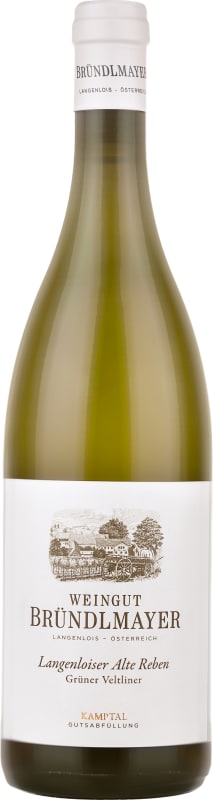
The Langenloiser Grüner Veltliner offers notes of apple, fresh pears and hay flowers. It is rich and solid with an umami mid palate well-balanced by vibrant acidity.
Professional Ratings
-
James Suckling
A complex and elegant gruner veltliner with white pepper, summer meadow and tree fruit aromas which we expect from this grape when it fully ripens, but doesn’t tip over into opulence. Wonderful freshness and delicacy at the long finish in spite of the moderate acidity.
-
Robert Parker's Wine Advocate
From vines averaging 40 years of age in the 1er crus Schenkenbichl, Spiegel and Käferberg and bottled in July of this year, the 2021 Grüner Veltliner Langenloiser Alte Reben shows deep, clear and elegant fruit with flinty as well as fresh-cut grass aromas, all wonderfully intense but refined. Full-bodied, intense and lush on the palate, this is a refined, elegant and finely tannic, mineral and substantial Veltliner with a long, complex and stimulating, sustainably saline, salivating and bitter finish.
-
Wine Spectator
An attractive, harmonious wine that takes some time to open up, showing stone fruit, fresh flowers and lemon meringue laced with dried green herbs and a subtle buttercream note. Supple at first, this builds in density and energy, with chalky minerality and grapefruit pith acidity driving tension. Drink now through 2030.


Fun to say and delightfully easy to drink, Grüner Veltliner calls Austria its homeland. While some easily quaffable Grüners come in a one-liter—a convenient size—many high caliber single vineyard bottlings can benefit from cellar aging. Somm Secret—About 75% of the world’s Grüner Veltliner comes from Austria but the variety is gaining ground in other countries, namely Hungary, the Czech Republic, Slovakia and the United States.

Climbing north and slightly east of the Kremstal region, Kamptal has very little vineyard area bordering the Danube River (unlike Wachau and Kremstal, whose vineyards run along it). The region takes its name from the river called Kamp, which traverses it north and south. Kamptal’s densely planted vineyards represent eight percent of Austria’s total.
The area experiences wide diurnal temperature variations like the Wachau but with less rain and more frost. Its vast geologic diversity makes it suitable for various experimentations with other varieties besides Grüner Veltliner and Riesling, such as Chardonnay, Pinot Blanc (Weissburgunder), Sauvignon Blanc, Pinot Noir, St. Laurent and Zweigelt.
But the region is probably most noted for the beautiful and expansive terraced Heiligenstein, arguably one of the world’s top Riesling sites, as well as some of Austria’s most extraordinary Grüner Veltliner vineyards. Kamptal’s soils, which are mostly loess and sand with some gravel and rocks, make it suitable for Grüner Veltliner, so much so that actually half of the zone is planted to that grape.