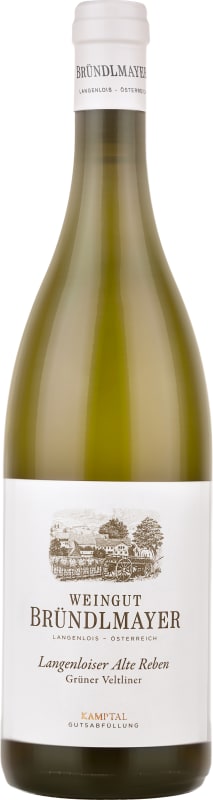


Winemaker Notes
Fully ripe & delicate at the same time, some lecithin & pepper, also a hint of blossom honey, abundantly detailed; nicely contoured & firmly interwoven, packed with notes of yellow fruit (Golden Delicious apple), creamy texture and conspicuous length.
Professional Ratings
-
James Suckling
Real transparency and beauty to this with sliced lemon, honey and some steel and stone undertones. It’s medium-to full-bodied with tightness and focus. Bright and vivid at the finish.
-
Robert Parker's Wine Advocate
I tasted the 2018 Grüner Veltliner Langenloiser Alte Reben as a just sulfured tank sample in late September last year, so shortly before the bottling in October. The wine is based on the fruits sourced in the "premiers crus" Käferberg, Schenkenbichel and Spiegel and was vinified in stainless steel tanks and aged in 300-liter barrels. It opens deep, intense and ripe on the elegant nose, offering delicate citrus fruit aromas. Full, round and elegant on the palate, with a beautiful sur lie texture and fine tannins, this is a very elegant and persistently salty GV with a lot of tension on the finish. Very promising and easily on "1ÖTW" level.
Barrel Sample: 92-94


Fun to say and delightfully easy to drink, Grüner Veltliner calls Austria its homeland. While some easily quaffable Grüners come in a one-liter—a convenient size—many high caliber single vineyard bottlings can benefit from cellar aging. Somm Secret—About 75% of the world’s Grüner Veltliner comes from Austria but the variety is gaining ground in other countries, namely Hungary, the Czech Republic, Slovakia and the United States.

Climbing north and slightly east of the Kremstal region, Kamptal has very little vineyard area bordering the Danube River (unlike Wachau and Kremstal, whose vineyards run along it). The region takes its name from the river called Kamp, which traverses it north and south. Kamptal’s densely planted vineyards represent eight percent of Austria’s total.
The area experiences wide diurnal temperature variations like the Wachau but with less rain and more frost. Its vast geologic diversity makes it suitable for various experimentations with other varieties besides Grüner Veltliner and Riesling, such as Chardonnay, Pinot Blanc (Weissburgunder), Sauvignon Blanc, Pinot Noir, St. Laurent and Zweigelt.
But the region is probably most noted for the beautiful and expansive terraced Heiligenstein, arguably one of the world’s top Riesling sites, as well as some of Austria’s most extraordinary Grüner Veltliner vineyards. Kamptal’s soils, which are mostly loess and sand with some gravel and rocks, make it suitable for Grüner Veltliner, so much so that actually half of the zone is planted to that grape.