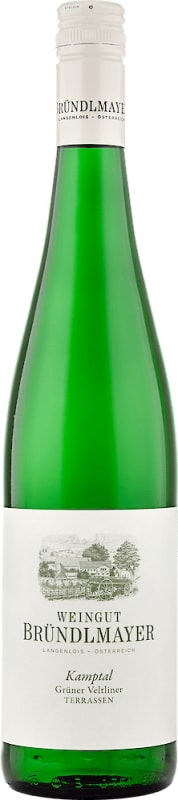


Winemaker Notes
This Grüner Veltliner is a blend of wines sourced from different terraced vineyards. The elevated terraces consist of stonier soils (schisted granite). The vines there show aromatic expression, good acidity, elegant stone fruit and lots of minerals. The lower sited terraces mostly of layered fertile loess show more body and ripeness. By combining those two characteristics we get a really classic Grüner Veltliner with both finesse and a certain vigor.
A perfect companion to many starters such as smoked trout, ham, cold vegetables, sea food, tapas, or fresh marinated goat cheese with herbs; also very good with fish barbecue, or roasted chicken, Asian dishes if not too hot such as Dim Sum, or Wok, fine with ‘Vegan Cuisine’.
Made with organic grapes.Professional Ratings
-
James Suckling
The perfect introduction to the gruner veltliner grape! Brimming with lime, yellow grapefruit, herbs and fresh cucumber, this is an extremely expressive and very friendly dry white. Lovely balance of on the finely etched, medium-bodied palate with elegant acidity underlining the wide spectrum of flavors. Invigorating, long finish. From organically grown grapes. Drink now.


Fun to say and delightfully easy to drink, Grüner Veltliner calls Austria its homeland. While some easily quaffable Grüners come in a one-liter—a convenient size—many high caliber single vineyard bottlings can benefit from cellar aging. Somm Secret—About 75% of the world’s Grüner Veltliner comes from Austria but the variety is gaining ground in other countries, namely Hungary, the Czech Republic, Slovakia and the United States.

Climbing north and slightly east of the Kremstal region, Kamptal has very little vineyard area bordering the Danube River (unlike Wachau and Kremstal, whose vineyards run along it). The region takes its name from the river called Kamp, which traverses it north and south. Kamptal’s densely planted vineyards represent eight percent of Austria’s total.
The area experiences wide diurnal temperature variations like the Wachau but with less rain and more frost. Its vast geologic diversity makes it suitable for various experimentations with other varieties besides Grüner Veltliner and Riesling, such as Chardonnay, Pinot Blanc (Weissburgunder), Sauvignon Blanc, Pinot Noir, St. Laurent and Zweigelt.
But the region is probably most noted for the beautiful and expansive terraced Heiligenstein, arguably one of the world’s top Riesling sites, as well as some of Austria’s most extraordinary Grüner Veltliner vineyards. Kamptal’s soils, which are mostly loess and sand with some gravel and rocks, make it suitable for Grüner Veltliner, so much so that actually half of the zone is planted to that grape.