


Winemaker Notes
Initial scents are full of small stone fruits, with notes of Pomme Gris, plum and Mirabelle plum, layered with a touch of honey. Aromas of blackberry, blackcurrant, cherry, and raspberry follow; a medley of red fruits dances with notes of almond. Exotic touches of mango follow, dissolving into tertiary scents of vanilla and a delicate woody aroma. On the palate the wine is plump, generous and enticing, reminiscent of Mirabelle plum jam. Texture and richness define the tasting experience. The finish blends notes of chocolate and citrus fruits, bringing a touch of acidity, lengthened further by hints of schist. A hugely generous wine!
La Grande Année 2015 is the perfect Champagne to serve with a fine meal, underscoring Bollinger’s reputation as the ultimate food pairing Champagne. The Champagne shines when enjoyed with pan fried foie gras with caramelized apple, magret de canard with raspberry and cranberry sauce, cantal, créme chocolat, raspberry and anise.
Blend: 60% Pinot Noir, 40% Chardonnay
Professional Ratings
-
James Suckling
Enticing, fragrant aromas of toast, lemon zest and an earthy-smoky nuance lead to a palate of subtle Bosc-pear, mango, papaya, even pineapple flavors. Lifted by fresh acidity on the medium-bodied palate, the wine keeps unfolding in toasted walnuts, honey and a dash of bitter marmalade. It’s mouth-filling, alive with acidity and full of finesse. Drink or hold.
-
Robert Parker's Wine Advocate
The 2015 La Grande Année, disgorged in May 2024 with a dosage of eight grams per liter, continues to drink beautifully, emerging from the glass with a deep bouquet of yellow apple, dried apricot, nashi pear and toasted hazelnut mingled with dried flowers, freshly baked bread and a hint of sage. Medium- to full-bodied, the palate is layered and fleshy, underpinned by ample reserves of chalky structuring extract, and concludes with a long, saline finish. It is a considerable success in the vintage and a very classic Bollinger, a wine with real identity.
-
Vinous
Bollinger's 2015 Brut Grand Année is an intriguing wine in that is clearly reflects the decision to pick on the later side in order to avoid vegetal notes derived from the mismatch of alcoholic and phenolic ripeness. "Balance was hard to achieve in 2015," Chef de Cave Denis Bunner notes. "At 10% in sugar, the fruit was simply not ripe. We had to wait to reach the optimal window of ripeness." Bunner also opted to increase the Chardonnay, so the blend is 60% Pinot Noir and 40% Chardonnay, as opposed to the more typical 70/30 blend, with more Verzenay than Aÿ in the Pinots. Dried citrus peel, sage, menthol, sage, tangerine peel and spice build with some coaxing. Light tropical overtones develop with aeration. There's real density and textural richness here. This will be a fascinating vintage to follow. Stylistically, it is the complete opposite from the much more linear 2014 that precedes it. Dosage is 8 grams per liter. Disgorged: May 2023.
-
Wine Spectator
This expressive Champagne features a rich, well-spiced range of flavors chiseled by well-honed, integrated acidity, which lends a racy feel to the ripe black cherry and mulberry fruit and notes of salted almond, pink grapefruit granita, crystallized honey and pickled ginger that ride the raw silk–like mousse. Hints of chalk and spring blossoms play on the clean-cut, lasting finish. Pinot Noir and Chardonnay. Disgorged May 2023. Drink now through 2040.
-
Decanter
A forward vintage for La Grande Année, with warmth evident in its roasted orange, Comice pear and Mirabelle plum, all polished with a sense of savoury maturity that is very Bollinger at heart. There’s a little more oxygen influence seemingly at play than in the 2014, with brine, nuts and a little dried leaf character already taking this far beyond fruit. The food-friendly chewiness of 2015 is there, but the mousse is supple and the Chardonnay brings the wine to a close with a fine, cooked lemon snap. This will start to show its best integration from 2025 onwards, although it is open for business now. 60% Pinot Noir and 40% Chardonnay from the Montagne de Reims, Grande Vallée de la Marne and Côte des Blancs, all fermented in small oak barrels and disgorged in May 2023 after seven years on lees.
-
Jeb Dunnuck
A bright silver/yellow color, the 2015 Champagne La Grande Annee Brut is a Pinot Noir-dominated blend with Chardonnay that was released in March of this year. This vintage offers decadence and a fleshy profile, with full-bodied richness and ripe notes of tangerine, apricot, almond, and fresh floral perfume. It speaks to the vintage's sunny nature, though without showing signs of oxidation or herbal notes. It was aged under cork for seven years before release. Tasted for a second time at my office in New York, it offers more immediacy, especially compared to the tension-driven focus of the 2014 release. However, it should also continue to improve over the next decade or more.


In 1829, Champagne Bollinger introduced an instantly recognizable, dry, toasty style that connoisseurs around the globe have coveted ever since. Six generations of the Bollinger family have maintained that trademark style, and Bollinger is one of the rare Grande Marque houses to be owned, controlled and managed by the same family since it was founded.
With 399 acres of vineyards situated in the best Grands Crus and Premiers Crus villages, Bollinger relies on its own estate for nearly two-thirds of its grape requirements, including the Pinot Noir that gives its Champagne its distinctive roundness and elegance. Bollinger is one of a select few houses that can control the quality of its grape supply so carefully.
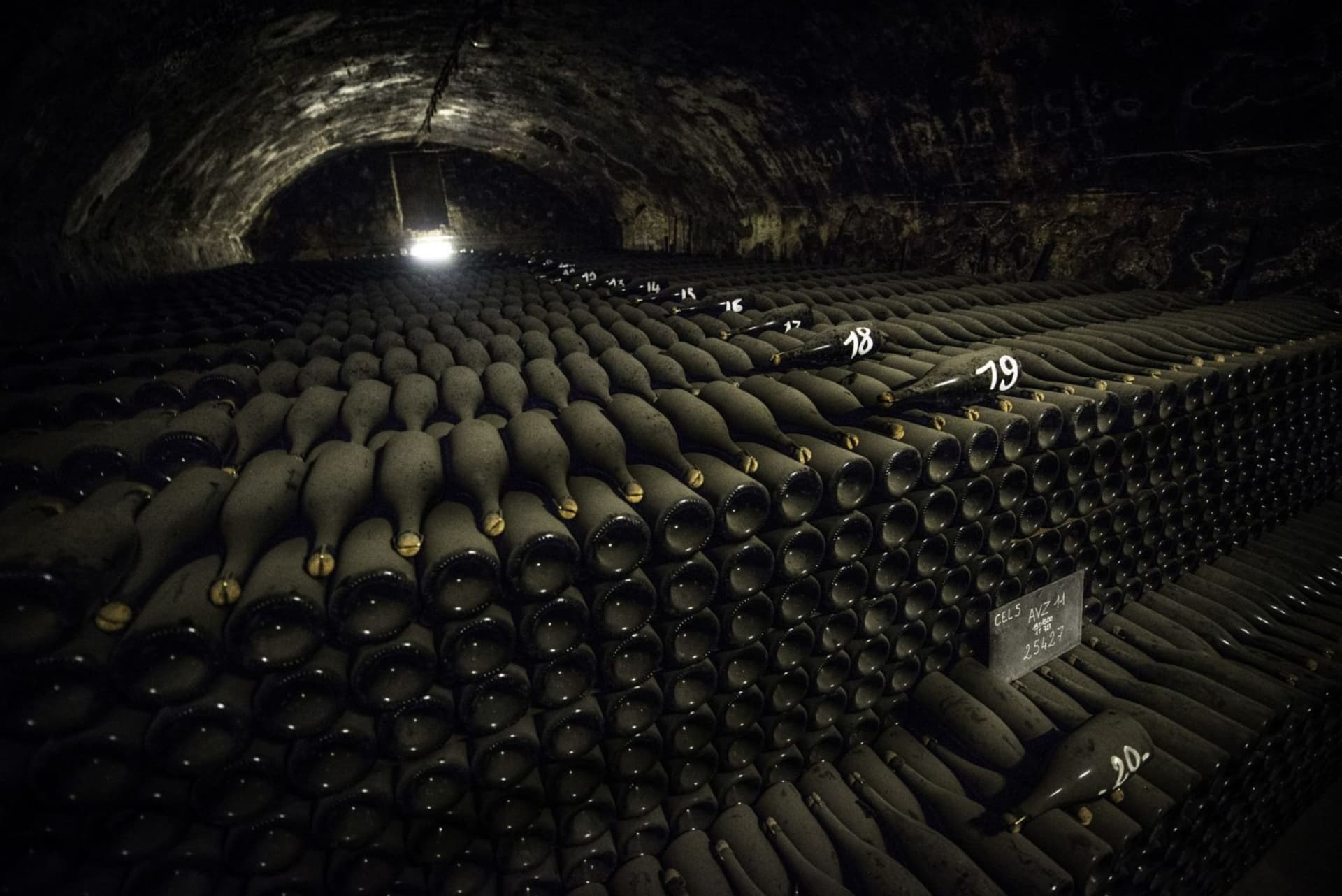
Bollinger is renowned for its stringent quality standards. It adheres to traditional methods, including individual vinification of each marc and cru, barrel fermentation (it is the last Champagne house to employ a full-time cooper) and extra-aging on the lees prior to disgorgement.
Members of the British Royal Court were among the first to embrace Bollinger’s unmistakable quality, and Queen Victoria made Bollinger the exclusive purveyor to the Court by Royal Warrant in 1884. Besides royalty, loyal devotees have included heads of state, celebrities and even famous fictional characters: Agent 007, James Bond, demands the exclusive Champagne Bollinger.

Representing the topmost expression of a Champagne house, a vintage Champagne is one made from the produce of a single, superior harvest year. Vintage Champagnes account for a mere 5% of total Champagne production and are produced about three times in a decade. Champagne is typically made as a blend of multiple years in order to preserve the house style; these will have non-vintage, or simply, NV on the label. The term, "vintage," as it applies to all wine, simply means a single harvest year.

Associated with luxury, celebration, and romance, the region, Champagne, is home to the world’s most prized sparkling wine. In order to bear the label, ‘Champagne’, a sparkling wine must originate from this northeastern region of France—called Champagne—and adhere to strict quality standards. Made up of the three towns Reims, Épernay, and Aÿ, it was here that the traditional method of sparkling wine production was both invented and perfected, birthing a winemaking technique as well as a flavor profile that is now emulated worldwide.
Well-drained, limestone and chalky soil defines much of the region, which lend a mineral component to its wines. Champagne’s cold, continental climate promotes ample acidity in its grapes but weather differences from year to year can create significant variation between vintages. While vintage Champagnes are produced in exceptional years, non-vintage cuvées are produced annually from a blend of several years in order to produce Champagnes that maintain a consistent house style.
With nearly negligible exceptions, . These can be blended together or bottled as individual varietal Champagnes, depending on the final style of wine desired. Chardonnay, the only white variety, contributes freshness, elegance, lively acidity and notes of citrus, orchard fruit and white flowers. Pinot Noir and its relative Pinot Meunier, provide the backbone to many blends, adding structure, body and supple red fruit flavors. Wines with a large proportion of Pinot Meunier will be ready to drink earlier, while Pinot Noir contributes to longevity. Whether it is white or rosé, most Champagne is made from a blend of red and white grapes—and uniquely, rosé is often produce by blending together red and white wine. A Champagne made exclusively from Chardonnay will be labeled as ‘blanc de blancs,’ while ones comprised of only red grapes are called ‘blanc de noirs.’