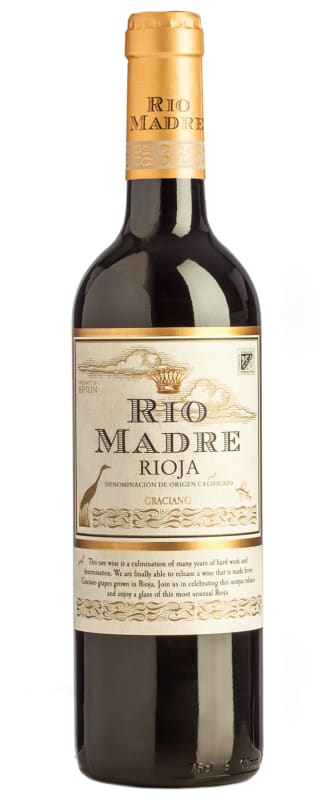


Winemaker Notes
Rio Madre is the result of the efforts of Jorge Ordóñez and Bodegas Ilurce to produce a 100% Graciano wine from D.O.C. Rioja. Mostly known for its role in adding complexity to the wines of Rioja Alta and Alavesa, Graciano is a varietal that thrives in Rioja Baja due to the hotter climate. Graciano is a late-ripening variety with a particularly long vegetative cycle, so it cannot ripen fully in Rioja Alta and Alavesa. As a result, although most northern Rioja wineries claim their blends include Graciano from their vineyards, most of them source their Graciano from Rioja Baja. Ordóñez discovered the quality of vineyards and Graciano in Rioja Baja and partnered with Bodegas Ilurce to produce a 100% Graciano wine, which are very rare.
Professional Ratings
-
James Suckling
Blackberries, blueberries and black cherries with some dried-fruit undertones. Full-bodied with slightly chewy tannins and a fresh finish.



Located in the heart of Rioja Baja in the town of Alfaro, Bodegas Ilurce is owned and operated by the fourth generation of the Escudero family. The family has grown grapes in Rioja Baja since 1940, and the current generation takes advantage of a wealth of 60Ha. of vineyards that are planted in alluvial soils on the slopes of the Monte Yerga. The vines range from century old head trained Garnacha to high density plantings of Graciano and Tempranillo planted in alluvial, limestone heavy soils with a high abundance of stones. Located at high altitudes, 2000 ft. (600m) above sea level, the vineyards take advantage of very cold winters and nights, combined with warm summers – perfect conditions for the maturation of Graciano, perhaps the estate’s most important treasure.
Jorge Ordóñez partnered with Bodegas Ilurce after he set a goal to produce and import a 100% Graciano wine. Graciano, a variety is most often used for blending in Rioja to improve Tempranillo, is heavily planted in Rioja Baja, as it is very challenging to ripen this grape in cooler Rioja Alta. Due to its long vegetative cycle and slow maturation, Graciano, like Garnacha, requires a warmer climate to ripen. For that reason, Ordóñez and his team travelled to Rioja Baja to find a producer to partner with. At the time, the few monovarietal Graciano wines were either very expensive or very low quality, so Jorge sought to produce a high quality, price accessible Graciano for the American market. Jorge achieved this with Rio Madre Graciano, a wine that has been a blockbuster success in the United States, as it represents incredible quality for an entry level Rioja.

Graciano has been best known as a blending grape used in Rioja to add color, depth and perfume to Tempranillo. It also thrives in the nearby region of Navarra and a few dedicated winemakers in California and Australia are making singe varietal bottlings certainly worthy of checking out! Graciano’s black fruit and lush tannins make it a perfect pairing to grilled or smoked red meat, as well as game.

Highly regarded for distinctive and age-worthy red wines, Rioja is Spain’s most celebrated wine region. Made up of three different sub-regions of varying elevation: Rioja Alta, Rioja Alavesa and Rioja Oriental. Wines are typically a blend of fruit from all three, although specific sub-region (zonas), village (municipios) and vineyard (viñedo singular) wines can now be labeled. Rioja Alta, at the highest elevation, is considered to be the source of the brightest, most elegant fruit, while grapes from the warmer and drier Rioja Oriental produce wines with deep color and higher alcohol, which can add great body and richness to a blend.
Fresh and fruity Rioja wines labeled, Joven, (meaning young) see minimal aging before release, but more serious Rioja wines undergo multiple years in oak. Crianza and Reserva styles are aged for one year in oak, and Gran Reserva at least two, but in practice this maturation period is often quite a bit longer—up to about fifteen years.
Tempranillo provides the backbone of Rioja red wines, adding complex notes of red and black fruit, leather, toast and tobacco, while Garnacha supplies body. In smaller percentages, Graciano and Mazuelo (Carignan) often serve as “seasoning” with additional flavors and aromas. These same varieties are responsible for flavorful dry rosés.
White wines, typically balancing freshness with complexity, are made mostly from crisp, fresh Viura. Some whites are blends of Viura with aromatic Malvasia, and then barrel fermented and aged to make a more ample, richer style of white.