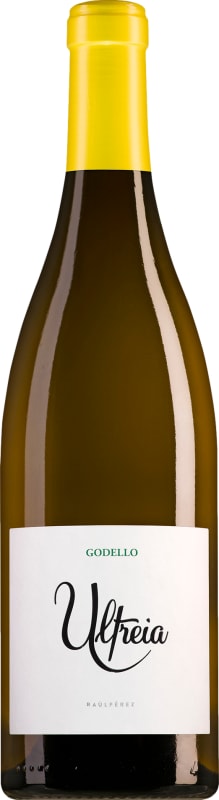


Winemaker Notes
Professional Ratings
-
James Suckling
Pure godello from young vines, showing aromas of citrus and almonds. Medium- to full-bodied, it’s balanced and flavorful, with stone fruit. Ample, delicious and persistent. Grapes undergo a very long fermentation.
-
Robert Parker's Wine Advocate
The 2023 Ultreia Godello, mostly from the zone of Cacabelos, and the vineyards have been transformed to organic. This is an unusual wine for this bottling because the fermentation was very slow (nine months) and without temperature control, and the wine went through malolactic—it's the first white he bottled with full malolactic. Most (70%) of the wine was in large stainless steel and the rest in used barriques. This seems to be happening again in 2024. It has a golden color and a ripe nose of yellow fruit and a round, tender mouthfeel with a bitter twist in the finish and a dry, chalky feeling. This is the most Burgundian of the whites here.


Godello is native to northwest Spain and has experienced a major revival in the last 20 years. Godello wines are typically sleek and lightly creamy in texture. Barrel fermentation and lees stirring are typical in Valdeorras, Spain where the grape comes from. These winemaking techniques make the most of Godello's inherent structure and help bring out its lovely floral character. Somm Secret—DNA profiling says that Spain’s Godello is actually identical to the Portugese grape variety Gouveio, which grows throughout the Douro and Dão (where it used to mistakenly be called Verdelho).

One of the few northwestern Spanish regions with a focus on a red variety, Bierzo, part of Castilla y León, is home to the flowery and fruity Mencia grape. Mencia produces balanced and bright red wines full of strawberry, raspberry, pomegranate, baking spice, pepper and black licorice. The well-drained soils of Bierzo are slate and granite.