


Winemaker Notes
color, deep red with purple reflections. Nose of great complexity, combining aromas of blackberry, cherry and fleshy strawberry. On aeration, the nose reveals toasted and liquorice notes. The palate shows a smooth attack with a remarkable consistency and freshness, leading to a powerful finish of exceptional length. The wine is built on a dense tannic structure and shows a perfect harmony throughout the tasting.
Professional Ratings
-
James Suckling
A very serious St.-Estèphe with excellent concentration, firm tannins and a dark soul. I love the earth, walnut, bark and smoke aromas that pour out of this. Very long, dramatic, dry finish. Better from 2021.
-
Decanter
Wow, this is silky-smooth and incredibly accomplished, straying very close to being sensational. Is this their best ever wine? Cassis, damson and dark chocolate flavours are joined by brushed tannins and great lift. It's so soft that it feels almost ready to be decanted and drunk, but the tannins are perceptive and I imagine this will close down for a few years soon. Try drinking in eight to ten years when it's fully ready.
-
Jeb Dunnuck
Showing beautifully on multiple occasions, the 2016 Château Phélan Ségur is incredibly impressive and reveals a saturated purple as well as pure cassis, violets, damp earth, lead pencil, and spice-driven aromas and flavors. Beautifully layered and textured, concentrated, with fine tannins and the purity and elegance that make the vintage so compelling front and center, it’s a high-class Saint Estèphe to enjoy over the coming 20-25 years or more.
-
Wine Enthusiast
There is a much better balance between fruit and the wood aging in this vintage from this estate than in the past. This wine offers richness and structure from fruit tannin. Dark fruits give the wine rich intensity. Drink from 2025.
-
Wine Spectator
This is a touch old-school, with bay and tobacco notes out front followed by alder, warm earth and steeped black currant flavors. The grippy finish lets the fruit and earth notes wrestle a bit, leaving a chewy feel. Will settle with cellaring, but this is not for fans of finesse. Best from 2022 through 2035.
-
Robert Parker's Wine Advocate
Deep garnet-purple in color, the 2016 Phélan Ségur gives elegant red and black currants, kirsch and black berries with violets and chocolate box scents plus a waft of cigars. The palate is medium-bodied, elegant, fine grained and fresh with great vibrancy and mineral notes on the finish.
-
Connoisseurs' Guide
Château Phelan Ségur has come up with a medium-bodied wine in 2016 that shows a little more fruity charm than its provenance classically predicts, and, here again, the role of Merlot is hard to miss. It teases with elements of cedar and cigar on the nose and is almost pliant on the palate when compared to traditional St. Estèphes, and it boasts plenty of fresh and fairly vibrant young fruit from beginning to end.



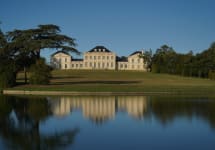
Located in the village of Saint-Estèphe, Château Phélan Ségur has proudly overlooked the Gironde estuary since the early 19th century. Founded by Irishman, Bernard Phelan, the estate was developed by his son, Frank, and renamed Phélan Ségur in the early 20th century. The cellar and the vat room are integrated into the Château in a highly unsual architectural ensemble.
The property is spread over 114 hectares, including 44 hectares of parks, forests, meadows, streams and ponds, forming a remarkable biodiversity reserve. Its 70 hectares of vineyards benefit from the temperature regulation provided by the proximity of the River; they are divided into four very distinct islands and express the diversity of the clay-gravel soils of the appellation. This produces powerful wines often characterised by their tannic structure. The Phélan Ségur style stands out for its elegance, its pure and complex aromas, its finesse and precision, the quality of its tannins and its balance.
Philippe Van de Vyvere is the owner since January 2018. Initiated by his grandfather at an early age, this great connoisseur of Bordeaux was really taken with the Château Phélan Ségur. He intends to apply his entrepreneurial values in pursuit of aesthetic and technical while respecting environmental balances.

One of the world’s most classic and popular styles of red wine, Bordeaux-inspired blends have spread from their homeland in France to nearly every corner of the New World. Typically based on either Cabernet Sauvignon or Merlot and supported by Cabernet Franc, Malbec and Petit Verdot, the best of these are densely hued, fragrant, full of fruit and boast a structure that begs for cellar time. Somm Secret—Blends from Bordeaux are generally earthier compared to those from the New World, which tend to be fruit-dominant.

Deeply colored, concentrated, and distinctive, St. Estephe is the go-to for great, age-worthy and reliable Bordeaux reds. Separated from Pauillac merely by a stream, St. Estephe is the farthest northwest of the highest classed villages of the Haut Medoc and is therefore subject to the most intense maritime influence of the Atlantic.
St. Estephe soils are rich in gravel like all of the best sites of the Haut Medoc but here the formation of gravel over clay creates a cooler atmosphere for its vines compared to those in the villages farther downstream. This results in delayed ripening and wines with higher acidity compared to the other villages.
While they can seem a bit austere when young, St. Estephe reds prove to live very long in the cellar. Traitionally dominated by Cabernet Sauvignon, many producers now add a significant proportion of Merlot to the blend, which will soften any sharp edges of the more tannic, Cabernet.
The St. Estephe village contains two second growths, Chateau Montrose and Cos d’Estournel.