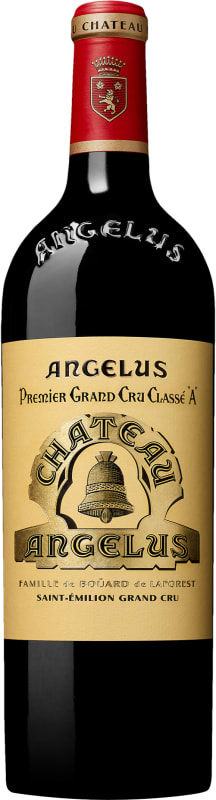


Winemaker Notes
Lush, dense and creamy because of the early onset of growth thanks to its terroir, but also elegant, classy and pure with lots of freshness.
Blend: 53% Merlot, 46% Cabernet Franc, 1% Petit Verdot
Professional Ratings
-
James Suckling
So many beautiful primary fruit aromas. Al dente. Peaches. Very floral. Aromatic. Full-bodied and extremely fine tannins with length and beauty that show incredible depth. Superb brightness and reality. Exciting.
Barrel Sample: 98-99 -
Jeb Dunnuck
Moving to the Grand Vin, the 2022 Château Angelus is 60% Merlot and 40% Cabernet Franc that spent 21 months in 100% new barrels, with a portion of the Cabernet Franc in foudre. It reveals a pure ruby/purple hue as well as stunning aromatics of black raspberries, cassis, spring flowers, and graphite that show more floral nuances with time in the glass. It's incredibly well-balanced, has fine tannins, and a rare mix of purity, finesse, and richness. It's an absolutely gorgeous Angelus that deserves a decade in the cellar and will cruise for 40+ years. The style here has shifted considerably towards elegance and finesse, sometimes at the expense of texture and richness, yet this classic beauty delivers perfectly balanced richness, depth, and elegance. Rating: 98+
-
Decanter
An excellently constructed and impressive Angélus in 2022 with power, focus and detail. Aromatically expressive; a burst of black and blue fruits on the nose, gorgeous floral scents, liquorice, graphite, damson, juniper berries, dark chocolate, vanilla and cinnamon. Straight and sleek, almost sharp red and blue berries marry with a slate minerality edging the tannins that makes the texture quite firm and mouthcoating but so precise with a playful juiciness on the mid palate and overall appealing coolness. Lovely clarity and layering of flavour, some strictness coming from the Cabernet Franc at this point, but there’s such class, finesse and precision on show. One for the long haul and will reward cellaring. Unlike in 2020 which took three days to harvest Merlot, 2022 took them two weeks, finishing with Cabernet Franc at the beginning of October. No press wine in the grand vin.
Barrel Sample: 97 -
Robert Parker's Wine Advocate
The 2022 Angélus has turned out beautifully in bottle, reflecting the estate's shift toward a livelier, more integrated style. Wafting from the glass with aromas of sweet cherries, blackberries and mulberries mingled with rose petals and violets, it's full-bodied, velvety and concentrated, with a deep, enveloping core of succulent fruit, integrated tannins and a long, perfumed finish. Rating:-97+
-
Vinous
The 2022 Angélus is still very contained on the nose, therefore, for this sample, I transferred the wine several times between two glasses in order to pry it open. It has a delineated and tensile bouquet, with blackberry, briar and light marine scents percolating through with time. Hints of oyster shell emerge from the limestone soils. The palate is medium-bodied, fresh and saline, with gentle grip, fine tannins and a poised, persistent finish. There is a linearity to this Angélus that I appreciate due to the 40% Cabernet Franc. It’s very minerally on the aftertaste. This is an excellent Angélus that will age perhaps more slowly than its peers.
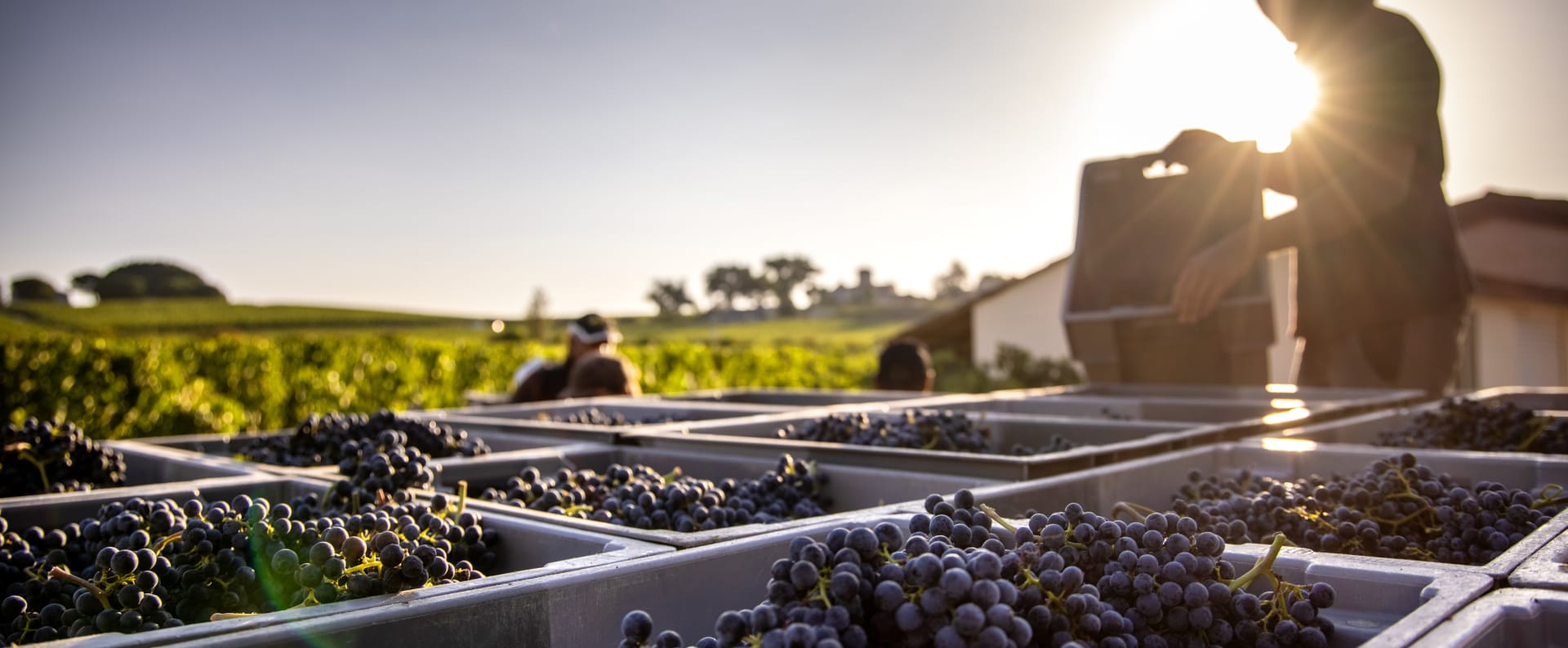


At the origin of Angelus is an exceptionally well-situated vineyard, at the gates to the village of Saint-Émilion, on the famous south-facing "foot of the slope". Since 1782, over the generations, the passion and determination of the de Boüard de Laforest family have built a destiny worthy of the Estate. At 131 hectares including 62 hectares in Saint-Émilion, of which 31 hectares from the historic heart of the Estate, Angelus is now one of the largest vineyards in the appellation. In 2012, after more than thirty years at the helm of Angelus, Hubert de Boüard de Laforest passed the baton to his daughter, Stéphanie de Boüard-Rivoal. She became the third woman in the family's nearly 250-year history to preside over the destiny of this emblematic Estate, ensuring its legacy continues to thrive. Today, Angelus employs 170 people, produces 8 cuvées and owns restaurants and hotels, in particular, the Logis de la Cadène in Saint-Émilion and Le Gabriel in Bordeaux. In 2023, diversification continued with the creation of La Ferme 1544, forming a link between Château Angelus wine business and its restaurants.

One of the world’s most classic and popular styles of red wine, Bordeaux-inspired blends have spread from their homeland in France to nearly every corner of the New World. Typically based on either Cabernet Sauvignon or Merlot and supported by Cabernet Franc, Malbec and Petit Verdot, the best of these are densely hued, fragrant, full of fruit and boast a structure that begs for cellar time. Somm Secret—Blends from Bordeaux are generally earthier compared to those from the New World, which tend to be fruit-dominant.

Marked by its historic fortified village—perhaps the prettiest in all of Bordeaux, the St-Émilion appellation, along with its neighboring village of Pomerol, are leaders in quality on the Right Bank of Bordeaux. These Merlot-dominant red wines (complemented by various amounts of Cabernet Franc and/or Cabernet Sauvignon) remain some of the most admired and collected wines of the world.
St-Émilion has the longest history in wine production in Bordeaux—longer than the Left Bank—dating back to an 8th century monk named Saint Émilion who became a hermit in one of the many limestone caves scattered throughout the area.
Today St-Émilion is made up of hundreds of independent farmers dedicated to the same thing: growing Merlot and Cabernet Franc (and tiny amounts of Cabernet Sauvignon). While always roughly the same blend, the wines of St-Émilion vary considerably depending on the soil upon which they are grown—and the soils do vary considerably throughout the region.
The chateaux with the highest classification (Premier Grand Cru Classés) are on gravel-rich soils or steep, clay-limestone hillsides. There are only four given the highest rank, called Premier Grand Cru Classés A (Chateau Cheval Blanc, Ausone, Angélus, Pavie) and 14 are Premier Grand Cru Classés B. Much of the rest of the vineyards in the appellation are on flatter land where the soils are a mix of gravel, sand and alluvial matter.
Great wines from St-Émilion will be deep in color, and might have characteristics of blackberry liqueur, black raspberry, licorice, chocolate, grilled meat, earth or truffles. They will be bold, layered and lush.