Castello di Monsanto 4 Items
You're no longer following this brand
You'll no longer receive alerts for new arrivals and brand updates




- Non-Vintage 18
- 2025 11
- 2024 114
- 2023 289
- 2022 477
- 2021 662
- 2020 797
- 2019 901
- 2018 872
- 2017 768
- 2016 996
- 2015 1257
- 2014 1215
- 2013 1655
- 2012 1641
- 2011 1679
- 2010 1631
- 2009 1221
- 2008 1003
- 2007 1003
- 2006 795
- 2005 491
- 2004 548
- 2003 401
- 2002 163
- 2001 383
- 2000 302
- 1999 317
- 1998 230
- 1997 242
- 1996 76
- 1995 95
- 1994 31
- 1993 24
- 1992 3
- 1991 6
- 1990 12
- 1989 3
- 1988 4
- 1987 3
- 1986 clear Vintage filter
- 1985 7
- 1984 1
- 1983 1
- 1982 2
- 1981 1
- 1980 2
- 1971 1
-
Gift Type Any
-
Occasion Any
-
Variety Any
-
Varietal Any
-
Region Tuscany
-
Availability Include Out of Stock
-
Size & Type Any
-
Fine Wine Any
-
Vintage 1986
-
Reviewed By Any
-
Sort By Most Popular
-
 Ships Sun, May 24Limit 0 per customerSold in increments of 0
 -
 Tenuta San Guido Sassicaia (1.5 Liter Magnum) 1986Tuscany, Italy ● Bordeaux Red Blends
-
Robert
Parker
- Collectible
Ships Sun, May 24Limit 0 per customerSold in increments of 0 -
Robert
-
 Tenuta San Guido Sassicaia (slightly torn label) 1986Tuscany, Italy ● Bordeaux Red Blends
-
Robert
Parker
- Collectible
Ships Sun, May 24Limit 0 per customerSold in increments of 0 -
Robert
-
 Ships Mon, Jan 1Limit 0 per customerSold in increments of 0
Browse by Category
Red White Sparkling Rosé Spirits GiftsThe Castello di Monsanto estate was established by Fabrizio Bianchi in...
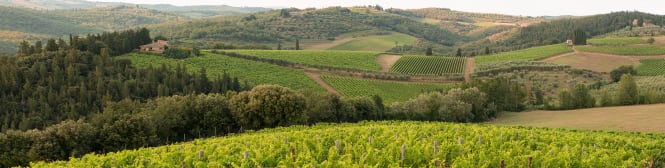
The Castello di Monsanto estate was established by Fabrizio Bianchi in the hillsides of Barberino Val d’Elsa in the province of Florence in the north-central reaches of the Chianti Classico denomination. Bianchi worked to clear a vineyard he named “Il Poggio” (“The Hill”), which would be utilized for production of a single vineyard wine riserva, the first example in Chianti Classico. Always the pioneer, Bianchi began to eliminate the white varieties, Malvasia and Trebbiano, from his Chianti Classico in 1968, preferring to use only the traditional red varieties of Sangiovese, Canaiolo and Colorino.
Cellar innovations in the early years included Slovenian casks for aging, instead of old chestnut barrel, as well as the introduction of stainless steel tanks for fermentation. Furthermore, Castello di Monsanto harvested the first 100% Cabernet Sauvignon, ‘Nemo,’ from the ‘Il Mulino’ vineyard. Today, the Monsanto estate totals 500 acres, of which slightly more than half are woods, while olive orchards occupy an additional 37 acres. Vineyards, situated between 800 and 1,000 feet above sea level, account for 175 acres. Three quarters of the plantings are Sangiovese, the basis for Chianti Classico, while Cabernet Sauvignon and Merlot are the next most widely planted varieties.
One of the most impressive components of Castello di Monsanto is the cellar and its underground tunnel, some 820 feet in length that serves as an aging cellar as well for a potential total of 1,500 barriques. This cave system, one of the most dazzling in all of Italy, took six years to build by hand. The gallery, connecting the new cellar with the original, is located underneath the castle and dates back to 1740.
Today, Fabrizio Bianchi and his daughter, Laura, represent the tradition and elegance that have been associated with the estate throughout its existence. “Il Poggio” was not just an innovation back in 1962; it truly represented a new vision for Chianti Classico. Today, each new vintage is eagerly anticipated as one of the very best bottlings of this wine type.
Each of the wines of Castello di Monsanto, from the award-winning Chianti Classico Riserva, to ‘Nemo’, a Super Tuscan, to the lush and exotic Vin Santo ‘La Chimera’, are true Tuscan treasures. Simply what you would expect from Castello di Monsanto, the grand jewel in the heart of Tuscany.