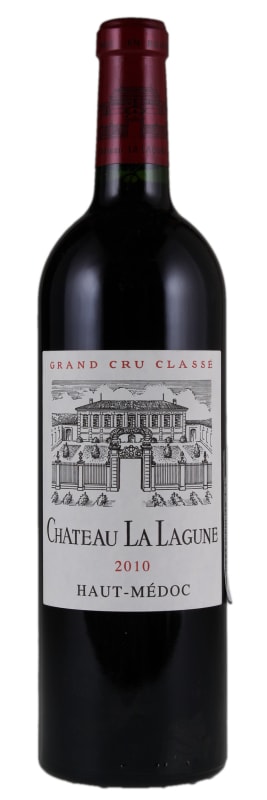


Winemaker Notes
Blend: 50% Cabernet Sauvignon, 40% Merlot, and 10% Petit Verdot
Professional Ratings
-
James Suckling
What a lovely texture to the wine, with super soft and supple tannins and blackberry and currant character. Round and juicy. One of the softest and most supple 2010s. It tastes more like a 2009 in style.
-
Wine Spectator
This is tangy, with red currant, roasted mesquite, sanguine and tobacco notes. Already shows range and definition, with solid grip.
Barrel Sample: 89-92 Points -
Robert Parker's Wine Advocate
Deep garnet in color, the 2010 la Lagune springs from the glass with scents of baked plums, boysenberries and dried mulberries plus touches of underbrush, damp soil and a medicinal waft. Medium to full-bodied, the palate has a good amount of savory, muscular fruit with chewy tannins and an invigorating finish.


One of the world’s most classic and popular styles of red wine, Bordeaux-inspired blends have spread from their homeland in France to nearly every corner of the New World. Typically based on either Cabernet Sauvignon or Merlot and supported by Cabernet Franc, Malbec and Petit Verdot, the best of these are densely hued, fragrant, full of fruit and boast a structure that begs for cellar time. Somm Secret—Blends from Bordeaux are generally earthier compared to those from the New World, which tend to be fruit-dominant.

One of the most—if not the most—famous red wine regions of the world, the Medoc reaches from the city of Bordeaux northwest along the left bank of the Gironde River almost all the way to the Atlantic. Its vineyards climb along a band of flatlands, sandwiched between the coastal river marshes and the pine forests in the west. The entire region can only claim to be three to eight miles wide (at its widest), but it is about 50 miles long.
While the Medoc encompasses the Haut Medoc, and thus most of the classed-growth villages (Margaux, Moulis, Listrac, St-Julien, Pauillac and St. Estephe) it is really only those wines produced in the Bas-Medoc that use the Medoc appellation name. The ones farther down the river, and on marginally higher ground, are eligible to claim the Haut Medoc appellation, or their village or cru status.
While the region can’t boast a particularly dramatic landscape, impressive chateaux disperse themselves among the magically well-drained gravel soils that define the area. This optimal soil draining capacity is completely necessary and ideal in the Medoc's damp, maritime climate. These gravels also serve well to store heat in cooler years.