

Winemaker Notes
Professional Ratings
-
James Suckling
A dense and rich red with lots of blackberry and plums. Dark cherry too. Full body, ripe fruit yet remains fresh and focused. Stone texture. A blend of malbec, cabernet sauvignon, ancellotta and caladoc.
-
Robert Parker's Wine Advocate
The red blend 2013 Tito Zuccardi feels a little mainstream next to wines like the Concreto, perhaps it's the spicy, roasted aromas from the oak and high ripeness that usually implies alcohol. It's mostly Malbec that is co-fermented with some 10% Cabernet and 12% of the unusual Italian red Ancelotta, all sourced from Altamira in the Valle de Uco. The blend might change with the vintage, but the origin will always be Altamira. Sebastian likes Ancelotta in the blends and this has a vegetal freshness. The nose mixes the violets and blue fruit with plenty of aromatic herbs and spices with a faint lactic hint. There is purity and elegance under the power, with fine minerality and a remarkable finish.
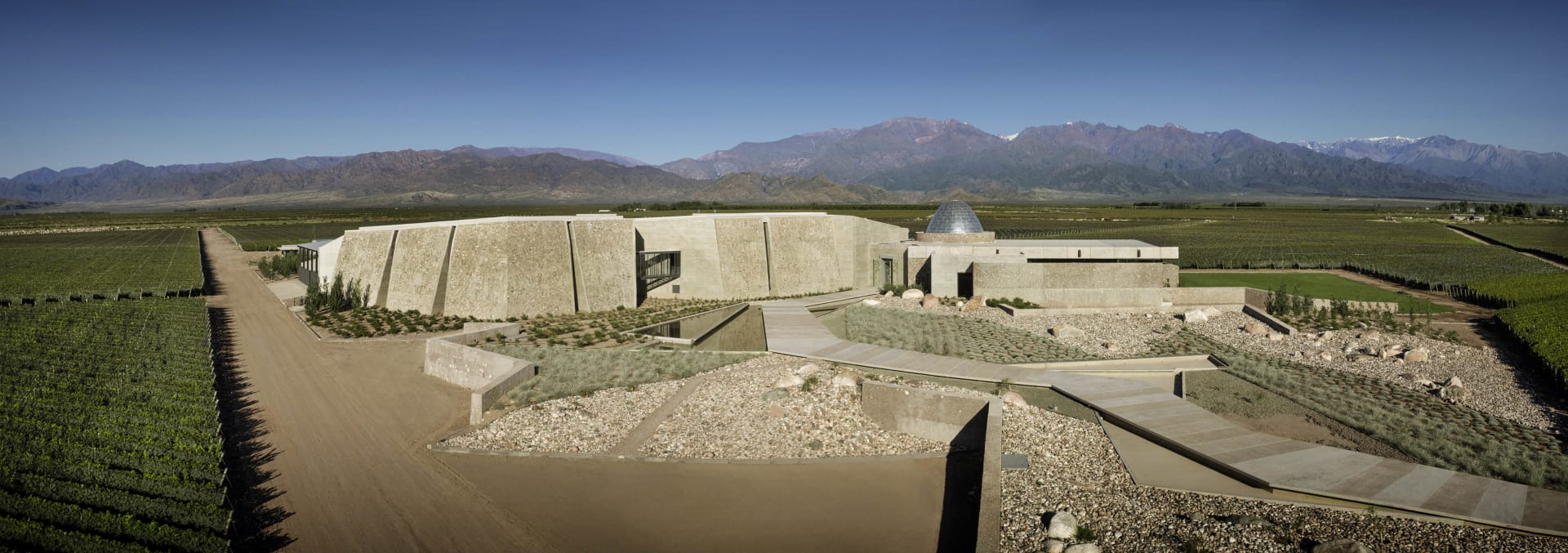





A few years before 1950, Ing. Alberto Zuccardi reaches Mendoza from his homeland in Tucuman where their great-grandparents had settled upon arriving in the Italian region of AveIino. In 1963, Alberto implanted a vineyard in the region of Maipu not knowing that it would begin the great passion of his life, the wine industry. In 1990, his son, Jose Alberto Zuccardi, assumed the General Director of the company.
In 2005, Sebastian Zuccardi, third generation of the family, lead the development of the new stage of the wines of the winery expansion into the Uco Valley. On his initiative, since 2008 the winery has an area of Research and Development dedicated to the study of the terroir and the different variables that affect wine production. In 2013 the construction of the new Zuccardi winery in the Uco Valley began. It opened in March 2016 with the premise of producing wines with identity, through the continuous exploration of the different terroirs of the Uco Valley.
The Zuccardi family’s approach to sustainability starts with the environment and people before any product. They’re dedicated to producing the highest quality wines through sustainable practices such as a focus on nurturing biodiversity, organic farming, efficient irrigation practices, composting, water treatment, comprehensive waste and recycling efforts, and the use of solar energy. The winery itself is designed to be naturally energy efficient by maximizing natural light and minimizing electricity consumption. Its concrete walls fulfill the function of a thermal insulator, the movements of liquid are caused by gravity and the concrete-designed vessels allow for a natural control of the temperature of the wine. As a third generation family-owned winery, the Zuccardi’s take seriously their responsibility to protect the environment, support the land, the farmers and uplift the local community. Through building schools, offering free education, fostering equality, banning child labor, and subsidizing health care, they’re not only elevating their wines and the Uco Valley as a world class wine region, but also giving the people who have contributed to their success a path forward and upward mobility for their own families.

With hundreds of red grape varieties to choose from, winemakers have the freedom to create a virtually endless assortment of blended red wines. In many European regions, strict laws are in place determining the set of varieties that may be used, but in the New World, experimentation is permitted and encouraged resulting in a wide variety of red wine styles. Blending can be utilized to enhance balance or create complexity, lending different layers of flavors and aromas. For example, a red wine blend variety that creates a fruity and full-bodied wine would do well combined with one that is naturally high in acidity and tannins. Sometimes small amounts of a particular variety are added to boost color or aromatics. Blending can take place before or after fermentation, with the latter, more popular option giving more control to the winemaker over the final qualities of the wine.
How to Serve Red Wine
A common piece of advice is to serve red wine at “room temperature,” but this suggestion is imprecise. After all, room temperature in January is likely to be quite different than in August, even considering the possible effect of central heating and air conditioning systems. The proper temperature to aim for is 55° F to 60° F for lighter-bodied reds and 60° F to 65° F for fuller-bodied wines.
How Long Does Red Wine Last?
Once opened and re-corked, a bottle stored in a cool, dark environment (like your fridge) will stay fresh and nicely drinkable for a day or two. There are products available that can extend that period by a couple of days. As for unopened bottles, optimal storage means keeping them on their sides in a moderately humid environment at about 57° F. Red wines stored in this manner will stay good – and possibly improve – for anywhere from one year to multiple decades. Assessing how long to hold on to a bottle is a complicated science. If you are planning long-term storage of your reds, seek the advice of a wine professional.

With vineyards tretching along the eastern side of the Andes Mountains from Patagonia in the south to Salta in the north, Argentina is one of the world’s largest and most dynamic wine producing countries—and most important in South America.
Since the late 20th century vineyard investments, improved winery technology and a commitment to innovation have all contributed to the country’s burgeoning image as a producer of great wines at all price points. The climate here is diverse but generally continental and agreeable, with hot, dry summers and cold snowy winters—a positive, as snow melt from the Andes Mountains is used heavily to irrigate vineyards. Grapes very rarely have any difficulty achieving full ripeness.
Argentina’s famous Mendoza region, responsible for more than 70% of Argentina’s wine production, is further divided into several sub-regions, with Luján de Cuyo and the Uco Valley most noteworthy. Red wines dominate here, especially Malbec, the country’s star variety, while Chardonnay is the most successful white.
The province of San Juan is best known for blends of Bonarda and Syrah. Torrontés is a specialty of the La Rioja and Salta regions, the latter of which is also responsible for excellent Malbecs grown at very high elevation.