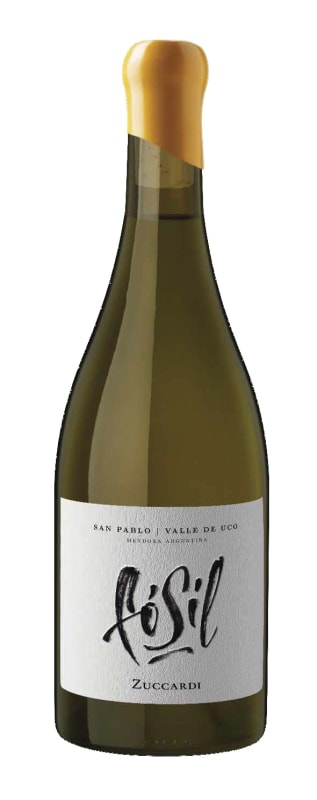


Winemaker Notes
Zuccardi Fosil Chardonnay offers aromas of spiced apple and butterscotch. A high-energy palate comes straight from the terroir. Lightly buttery baked apple and peach flavors are pure and steady on a firm, balanced finish.
Professional Ratings
-
Vinous
The 2022 Chardonnay Fosil hails from Zuccardi’s San Pablo Vineyard in the Uco Valley. It was aged in 75% concrete vats, with the remainder going into used French oak barrels. In the glass, it’s yellow with a greenish sheen. The complex aromas range from green apple peel to chamomile, lime, and mountain herbs such as huacatay, with a pastry backdrop adding further depth. On the palate, it’s lean and dry with a chalky texture and refreshingly tart acidity. The vibrant character is a showcase for the terroir with its austere, herbal notes. Better to keep it for another couple of years to let it truly come into its own.
-
Decanter
Pure and mineral nose with limey citrus and a hint of white almond. Quite transparent on the palate with an elegant but zingy mouthfeel. Transparent, but it also has lots of stamina and verve. 25% fermented in old 500 liter barrels. Drink now or hold.
-
Robert Parker's Wine Advocate
Sourced from San Pablo and vinified in concrete, the 2022 Fósil leads with a chalky, vibrant bouquet of stone fruits, citrus peels and wet stones, followed by a sleek, seamless palate underpinned with mineral-driven grip. It concludes with a nuanced, waxy finish enlivened by tangy streaks of acidity. As with the 2023 iteration, I found this to lean slightly more round and textural versus the Botánico's additional focus and persistence.
-
Wine Enthusiast
This white comes from cool-climate vineyards at 4,590 feet in San Pablo, Uco Valley. Wonderful acidity and a mineral texture run the show. The nose is austere, featuring light herbal aromas. It has delicate flavors of linden leaves, grapefruit and lime. A sturdy frame suggests a long life.
-
Wine Spectator
Fresh and clean, with flint and floral accents to the pear, citrus and apple core, and plenty of acidity lifting the flavors onto the finish where a hint of epazote chimes in. Drink now. 3,300 cases made, 1,000 cases imported.


One of the most popular and versatile white wine grapes, Chardonnay offers a wide range of flavors and styles depending on where it is grown and how it is made. While it tends to flourish in most environments, Chardonnay from its Burgundian homeland produces some of the most remarkable and longest lived examples. California produces both oaky, buttery styles and leaner, European-inspired wines. Somm Secret—The Burgundian subregion of Chablis, while typically using older oak barrels, produces a bright style similar to the unoaked style. Anyone who doesn't like oaky Chardonnay would likely enjoy Chablis.

With a winning combination of cool weather, high elevation and well-draining alluvial soils, it is no surprise that Mendoza’s Uco Valley is one of the most exciting up-and-coming wine regions in Argentina. Healthy, easy-to-manage vines produce low yields of high-quality fruit, which in turn create flavorful, full-bodied wines with generous acidity.
This is the source of some of the best Malbec in Mendoza, which can range from value-priced to ultra-premium. Cabernet Sauvignon, Cabernet Franc and Chardonnay also perform well here.