


Winemaker Notes
Deep red color with violet hues. Expresses a red and black fruit character with notes of blackberry, cherry, plum complemented by fresh herbal and violet notes. Juicy, with a lively acidity, mineral texture and elegant tannins. It has a long finish.
Professional Ratings
-
Robert Parker's Wine Advocate
The intense and high-pitched 2018 Aluvional Gualtallary has finesse, which is the challenge in this very wild zone of the Valle de Uco. This is a powerful zone because of the light and the cold nights, which make it difficult to achieve elegance in the wines, but they have worked in this direction. As with other 2018s, the aromas and flavors are fully developed, so there's more complexity, nuance and depth than in the 2017s, which ripened faster and earlier. A superb mineral Gualtallary with contained ripeness and wildness.
-
James Suckling
Blueberries, blackberries, violets and some stones on the nose. Orange peel, as well. It’s full-bodied with firm, silky tannins and a linear, refined finish. So gorgeous and long now, but better after 2023.
-
Wine Enthusiast
Plum, licorice, peppercorn and a hint of salt show in the bouquet of this balanced wine. It's full bodied, with well-integrated tannins. The vibrant palate delivers bright black-fruit flavors and peppery spice. It finishes long with leather notes.
-
Wine Spectator
Exotic spice and cedar notes accent the taut, powerful flavors of red currant and dried raspberry that feature muscular tannins and acidity, with dried berry and sanguine accents on the savory finish.
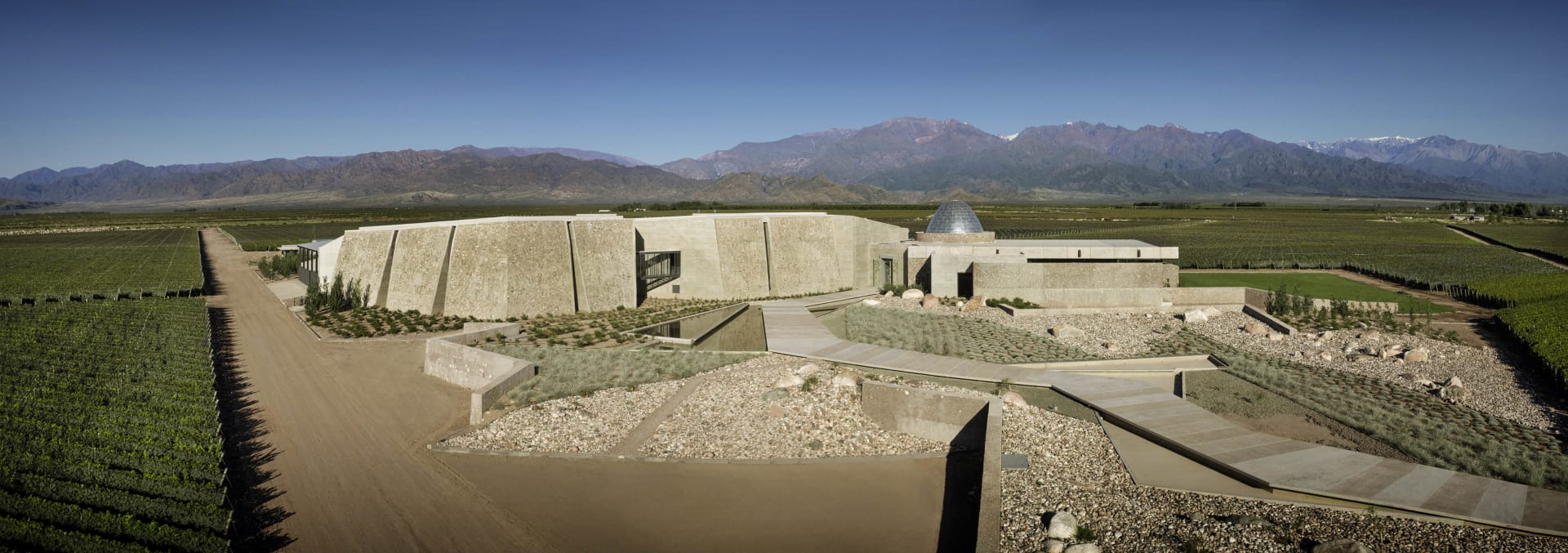




A few years before 1950, Ing. Alberto Zuccardi reaches Mendoza from his homeland in Tucuman where their great-grandparents had settled upon arriving in the Italian region of AveIino. In 1963, Alberto implanted a vineyard in the region of Maipu not knowing that it would begin the great passion of his life, the wine industry. In 1990, his son, Jose Alberto Zuccardi, assumed the General Director of the company.
In 2005, Sebastian Zuccardi, third generation of the family, lead the development of the new stage of the wines of the winery expansion into the Uco Valley. On his initiative, since 2008 the winery has an area of Research and Development dedicated to the study of the terroir and the different variables that affect wine production. In 2013 the construction of the new Zuccardi winery in the Uco Valley began. It opened in March 2016 with the premise of producing wines with identity, through the continuous exploration of the different terroirs of the Uco Valley.
The Zuccardi family’s approach to sustainability starts with the environment and people before any product. They’re dedicated to producing the highest quality wines through sustainable practices such as a focus on nurturing biodiversity, organic farming, efficient irrigation practices, composting, water treatment, comprehensive waste and recycling efforts, and the use of solar energy. The winery itself is designed to be naturally energy efficient by maximizing natural light and minimizing electricity consumption. Its concrete walls fulfill the function of a thermal insulator, the movements of liquid are caused by gravity and the concrete-designed vessels allow for a natural control of the temperature of the wine. As a third generation family-owned winery, the Zuccardi’s take seriously their responsibility to protect the environment, support the land, the farmers and uplift the local community. Through building schools, offering free education, fostering equality, banning child labor, and subsidizing health care, they’re not only elevating their wines and the Uco Valley as a world class wine region, but also giving the people who have contributed to their success a path forward and upward mobility for their own families.

Celebrated for its bold flavors and supple texture, Malbec has enjoyed runaway success in Argentina since the late 20th century. The grape originated in Bordeaux, France, where it historically contributed color and tannin to blends. A French agronomist, who saw great potential for the variety in Mendoza’s hot, high-altitude landscape, brought Malbec to Argentina in 1868. Somm Secret—If you’re trying to please a crowd, Malbec is generally a safe bet with its combination of dense fruit and soft tannins.

By far the largest and best-known winemaking province in Argentina, Mendoza is responsible for over 70% of the country’s enological output. Set in the eastern foothills of the Andes Mountains, the climate is dry and continental, presenting relatively few challenges for viticulturists during the growing season. Mendoza, divided into several distinctive sub-regions, including Luján de Cuyo and the Uco Valley, is the source of some of the country’s finest wines.
For many wine lovers, Mendoza is practically synonymous with Malbec. Originally a Bordelaise variety brought to Argentina by the French in the mid-1800s, here it found success and renown that it never knew in its homeland where a finicky climate gives mixed results. Cabernet Sauvignon, Syrah, Merlot and Pinot Noir are all widely planted here as well (and sometimes even blended with each other or Malbec). Mendoza's main white varieties include Chardonnay, Torrontés, Sauvignon Blanc and Sémillon.