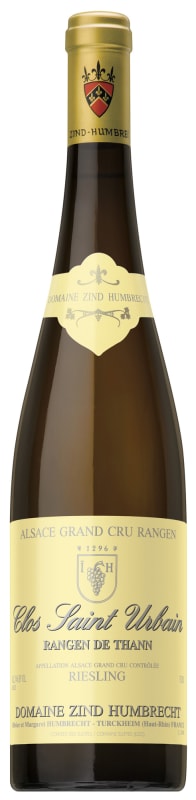


Winemaker Notes
Savor as an aperitif or with simple dishes that showcase the wine.
The Riesling vines are spread all over the 13.6 acres of the Clos-Saint-Urbain in the Rangen Grand Cru vineyard. Being located at the opening of a cold and higher altitude valley, the Rangen enjoys a late ripening climate, but eventually catches up in October, when the steep slope (90%) and dark warm volcanic rocks allow the grapes to reach a high ripeness level. Zind-Humbrecht's dedication to terroir expression guides all winemaking practices, which include extended pressing cycles, abbreviated clarification cycles (to retain natural yeasts and proteins in the must), natural malolactic fermentation and extended aging on the lees. The wine is aged 18 months in 40-year-old French barrels.
Professional Ratings
-
Wine Enthusiast
Smoke, orange, wet stone and earth notes are powerful and beguiling on the nose. The palate has absolute concentration and energy and more of that smoky promise. This is like the bundled focus of a laser light—incisive, precise and piercing. Notions of peach, lemon and tangerine dance and hover, but the central core and force remains a kind of drive that could move mountains. This is a sleeping giant, absolute and pure, brooding, laying in wait to unleash its might. The palate is absolutely dry, absolutely fresh, absolutely uncompromising. The finish is piercingly clean. Wait for this. Drink 2025–2040 at least.
-
Robert Parker's Wine Advocate
The 2015 Riesling Clos Saint-Urbain Rangen de Thann opens with a clear, pure, stony, pretty pithy and concentrated yet not really fruity or, at least, juicy aroma. The 2015 is stony, saline and dense as well as aromatic yet specific in its lemon-skin notes. "From the middle of June, temperatures rose significantly, peaking in early July at 38 to 39 degrees Celsius for many days, too many days," Olivier Humbrecht noted in his vintage report. "The absence of rain and extreme heat caused hydric stress problems that resulted in many burned leaves and grapes. In fact, there was more damage from the sun rays than the drought," he continued.
-
James Suckling
This is a really fresh and dynamic white with sliced pear and lemon rind character and minerals. Full and flavorful with lots of crisp acidity and fruit intensity. Great density. From biodynamic grapes. Drink now.
-
Wine Spectator
A dense and creamy Riesling, medium- to full-bodied and tightly meshed. Rich and smoky, with an exotic overtone of Indian spices and jasmine accenting the ripe green melon, grapefruit sorbet and nectarine flavors. Well-defined and lingering on the dry, zesty finish.
-
Wine & Spirits
The village of Thann, in the southern reaches of Alsace, includes this historic vineyard planted on compacted, reddish-brown volcanic ash. Olivier Humbrecht farms this steep site under biodynamics, and it grows some of his most distinctive wines. This is one of the most dynamic 2015 rieslings we tasted, a brisk, formidable wine with staying power. It starts on zesty scents of fresh chamomile and lasts on notes of sage and brisk yellow fruit. This is a classically structured riesling with a long life ahead.


Riesling possesses a remarkable ability to reflect the character of wherever it is grown while still maintaining its identity. A regal variety of incredible purity and precision, this versatile grape can be just as enjoyable dry or sweet, young or old, still or sparkling and can age longer than nearly any other white variety. Somm Secret—Given how difficult it is to discern the level of sweetness in a Riesling from the label, here are some clues to find the dry ones. First, look for the world “trocken.” (“Halbtrocken” or “feinherb” mean off-dry.) Also a higher abv usually indicates a drier Riesling.

Small but mighty, this picturesque region in northeastern France is renowned for its white wines produced by passionate families whose winemaking roots span generations and even centuries. Nestled between the Vosges Mountains and the Rhine River, Alsace benefits from a sunny, dry climate and a long growing season. It is one of the most geologically diverse regions in the world — one of the many reasons why Alsace rocks!
Alsace wines include dry, mineral-driven Riesling, earthy Pinot Gris, refreshing Pinot Blanc, exuberant Gewurztraminer, elegant Pinot Noir, and more. From traditional-method sparkling wines to easy-drinking AOC Alsace, to complex Grand Cru bottlings from 51 distinct sites, and rich, late harvest wines, Alsace produces a wine for every occasion. Most Alsace wines are single-varietal bottlings and are labeled with the grape name. The region is also one of the greenest wine-producing areas in France, with 36% of its vineyard area certified organic.
Riesling, the region’s calling card, is dry, fresh and floral in its youth, developing complex mineral and flint character with age. Gewurztraminer is known for its signature spice and lychee aromatics. Pinot Gris is prized for its combination of crisp acidity and savory spice as well as ripe stone fruit flavors. Pinot Blanc is an affable food partner or porch sipper. Pinot Noir, the only red grape in AOC Alsace, is now authorized in three Grand Cru areas and is also used for Crémant d’Alsace sparkling rosé. Any bottle you choose will offer deliciousness, pleasure and value that is unprecedented in other wine regions.